
US Rocket Launches Surge: Artemis, Starlink Drive Historic Growth
The United States is experiencing a dramatic increase in rocket launches, with projections indicating nearly 4,300 by 2036. NASA's Artemis program and the expansion of satellite constellations like Starlink are primary drivers.

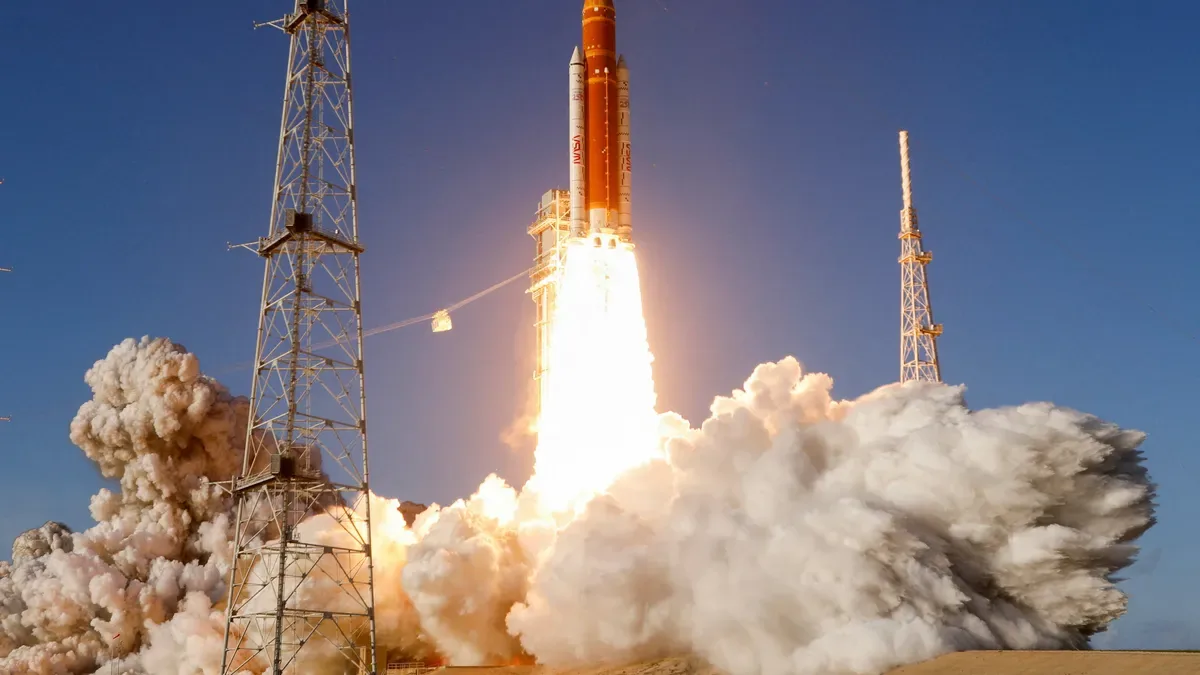
The United States is witnessing an unprecedented surge in rocket launches, with nearly 4,300 expected between fiscal years 2026 and 2036. This significant increase, projected by the Federal Aviation Administration (FAA), is fueled by NASA's ambitious Artemis moon program, the burgeoning demand for satellite internet services, and a general rise in commercial and crewed spaceflights. Rockets are now launching from U.S. soil with remarkable frequency, underscoring a new era in space exploration and utilization.
The Artemis missions, aimed at returning humans to the lunar surface for the first time in over fifty years, represent a major catalyst for this launch cadence. The recent Artemis II mission, which successfully sent four astronauts on a 10-day journey around the moon and back, captivated global audiences and reignited public interest in human spaceflight. Following Artemis II, NASA is planning subsequent missions, including Artemis III slated for a crewed moon landing as early as 2028, and Artemis IV, with the ultimate goal of establishing a permanent lunar base by 2032. These complex, long-term objectives require a consistent and robust launch schedule.
Commercial Sector Fuels Exponential Growth
Beyond NASA's lunar ambitions, the commercial space sector is a substantial contributor to the escalating launch rates. Companies like SpaceX, founded by Elon Musk, are at the forefront, utilizing their workhorse Falcon 9 rocket for a variety of missions. These include deploying thousands of Starlink satellites to create a global internet constellation, transporting astronauts to the International Space Station (ISS) under contracts with NASA, and fulfilling commercial and military payload requirements. The FAA predicts that annual launches will climb from over 200 this year to more than 500 within the decade.
Florida and California, the primary hubs for rocket launches in the U.S., have already set records. Vandenberg Space Force Base in California recorded 71 launches in 2025 and is on pace to surpass that number in 2026. Florida's Cape Canaveral Space Force Station and NASA's Kennedy Space Center collectively saw 109 launches in 2025, with SpaceX prioritizing its Starbase facility in South Texas for flight tests of its colossal Starship rocket. Starship, standing over 400 feet tall, is crucial for both Musk's aspirations of colonizing Mars and NASA's deep space exploration goals.
The growth is not limited to a few major players. Numerous aerospace startups are entering the satellite deployment business, mirroring the success of Starlink. Space tourism also continues to be a profitable venture, with companies like Virgin Galactic seeking to capture market share. Other significant players include Blue Origin, developing its New Glenn rocket and lunar landers; Rocket Lab, preparing its Neutron rocket; Firefly Aerospace, extending its partnership with Lockheed Martin for its Alpha rocket; and United Launch Alliance (ULA), continuing to operate its Atlas V rocket for missions such as building Amazon's Project Kuiper constellation.
Regulatory changes are also playing a role. The U.S. administration has pursued policies aimed at streamlining the licensing process for commercial space launches, reducing bureaucratic hurdles that can slow down operations. Proponents argue this deregulation is essential to fostering innovation and competitiveness in the rapidly evolving space industry, while critics raise concerns about potential impacts on environmental regulations.