
Spain to Witness Deep Partial Lunar Eclipse August 28
Spain will experience a deep partial lunar eclipse on August 28, 2026, with up to 93% of the Moon expected to be obscured by Earth's umbra. The event will be visible across the country and requires no special equipment.

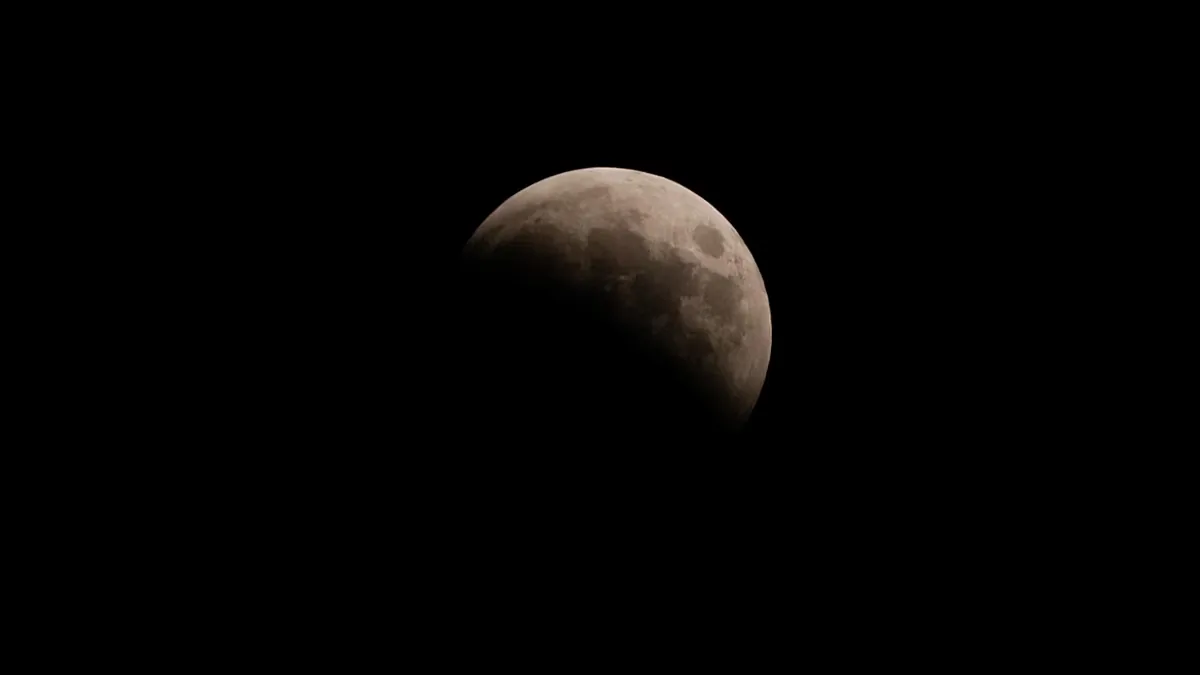
Spain is set to witness another significant astronomical spectacle on August 28, 2026, with a deep partial lunar eclipse visible across the Iberian Peninsula. This celestial event follows closely on the heels of the total solar eclipse observed on August 12, marking a rare convergence of major astronomical occurrences for the region. Unlike its solar counterpart, this lunar eclipse requires no special viewing equipment, making it accessible to all.
The National Geographic Institute (IGN) confirmed that the eclipse can be observed with the naked eye, posing no risk to viewers. The event is classified as partial because only a portion of the Moon will pass through the Earth's darkest shadow, known as the umbra. At its peak, approximately 93% of the Moon's diameter will be covered by this shadow, a magnitude of 0.93, creating a deeply shadowed appearance.
Observing the Eclipse Across Spain
The visibility of the lunar eclipse will vary slightly depending on the specific location within Spain. While the entire country will be able to see the partial phase before moonset, the timing of moonset relative to the eclipse's progression will differ. Residents in the central and eastern parts of the peninsula, along with the Balearic Islands and Melilla, may see the Moon set before the partial phase concludes. However, in the western peninsula, the Canary Islands, and Ceuta, moonset will occur after the partial obscuration has ended. This distinction highlights the importance of choosing a viewing spot with a clear, unobstructed view of the horizon.
Weather conditions will also play a crucial role in the viewing experience. Clear skies are essential for optimal observation of the celestial event. Astronomical enthusiasts are advised to monitor local weather forecasts in the days leading up to August 28. The IGN has provided data indicating that the eclipse's phases will be observable not only in Spain but also in parts of Europe, Africa, the Americas, and western Asia, though Spain offers a particularly favorable vantage point for witnessing its deepest phases.
A lunar eclipse occurs when the Earth positions itself directly between the Sun and the Moon, casting a shadow on our natural satellite. The intensity of the eclipse depends on how much of the Moon passes through the umbra, the darkest central part of Earth's shadow. A penumbral eclipse, where the Moon passes through the lighter outer shadow, is less dramatic and often difficult to notice. The impending eclipse on August 28, with its 0.93 magnitude, promises to be a significant event, offering a striking visual of the Moon being dramatically obscured.
The proximity of this lunar event to the August 12 solar eclipse has generated considerable excitement among stargazers and the public alike. The solar eclipse, a rare occurrence for Spain, captivated millions. The upcoming astronomical event provides a second chance for the public to engage with celestial phenomena. Such events often spark renewed interest in astronomy and science education, encouraging people to learn more about the solar system and Earth's place within it. The IGN continues to be a key resource for astronomical data and public engagement in Spain, providing essential information for events like these.