
University of Queensland physicists transmit binary message using gravity
University of Queensland researchers have successfully transmitted a binary message through a brick wall using an elevator's counterweight and gravity.

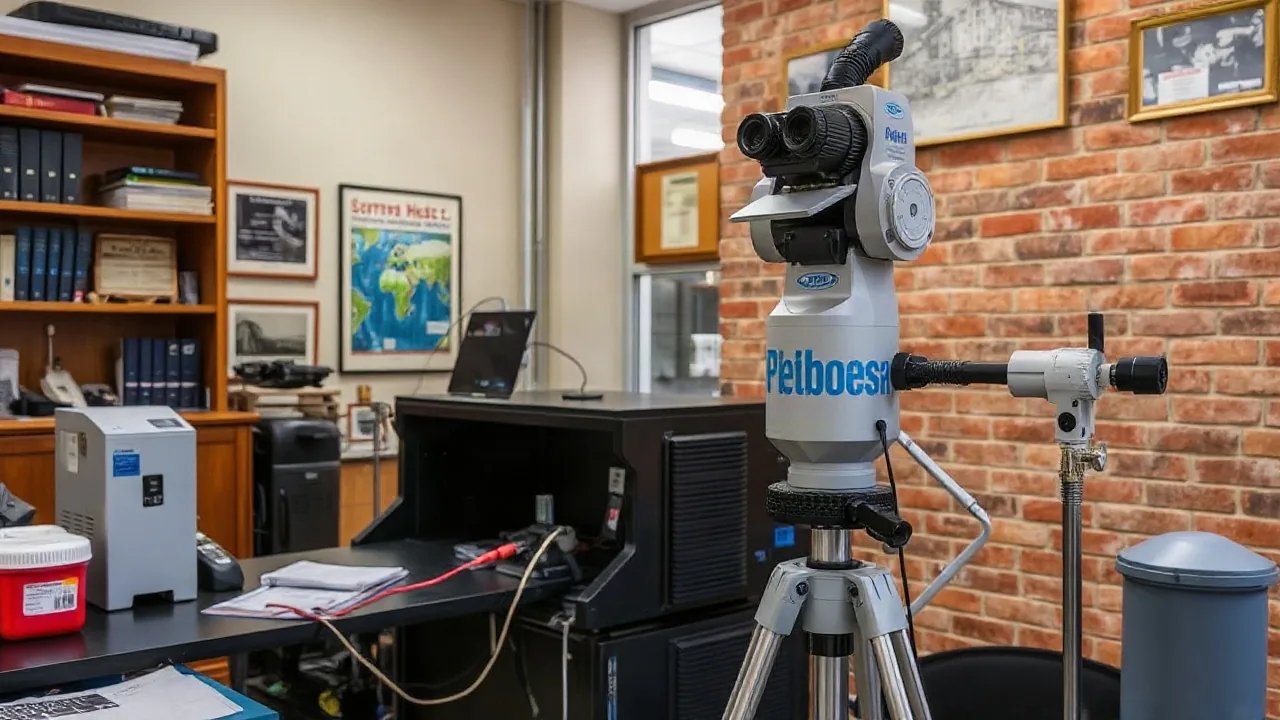
Physicists at the University of Queensland have successfully transmitted a binary message through a brick wall by utilizing an elevator and a sensitive gravimeter. The experiment took place within the Parnell Building, where the team manipulated an elevator to move its 1.8 metric ton counterweight between specific positions representing binary 0 and 1.
A gravimeter positioned in an adjacent bathroom detected the minuscule shifts in the gravitational field, translating the received data into the word “Gravity.” The findings from this unusual study were published in Science Advances.
The Mechanics and Limitations of Gravitational Communication
Dr. Charles Woffinden from the School of Mathematics and Physics noted that gravitational communication offers a distinct advantage over standard wireless technology. According to Woffinden, “Unlike the electromagnetic signals used in modern wireless communication, a gravitational signal cannot simply be screened out by placing ordinary material in its path.” He added that anyone struggling with lost phone reception in tunnels or solid walls would recognize the appeal, noting that the system demonstrates communication that ordinary physical barriers cannot block.
The concept originated from an entirely different application: developing a contactless truck scale. Dr. Andrew Groszek explained that the initial goal was determining the mass of trucks and large vehicles by measuring their tiny gravitational pull. Once that concept proved successful, the researchers realized the underlying physics could be adapted to encode and transmit information.
Despite its potential, current technology faces major hurdles. Professor Andrew White pointed out that the 1950s elevator used in the setup was extremely slow, transmitting just 1 bit per minute and taking an hour to send a single word. White noted that the speed of gravitational communication depends entirely on the size of the mass, the speed of its movement, and the detector's sensitivity. Meanwhile, Professor Matthew Davis highlighted that while the team utilized a classical gravity sensor, theoretical modeling suggests future quantum sensors might support ranges up to about 500 meters and data rates of roughly 15 bits per minute.