
US States View Partial Solar Eclipse August 12, Perseid Meteor Shower Peaks
Skywatchers across the U.S. can witness a partial solar eclipse on August 12, followed by the peak of the Perseid meteor shower into the early hours of August 13. Favorable conditions promise a memorable astronomical double-feature.

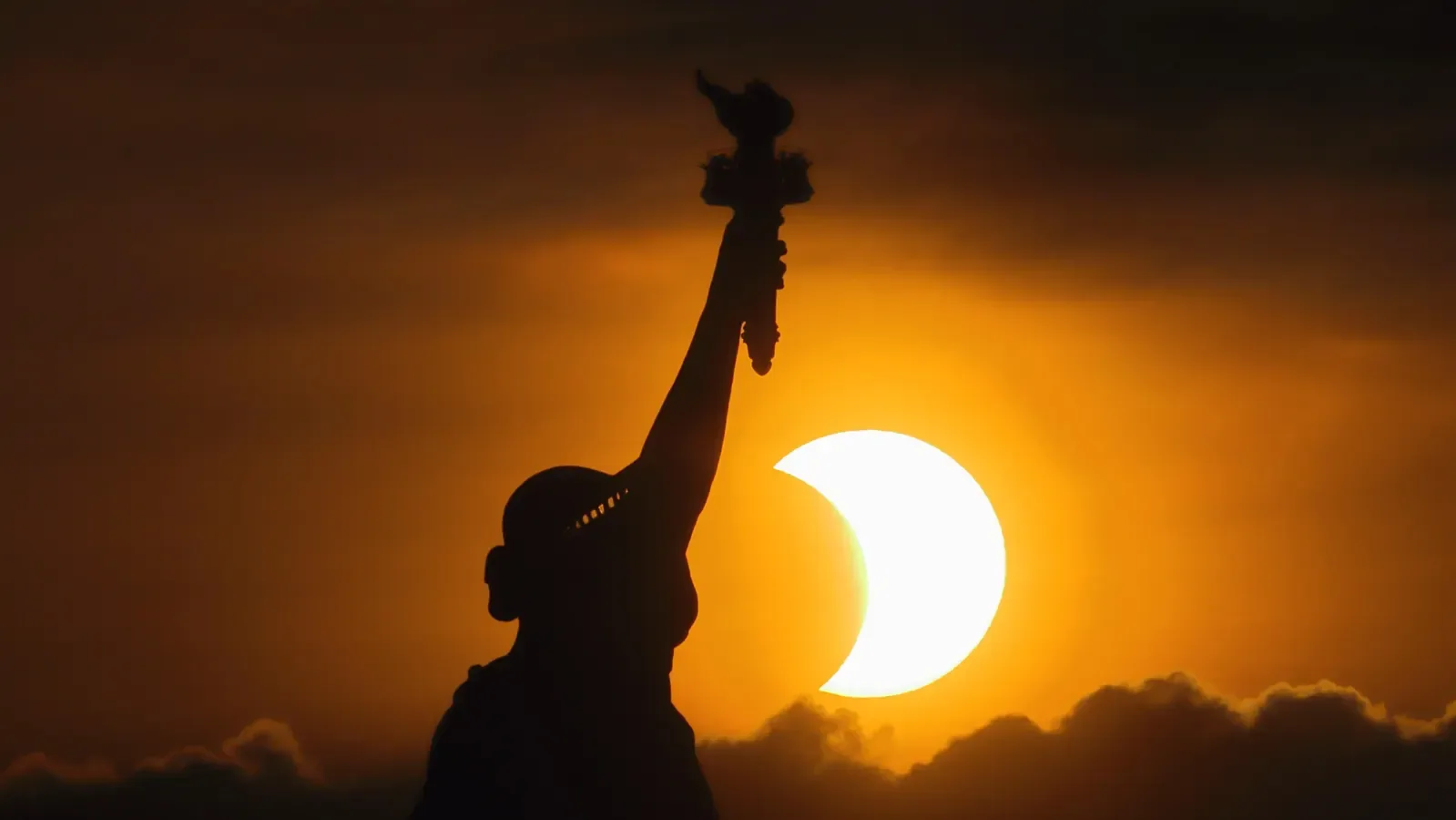
Millions of Americans will have the opportunity to observe a rare celestial double-header on August 12 and into the early morning hours of August 13. While Europe will experience a total solar eclipse, the United States will instead witness a partial solar eclipse alongside the annual Perseid meteor shower. This unusual back-to-back event, occurring under favorable weather conditions and a nearly moonless night, is anticipated to be one of the most memorable astronomy events of 2026.
The partial solar eclipse will be visible in twenty-six U.S. states, with the most significant coverage occurring in Alaska and northern Maine. For most observers, the eclipse will appear as a modest event, with the moon obscuring only a small portion of the sun. However, areas in Alaska, Maine, Vermont, New Hampshire, Massachusetts, Rhode Island, Connecticut, and parts of New York can expect to see at least a 10% eclipse, visible with proper eye protection. Fairbanks, Alaska, is projected to have the deepest view at 37% coverage around 8:27 a.m. AKDT, followed by Presque Isle, Maine, with 28% coverage at 1:50 p.m. EDT. New York City is situated on the boundary, with approximately 10% coverage expected.
Dark Skies Enhance Meteor Shower Spectacle
Following the daytime eclipse, the night sky will host the peak of the Perseid meteor shower. Coinciding with a new moon, the darkness will be ideal for viewing, minimizing light pollution's interference. Under optimal, dark sky conditions, observers can expect to see between 60 to 100 meteors per hour, including brilliant fireballs. The shower's activity will increase after midnight on August 12, reaching its zenith before dawn on August 13 as the constellation Perseus rises in the northeastern sky. Although meteors appear to emanate from Perseus, they can streak across any part of the sky.
These celestial streaks are caused by tiny debris fragments from Comet 109P/Swift-Tuttle burning up in Earth's atmosphere at approximately 37 miles per second, according to the American Meteor Society. To best enjoy the Perseids, experts recommend allowing your eyes 20 to 30 minutes to adjust to the darkness and observing with the naked eye after midnight. The Perseid meteor shower, a reliable annual event, is expected to be particularly spectacular this year due to the absence of moonlight.
While the partial solar eclipse may not rival the dramatic total eclipses seen in 2017 or 2024, it offers a distinct opportunity to witness the moon's passage across the sun. The best locations in the U.S. for experiencing both the eclipse and the meteor shower are rural areas in New England and upstate New York. These regions, often characterized by lower light pollution, provide darker skies essential for appreciating the full spectacle of the Perseids. Finding a certified Dark Sky Place or a location identified on light pollution maps can significantly enhance the viewing experience.
Safety is paramount for observing the solar eclipse. All individuals must use ISO 12312-2 certified eclipse glasses during every phase of the partial solar eclipse. Looking directly at the sun without proper protection, even through cameras, binoculars, or telescopes, can cause permanent eye damage. Specially designed solar filters are required for any optical instruments used to view the sun.