
50 Years Since Viking 1's Historic Mars Landing
NASA's Viking 1 lander touched down on Mars 50 years ago on July 20, 1976, marking a monumental achievement in space exploration. The mission provided unprecedented data and images of the Red Planet.

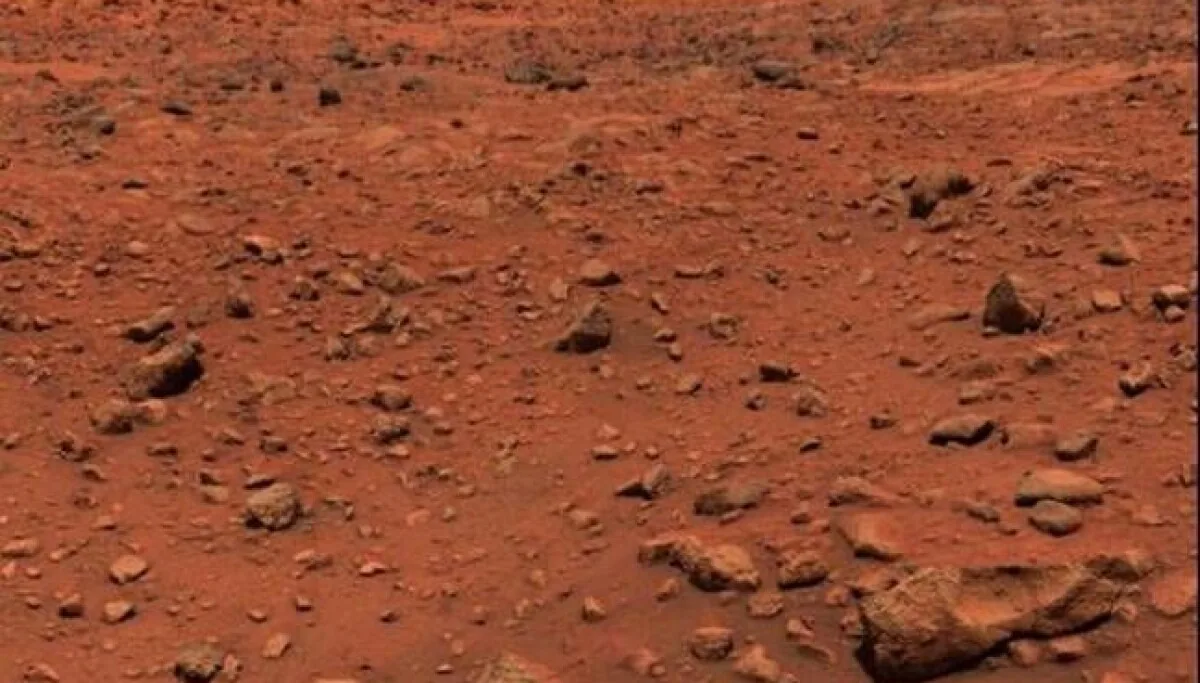
Fifty years ago, on July 20, 1976, NASA's Viking 1 lander successfully touched down on the surface of Mars in the vast plains of Chryse Planitia. This historic landing, part of one of the most expensive robotic missions ever undertaken by the U.S. space agency, represented a significant leap in humanity's quest to understand the Red Planet. Launched on August 20, 1975, Viking 1 arrived in Martian orbit in June 1976, preceding its landing by just over a month.
The Viking program comprised two spacecraft, each with an orbiter and a lander. While the orbiter component of Viking 1 ceased operations on August 7, 1976, due to depleted attitude control gas, the lander became the mission's enduring legacy. Initially, mission planners had aimed for a July 4, 1976, landing to coincide with the U.S. Bicentennial. However, a closer examination of the potential landing site prompted a delay to July 20, the seventh anniversary of the Apollo 11 lunar landing, in favor of a safer destination.
Equipped with an ablative heat shield to endure atmospheric entry and parachutes for initial deceleration, the Viking 1 lander utilized retro-rockets for a gentle touchdown. Upon arrival, it deployed a robotic arm to collect Martian soil samples, which were then analyzed by an onboard biological laboratory. Although NASA's official stance concluded that no definitive signs of life were detected, the mission's findings sparked decades of scientific debate. The experiments reported "unexpected and enigmatic chemical activity" but offered no clear evidence of extant microbial life.
Beyond its biological investigations, the lander was outfitted with sophisticated cameras that captured stunning vistas of the Martian landscape. These images, along with data relayed through the Viking 1 orbiter and direct transmissions to Earth, formed a crucial part of the mission's scientific return. Powering the lander for its extended operations was a Radioisotope Thermoelectric Generator (RTG), which harnessed heat from the decay of plutonium-238 to produce electricity. This robust power source allowed the lander to operate far beyond its intended 90-day primary mission, transmitting its final message on November 11, 1982.
An Unintended End to a Groundbreaking Mission
The mission's remarkable longevity was ultimately cut short by an error made during attempts to prolong the life of its batteries. In January 1982, three of Viking 1's four nickel-cadmium batteries showed signs of wear. Engineers initiated a deep-discharge conditioning process to restore their performance, achieving only temporary success. A subsequent approach involved modifying the battery charging sequence to reduce frequency and duration, based on achieving a specific voltage rather than a set discharge time.
This revised sequence was uploaded on November 19, 1982. Tragically, the new instructions overwrote critical memory locations containing the high-gain antenna's pointing parameters. The lander’s antenna consequently lost its alignment with Earth, and the anticipated data downlink never arrived. A spacecraft emergency was declared the following day, November 20, 1982. Despite four months of attempts to re-establish contact, all efforts proved futile, and the Viking Lander Monitor Mission was officially terminated in March 1983. Although the Soviet Union's Mars 3 lander achieved the first soft landing on Mars in 1971, its operational life was merely 20 seconds. In contrast, the Viking 1 lander's years of service and the wealth of data it returned cemented its status as a landmark achievement in the history of space exploration, especially coming just seven years after the first crewed lunar landing.