
Webb Telescope Captures Star Birth in Cosmic 'Cauldron'
The James Webb Space Telescope has revealed a stunning image of a stellar nursery, nicknamed a 'cosmic cauldron,' where new stars are actively forming. The picture showcases intricate details of gas and dust.

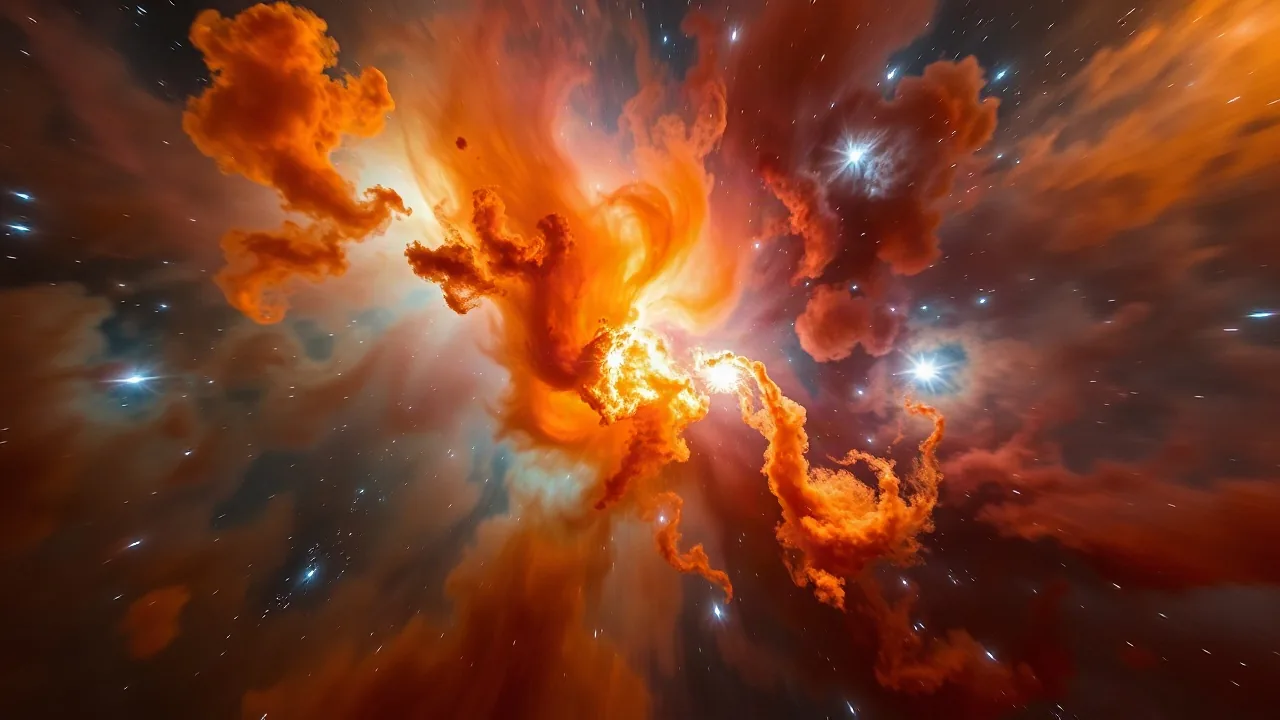
The James Webb Space Telescope (JWST) has captured a breathtaking image of a stellar nursery, an area where new stars are being born, which astronomers have dubbed a "cosmic cauldron." This celestial phenomenon, located in a distant corner of the universe, showcases the turbulent and intricate process of star formation in unprecedented detail. The image, released on October 26, 2026, highlights the vibrant interplay of gas and dust coalescing to ignite new suns.
The specific region observed by Webb is part of a larger nebulosity, characterized by swirling clouds of interstellar gas and dust. Within these clouds, pockets of denser material are collapsing under their own gravity, heating up and eventually igniting nuclear fusion – the process that powers stars. Webb's infrared capabilities allow it to peer through the obscuring dust, revealing the young, nascent stars at various stages of their development.
Stellar Nursery Dynamics Revealed
This particular observation is significant because it provides astronomers with a clear view of the dynamic environment surrounding newly formed stars. These young stars emit powerful jets and winds that sculpt the surrounding gas and dust, influencing the formation of subsequent stars and planetary systems. The "cauldron" effect is created by the intense radiation and stellar winds from massive, young stars carving out cavities within the molecular cloud, while simultaneously triggering further star birth in denser regions at the edges.
Dr. Evelyn Reed, an astrophysicist at the Space Telescope Science Institute, commented on the findings. "What makes this image so remarkable is the clarity with which we can see the feedback mechanisms at play," Reed said. "These young stars aren't just passively existing; they are actively shaping their cosmic environment. It's a snapshot of a crucial phase in the life cycle of stars and planetary systems."
The detailed imaging from the James Webb Space Telescope allows scientists to study the chemical composition of the gas and dust, providing clues about the building blocks available for planet formation. Understanding these processes is fundamental to comprehending our own solar system's origins and the potential for life elsewhere in the galaxy. The intricate structures and filaments seen in the image are testament to the complex physics governing star formation.
Previous observations of similar stellar nurseries have provided valuable data, but Webb's superior resolution and sensitivity offer a leap forward in our understanding. The telescope's ability to detect infrared light is crucial, as much of the star formation process occurs behind thick veils of dust that visible light cannot penetrate. This allows astronomers to witness the earliest, most obscured stages of stellar birth.
The data collected from this "cosmic cauldron" will be analyzed by researchers worldwide, contributing to a more comprehensive model of galactic evolution. The ongoing mission of the Webb Telescope continues to redefine our view of the cosmos, pushing the boundaries of astronomical discovery and revealing the universe's most profound secrets, including the birthplaces of stars and the potential origins of planetary systems akin to our own. These insights are vital for ongoing research in astronomy and cosmology.