
Yellowstone Supervolcano Eruption: Scientists Detail Global Catastrophe
A hypothetical eruption of the Yellowstone supervolcano could lead to widespread devastation, causing over a billion premature deaths and global climate disruption, according to new scientific modeling.

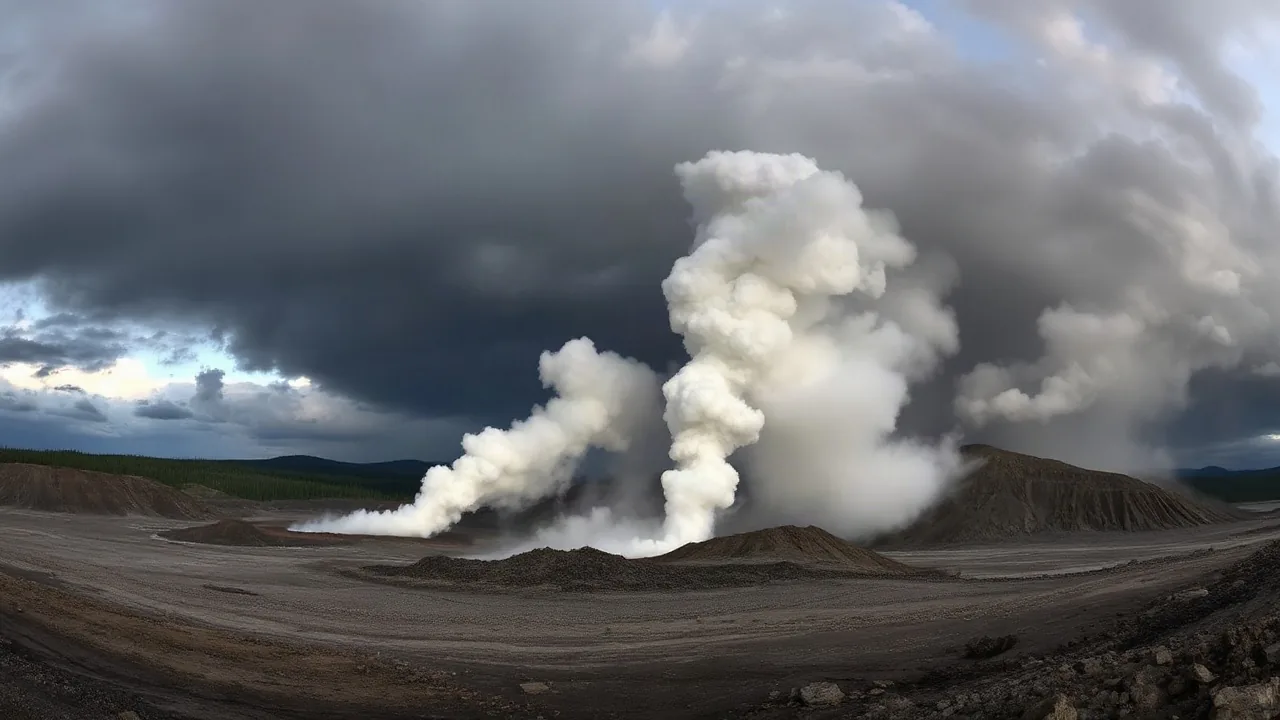
A catastrophic eruption of the Yellowstone supervolcano, though statistically improbable in our lifetimes, could unleash a chain of events leading to the premature deaths of an estimated 1.3 billion people and trigger a global volcanic winter, scientists have detailed in a new analysis. The geological event, if it occurred, would dramatically reshape the planet's climate and infrastructure, impacting every corner of the globe.
The study, published by researchers at the University of Southern California, models the cascading effects of a supervolcano event, which is defined by the U.S. Geological Survey as an eruption with a magnitude of 8 on the Volcanic Explosivity Index, ejecting more than 1,000 cubic kilometers of material. Such an event at Yellowstone, a caldera nearly 40 miles wide, would be unprecedented in recorded human history.
The immediate aftermath of a Yellowstone supervolcano eruption would involve pyroclastic flows and ashfall covering vast swathes of North America. States like Wyoming, Montana, and Idaho would face utter destruction, with ash deposits potentially reaching hundreds of feet thick. In the continental United States, an estimated 87% of the population would perish within the first year due to direct impacts, starvation, and the collapse of essential services. This staggering figure is a core component of the 1.3 billion global premature death projection, according to lead researcher Dr. Anya Sharma.
"The sheer scale of ash deposition would be unlike anything modern civilization has ever contended with," Dr. Sharma stated in a press conference. "It would cripple transportation, agriculture, and power grids across the continent, leading to widespread societal breakdown."
Global Climate Collapse
Beyond the initial devastation in North America, the eruption's most significant long-term impact would be on global climate. The massive release of sulfur dioxide and other volcanic gases into the stratosphere would block incoming solar radiation, leading to a rapid and severe drop in global temperatures. This phenomenon, known as a volcanic winter, could plunge the planet into prolonged cold, potentially lasting for decades. Average global temperatures could fall by as much as 10 to 20 degrees Celsius, severely impacting crop yields and making large regions uninhabitable.
The consequences for global food security would be dire. With widespread crop failures due to the cold, lack of sunlight, and ash contamination, widespread famine would ensue. This is a primary driver behind the projected 1.3 billion premature deaths, as malnutrition and starvation would claim far more lives than the initial volcanic event itself.
International cooperation and disaster response would be tested to their limits. The interconnected nature of global supply chains means that even regions far from Yellowstone would experience severe shortages of food, medicine, and essential resources. The economic fallout would be unprecedented, potentially leading to a global depression far exceeding any previously recorded.
While the probability of a Yellowstone supervolcano eruption occurring in any given year is extremely low, estimated to be about 1 in 730,000, the potential consequences underscore the importance of understanding and preparing for such extreme geological events. The study's findings serve as a stark reminder of Earth's powerful natural forces and the fragility of human civilization in their face.