
AI Revolutionizes Internet Search, Social Media, and Shopping in 2026
Artificial intelligence is reshaping how Americans search online, interact on social media, and shop. Major tech companies are integrating AI into core services, leading to significant changes in user behavior and digital content.

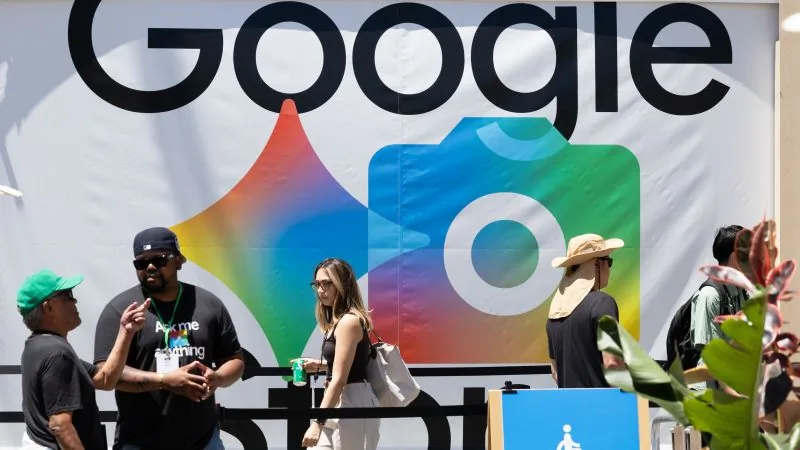
Google is overhauling its decades-old search engine to meet a surge in complex user queries, a shift driven by artificial intelligence. Robby Stein, vice president of product for Google Search, told CNN that people are now posing longer, more intricate questions that often lack straightforward answers online. In response, Google is introducing a feature that generates custom visuals, interactive graphics, and even mini-applications directly on its search page by synthesizing information from across the web. This innovation, unveiled at the company's annual conference, is part of a broader trend demonstrating how AI is transforming search, social media, online shopping, and beyond.
Users are increasingly opting for more specific search terms instead of generic keywords, a trend accelerated by the widespread adoption of AI chatbots like ChatGPT. The rise of AI-generated influencers on social media platforms and the growing use of AI for product comparisons and purchasing decisions highlight AI's pervasive influence. Despite mounting concerns about job displacement, data privacy, and environmental impact, avoiding AI in daily internet use is becoming increasingly difficult. "After a while, it just becomes part of the way you live," noted Joseph Turow, a media professor at the University of Pennsylvania who studies AI's effect on internet advertising.
Google's search interface is undergoing its most significant upgrade in 25 years. The updated search bar expands to accommodate longer queries and integrates various media types, such as photos and files. This enhancement aims to streamline the user's search journey, enabling tasks like photo-based searches or seamlessly transitioning to Google's AI Mode for follow-up questions. Stein reported that searches initiated with photos or by circling elements on a phone screen have grown by 60% year-over-year. Searches within AI Mode, designed for conversational interactions, have more than doubled each quarter since its launch a year ago, with queries in this mode averaging three times the length of standard searches.
Data from Semrush, a prominent SEO and marketing firm, suggests a growing number of users are adapting their search habits to mimic interactions with chatbots. Searches exceeding 10 words have risen significantly, while conversational queries have surged from 5% to 20%, conversely, traditional keyword-style searches have seen a decline. However, the median query length remains at three words, indicating that many users still rely on conventional search methods. Robert Langenback, president of SEO marketing agency Eight Oh Two Marketing, has observed a shift towards searches ranging from five to 10 words, a trend that predates ChatGPT but has intensified since its release.
AI's Influence Beyond Search Engines
The impact of artificial intelligence extends far beyond search engine functionality. Virtual influencers like Aitana Lopez, who boasts nearly 400,000 Instagram followers with curated posts of events, fitness, and beauty tips, are gaining traction. These AI-generated personalities, alongside others like Lil' Miquela and Lu do Magalu, are captivating audiences. According to the social agency Billion Dollar Boy, approximately 80% of marketers have increased their investment in creator content utilizing generative AI over the past year. AI personalities appeal to brands due to their cost-effectiveness compared to human influencers and their adaptability for specific marketing campaigns, explained Professor Turow. Tech giants are actively integrating AI into social media platforms; Meta is embedding its Muse Spark model into applications like WhatsApp, Instagram, and Facebook, and experimenting with AI assistant side chats. Google recently unveiled Gemini Omni, a new AI model enabling the creation of realistic user avatars.
The retail sector is also experiencing a dramatic transformation driven by AI. Traffic to U.S. retail websites originating from AI services surged by 393% in the first quarter of 2026, according to Adobe. Major players like Meta, Amazon, Google, and OpenAI are rolling out AI-powered shopping tools. Google's new "universal" shopping cart allows users to aggregate items from various online retailers. Amazon has integrated its Rufus shopping assistant into a tool called Alexa for Shopping, enhancing its search bar with an AI helper capable of comparing products and historical pricing data. Despite these advancements, Stein emphasizes that high-quality, human-created websites remain essential. While Google continues to direct billions of clicks to websites daily, Pew Research data indicates a potential decline in user click-through rates for AI-summarized answers. Langenback notes that while some clients are seeing reduced traffic, the visitors they do receive exhibit higher engagement, often leading to purchases or service requests. "You just have to be ready to adapt, because (search) could look a lot different six months or a year from now," he advised.