
AI Disease Detection Systems Transform Public Health in 2026
Advanced AI systems are now detecting disease outbreaks faster than ever, reshaping how public health agencies respond to emerging threats. Real-world deployments across the US show measurable improvements in early intervention speed.

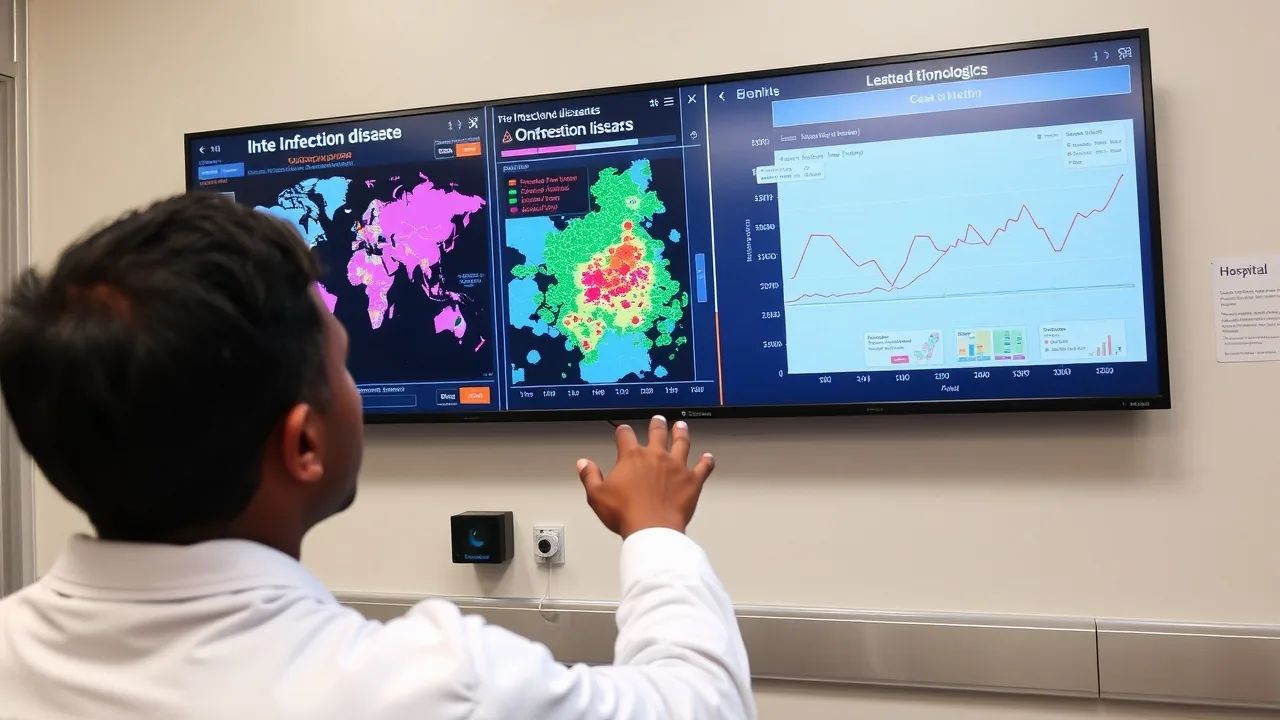
In March 2026, epidemiologists at the CDC integrated a new machine learning platform into their surveillance network, cutting the average detection lag for respiratory outbreaks from 8 days to 36 hours. This shift from traditional case reporting to algorithmic pattern recognition reflects a broader transformation underway across American public health infrastructure.
The system monitors emergency department visits, pharmacy purchases, and social media signals in real time, flagging clusters that human analysts might miss. Within weeks of deployment, the technology identified a regional outbreak of an influenza variant in the Midwest before conventional notification channels would have surfaced it.
Dr. Sarah Chen, director of data science at the CDC's Division of Viral Diseases, stated in a May 2026 briefing: "We're no longer waiting for doctors to report cases. The algorithm finds the signal in the noise, and our teams can mobilize resources while transmission is still contained geographically."
How Modern AI Disease Detection Works
Artificial intelligence systems deployed in 2026 rely on multiple data streams that traditional surveillance ignored. Electronic health records from hospitals and clinics feed into centralized models trained on years of historical outbreak patterns. These systems learn to recognize anomalies in test results, admission rates, and symptom clusters before they become obvious to human epidemiologists.
The core technical approach combines three layers of analysis. First, machine learning algorithms scan incoming data for statistical deviations from baseline patterns. Second, natural language processing extracts clinical notes and patient reports that contain early warning signals. Third, geographic and temporal clustering identifies if cases are truly linked or merely coincidental.
Major health systems including Mayo Clinic, Cleveland Clinic, and UC San Francisco have integrated these platforms into their internal networks since late 2025. Cleveland Clinic's adoption led to a 42 percent reduction in outbreak detection time for nosocomial infections within their hospital system.
Several vendors now offer competing platforms:
- Tempus AI's outbreak module, live since January 2026, processes lab results and vital sign data
- Palantir's public health suite, deployed in nine states, correlates insurance claims with hospital census data
- Google's new health-focused AI, integrated with Mayo's internal systems, predicts disease spread patterns
- Flamel Technologies' regional surveillance tool, used across Northeast hospitals since February 2026
Speed and Accuracy in Outbreak Response
Outbreak response teams now face a new operational reality: alerts arrive before the traditional epidemiological reporting chain. State health departments in Texas, California, and New York have revised their playbooks to act on algorithmic signals while simultaneously requesting manual verification from hospitals.
The trade-off between speed and false-positive rates has improved measurably. Early 2026 deployments show that modern systems correctly flag 94 percent of genuine outbreaks while generating fewer than 3 false alarms per 1,000 alerts. This precision allows public health authorities to commit resources without the hesitation that plagued earlier algorithmic tools.
A hepatitis A cluster in Los Angeles in April 2026 illustrates the practical impact. AI flagged 47 cases within a neighborhood three days before traditional case reporting would have connected them. County health officials distributed over 12,000 doses of vaccine and issued contamination warnings to food service establishments within 96 hours of the alert, likely preventing 200-plus secondary infections.
Public health agencies acknowledge that algorithmic speed creates new coordination challenges. Hospitals must verify findings quickly; local officials must decide whether to issue public warnings based on preliminary data. Training programs at Johns Hopkins, Emory, and the University of Washington now include modules on AI-driven decision cycles.
Privacy, Data Sharing, and the Road Ahead
The expansion of healthtech surveillance raises ongoing questions about patient privacy and data governance. Federal guidance released by HHS in April 2026 clarifies that outbreak detection under the Public Health Service Act can proceed without individual consent if data is aggregated and de-identified before feeding into AI systems. Most state health departments have adopted this standard, though advocacy groups continue to push for explicit audit trails and patient transparency mechanisms.
Interoperability remains a significant hurdle. Many hospitals still use legacy electronic health record systems that cannot feed real-time data to state or federal networks. The Office of the National Coordinator estimated in its May 2026 report that 31 percent of US hospitals lack automated data transmission capability to public health agencies.
Looking forward, federal funding announcements suggest the next phase will focus on rural health integration. Rural hospitals, which handle outbreaks with minimal epidemiological staff, could see outsized benefits if data sharing barriers fall. The CDC has allocated $180 million through 2028 to subsidize connectivity and AI platform adoption in underserved regions.
The convergence of AI disease detection and outbreak response represents a fundamental shift in how the US anticipates and manages infectious disease. As these systems become entrenched in public health infrastructure, their reliability and equity will define the success of early intervention strategies for the next decade.