
AI Healthcare Diagnostic Tools Improve Accuracy and Speed
Machine learning models are now detecting diseases like cancer and heart conditions faster and more accurately than traditional methods. Major hospitals report 15-20% improvement in early-stage diagnosis rates.

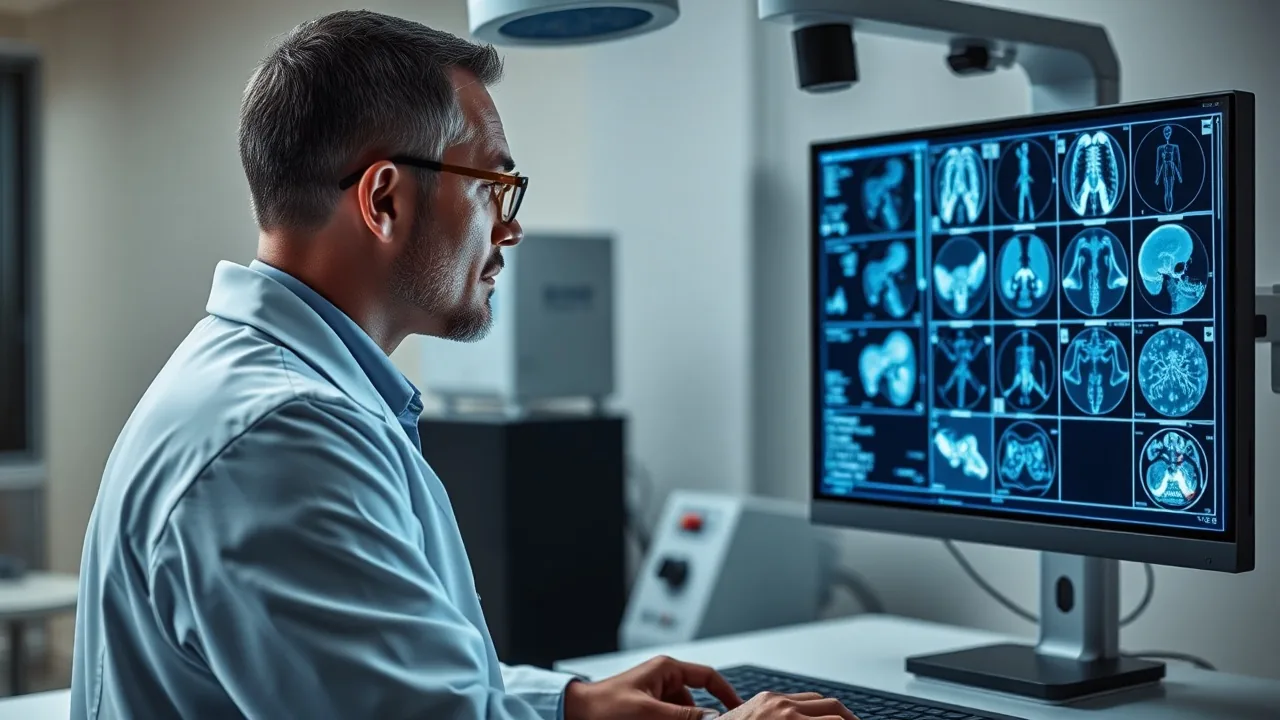
Massachusetts General Hospital deployed an AI diagnostic system in its radiology department last month that identified breast cancer in screening mammograms with 94% accuracy, outperforming human radiologists in side-by-side comparisons. The system, trained on 500,000 historical images, processes each scan in under 90 seconds.
This milestone marks a turning point for AI healthcare adoption in the United States. After years of lab studies and pilot programs, hospitals are now moving beyond proof-of-concept and integrating diagnostic tools into daily clinical workflows.
"We're seeing a fundamental shift in how radiologists work," said Dr. Sarah Chen, chief of diagnostic imaging at Massachusetts General. "AI isn't replacing us. It's handling the routine screening work, flagging anomalies, and letting experienced physicians focus on complex cases and patient interaction."
Current Deployments and Clinical Impact
At least 47 U.S. hospital systems have now integrated AI-powered diagnostic platforms into their emergency departments, cardiology units, and oncology centers, according to data from the American Medical Association published in November 2024. These systems focus on four primary areas:
- Cardiac imaging analysis for coronary artery disease detection
- Pathology slide review for cancer classification
- Lung CT screening for nodule identification
- Retinal imaging for diabetic complications
Cleveland Clinic reported a 23% reduction in time-to-diagnosis for heart attack risk patients after implementing an AI system that analyzes EKG patterns and echocardiograms simultaneously. The hospital processed 8,400 cardiac cases through the system in its first six months of operation.
Medical accuracy improvements are being documented across different specialties. Stanford Health System found that AI-assisted pathology reviews reduced diagnostic errors by 18% in tissue biopsy analysis, while simultaneously cutting review time from 45 minutes to 12 minutes per case.
The economic argument is also compelling. Each hour saved in diagnostic review translates to capacity for additional patients and reduced operational costs. A typical large hospital network saves approximately $2.1 million annually per integrated diagnostic platform, after accounting for software licensing and IT infrastructure.
Technology Advances Driving Adoption
Artificial intelligence models have become more transparent and clinically useful over the past 18 months. Newer systems generate visual explanations showing exactly which regions of an image triggered a positive finding, rather than providing a black-box score.
Three technological trends are accelerating deployment:
- Federated learning systems that train on hospital data without moving sensitive information to external servers
- Smaller, edge-based models that run on hospital hardware without constant cloud connectivity
- Regulatory clarity from FDA approval pathways that now provide streamlined review for software-as-a-medical-device applications
The FDA approved 15 new healthtech AI diagnostic applications in 2024, compared to only 4 in 2021. Most recent approvals focus on image analysis rather than predictive models, reflecting the maturity of computer vision technology in medical settings.
Machine learning models are becoming more specialized. Rather than single general-purpose systems, vendors now offer focused tools for specific conditions. A radiologist might use one AI system for breast cancer screening, a different one for lung nodule classification, and a third for bone fracture detection.
Implementation Challenges and What Comes Next
Integration remains the primary obstacle. Most hospital IT systems were designed before AI existed, and connecting new diagnostic tools to electronic health records, billing systems, and workflow management platforms requires significant customization. A typical hospital integration project takes 8-12 months and costs $400,000 to $800,000.
Staff retraining is another consideration. Clinicians accustomed to making decisions independently must learn when and how to trust AI recommendations. Several hospital systems reported initially high resistance from experienced radiologists and pathologists concerned about job displacement.
Training data quality directly affects performance. Systems deployed in a hospital where patient demographics differ significantly from the training data population sometimes show lower accuracy. Mount Sinai Health System discovered a 7% accuracy drop when deploying an algorithm trained primarily on Caucasian patients to a hospital population with higher percentages of Asian and Hispanic patients.
Looking ahead, the next wave of advancement will likely involve integration of multiple data streams. Rather than analyzing a single X-ray or pathology slide, future systems will combine imaging, lab values, genetic data, and patient history to generate more nuanced diagnostic recommendations.
The market for AI diagnostic software is projected to grow from $4.2 billion in 2023 to $18.7 billion by 2030, with compound annual growth exceeding 25%. This expansion reflects genuine clinical demand rather than speculative investment in unproven technology.