
Google's Gemini Agent: The AI Digital Partner Available 24/7
Google is advancing its Gemini agent to function as a persistent digital partner capable of handling complex tasks around the clock. The system represents a significant step toward autonomous AI assistants that can manage workflows without constant human direction.

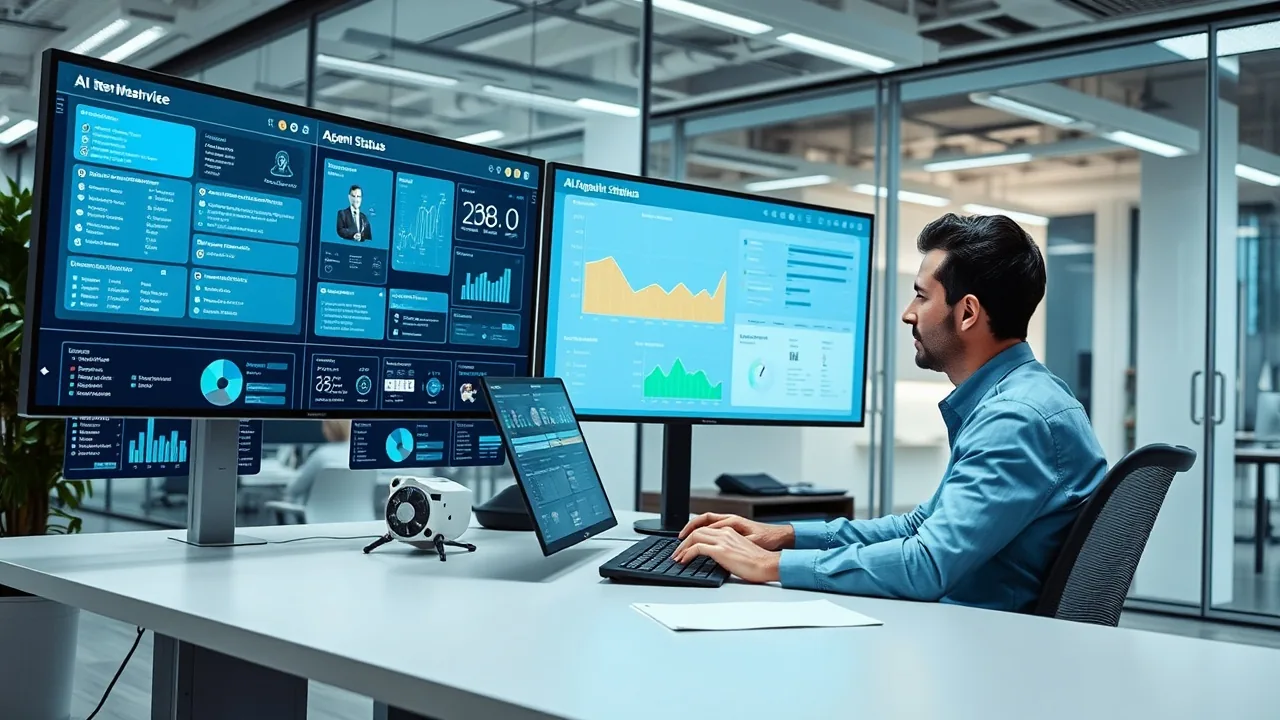
Google has begun preparing an advanced version of its Gemini agent designed to serve as a 24/7 digital partner, marking a substantial evolution in how the company approaches autonomous artificial intelligence. Unlike earlier chatbot iterations that respond only when prompted, this new Gemini agent is being built to operate continuously, proactively managing tasks and workflows on behalf of users across multiple domains.
The initiative reflects a broader industry shift toward AI assistants that function less like question-answering tools and more like delegated workers. Sources familiar with Google's roadmap indicate the system will be capable of initiating actions, monitoring progress on assignments, and adapting its behavior based on user patterns and preferences without requiring explicit instructions for each task.
Sundar Pichai, Google's CEO, has emphasized in recent statements that the company views autonomous agent capabilities as central to the next phase of artificial intelligence development. "The future of AI is not just answering questions," Pichai noted in a company earnings call, "but proactively helping people accomplish their goals."
Technical Architecture and Core Capabilities
The Gemini agent system builds on the foundation of Google's existing Google AI infrastructure, which has been refined through years of large language model research. The agent layer adds orchestration and memory systems that allow the model to track multiple parallel workflows and maintain context over extended periods.
Key architectural components include:
- Persistent context windows that retain user history and preferences across sessions
- Task decomposition modules that break complex requests into executable sub-steps
- Integration frameworks connecting to external APIs and productivity tools
- Error recovery systems that identify failures and attempt alternative approaches
- Resource management layers that optimize computational costs during idle periods
The system is designed to operate within enterprise and consumer environments, adapting its behavior based on the context in which it is deployed. Google's engineering teams have prioritized safety guardrails, ensuring the agent does not execute unintended actions or access restricted information without proper authorization.
Testing phases have focused on workflows common to knowledge work: email triage, calendar management, document preparation, and cross-platform data synthesis. Early internal evaluations show the agent can reduce time spent on routine administrative tasks by an estimated 35-40 percent when given appropriate permissions and well-defined objectives.
Competitive Landscape and Industry Impact
The advancement places Google in direct competition with OpenAI's agent initiatives and other artificial intelligence vendors developing autonomous systems. OpenAI has been exploring similar persistent agent architectures through its API partnerships, while Microsoft has integrated agent-like capabilities into its Copilot suite.
Analysts at Gartner estimate that by 2027, autonomous AI agents will handle 15-20 percent of routine enterprise processes, up from less than 2 percent today. The Gemini agent's 24/7 availability model could accelerate that timeline if adoption gains momentum across Google's user base.
"Google has invested heavily in foundational model quality, which gives them a structural advantage in agent deployment," said Dr. Elena Vasquez, senior analyst at Forrester Research. "The challenge will be user trust and managing expectations around what an always-on agent should and should not do."
Enterprises are showing cautious interest. Companies in financial services, healthcare, and software development have requested pilot programs, though deployment timelines remain uncertain pending regulatory clarity around AI liability and data residency requirements.
Practical Use Cases and User Experience
Google has outlined preliminary use cases demonstrating the agent's scope. In customer support contexts, the agent can field incoming inquiries, research solutions within a knowledge base, and escalate complex issues to human representatives while maintaining conversation continuity.
For content creation workflows, the agent can gather research materials, draft outlines, suggest revisions based on brand guidelines, and schedule publication across multiple platforms. The system learns user preferences over time, refining its recommendations and flagging content that deviates from established patterns.
Product teams are testing the agent in code review and debugging scenarios, where it monitors repositories, identifies potential issues, and suggests fixes or opens pull requests for developer approval. These capabilities remain limited compared to human expertise, but they reduce context-switching and free developers to focus on higher-level architectural decisions.
Privacy and data handling remain central concerns. Users retain full visibility and control over agent actions through detailed logs and permission hierarchies. The agent operates within strict boundaries defined by administrators, refusing requests that exceed its authorized scope.
Rollout timelines have not been officially announced, though sources indicate Google plans beta availability for select enterprise customers in the second half of 2025. Consumer availability through Google Workspace and other platforms may follow later, dependent on product refinement and regulatory approval.
The development of persistent digital partner systems like Gemini represents a fundamental shift in how people interact with technology. Rather than treating AI as a tool to query on demand, users will delegate ongoing responsibilities to systems that work autonomously within defined parameters, fundamentally changing workflows and human-computer collaboration patterns.