
AI Agents Gain Dreaming and Orchestration Capabilities
Anthropic's latest Claude upgrades enable AI agents to simulate outcomes and coordinate complex tasks autonomously. The advances mark a shift toward more independent, reasoning-capable systems.

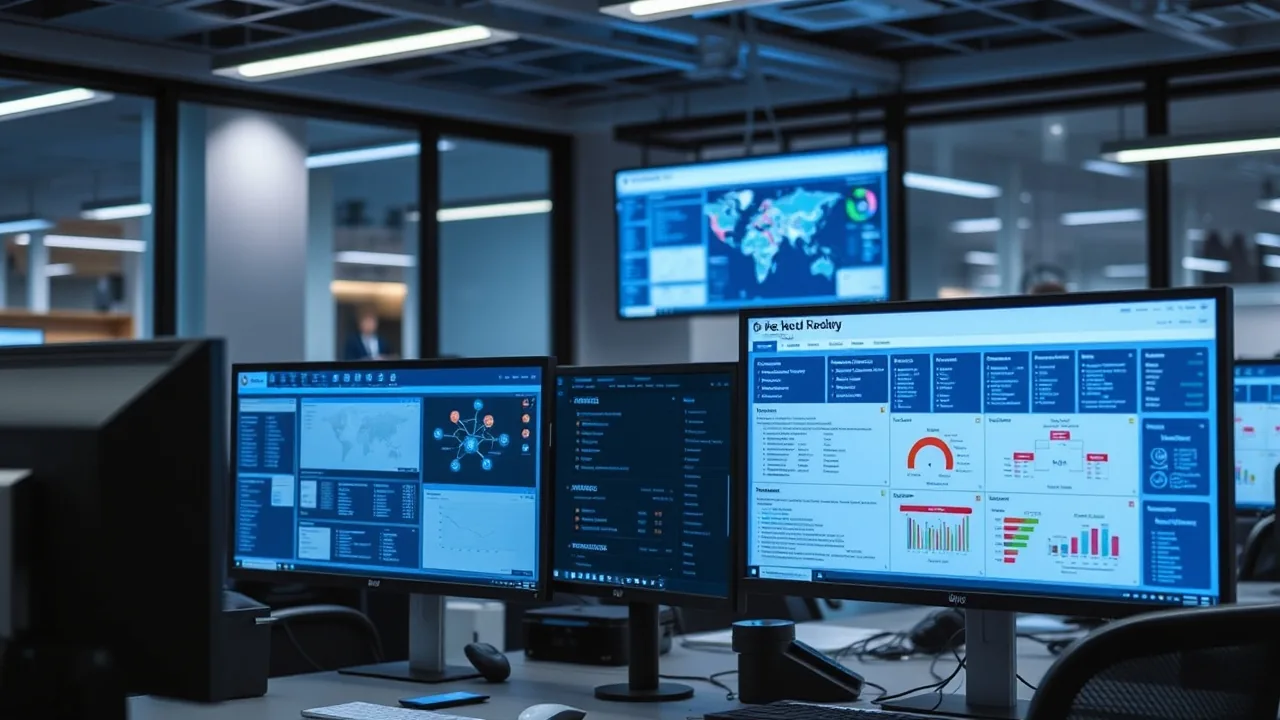
Anthropic announced significant enhancements to Claude AI agents this week, introducing three core capabilities that push autonomous systems toward more sophisticated decision-making and task management. The updates center on what the company calls "dreaming," outcome prediction, and orchestration - features designed to let agents reason through problems, anticipate results, and coordinate multiple workflows without constant human oversight.
The dreaming capability allows agents to simulate scenarios internally before acting. Rather than jumping directly to a solution, Claude agents can now engage in extended reasoning about potential paths forward, similar to how humans mentally rehearse before committing to action. This mirrors recent advances in deep learning systems that benefit from test-time computation and reflection.
"What we're seeing is a fundamental shift in how agents approach uncertainty," said Dario Amodei, CEO of Anthropic, in a statement accompanying the release. "By enabling agents to explore possibilities before committing to decisions, we're creating systems that fail less often and adapt faster to novel situations."
Outcome Prediction and Real-World Orchestration
The second pillar of the update addresses outcome forecasting. Agents can now estimate likely consequences of their actions before execution, allowing them to evaluate options and select strategies with higher confidence. This capability reduces costly errors in production environments where trial-and-error approaches carry real financial or safety costs.
Orchestration ties these together. AI agents increasingly operate in multi-system environments where a single task requires coordination across APIs, databases, and external services. Anthropic's orchestration layer lets agents delegate sub-tasks, manage dependencies, and reassemble results into coherent outputs. An agent might break down "generate and deliver a quarterly report" into separate steps: gather data from five internal systems, validate accuracy, apply formatting rules, and schedule delivery - all coordinated automatically.
The practical impact surfaces immediately in enterprise use cases. Financial firms report agents using orchestration to audit transactions across multiple ledgers. Healthcare organizations deploy orchestrated agents for patient record consolidation. Customer service teams use them to resolve tickets by coordinating responses from billing, technical support, and compliance departments.
Why Autonomy Matters Now
These advances arrive amid broader industry momentum toward AI autonomy. Unlike previous generations of artificial intelligence that operated in narrow, supervised contexts, today's systems show capability across open-ended domains. Yet autonomy without reasoning remains risky. The dreaming and outcome prediction features address this directly by building in safety through simulation and foresight.
Industry analysts view the shift as essential for scaling AI impact. "Every autonomous system faces a moment where it must act despite incomplete information," noted Kate Crawford, Senior Principal Researcher at Microsoft Research, in comments during a recent AI governance panel. "The question isn't whether agents will operate independently - they already do. The question is whether they reason well before acting. Anthropic's update suggests they're taking that seriously."
Competitors are moving in parallel directions. OpenAI's o1 model introduced extended reasoning chains. Google DeepMind published research on multi-agent coordination. Yet Anthropic's focus on bundling these capabilities specifically into agent workflows rather than just foundation models distinguishes the approach - agents become the deployment unit, not just prompts passed to generic models.
The technical implementation relies on Claude's 3.7 architecture, enhanced with what Anthropic terms "outcome simulation tokens." During the reasoning phase, agents allocate compute to exploring potential states without physical action. Once committed to a plan, execution becomes deterministic and auditable. This design allows human operators to review agent reasoning before critical actions.
Adoption metrics already signal traction. Anthropic reports that organizations using Claude agents increased task completion rates by 34% on average after deploying dreaming capabilities in pilot programs. Fortune 500 companies in insurance, logistics, and pharmaceuticals account for roughly half of current enterprise deployments.
The road ahead involves deeper integration of machine learning feedback loops. Agents will learn from outcomes, refining their simulation models over time. This creates a virtuous cycle where agents that predict accurately get better at planning. Early testing shows agents improve outcome prediction accuracy by 8-12% monthly during the first quarter of deployment.
Security and compliance remain central concerns. Orchestrated agents with broad autonomy require robust audit trails and killswitches. Anthropic built constitutional AI constraints directly into the agent architecture - agents assess actions against a codified set of principles before execution. This constraint layer operates independently of the main reasoning system, ensuring critical safeguards remain active even if the agent's planning logic becomes corrupted or misaligned.
The broader implications point toward a future where knowledge workers offload routine coordination to agents while focusing on judgment calls. Rather than a person manually orchestrating handoffs between systems, agents handle the work. Rather than humans simulating scenarios mentally, agents explore possibilities computationally. The human role shifts toward oversight, exception handling, and strategic decisions that require lived experience or ethical judgment.
Anthropic's announcement this week signals confidence that these capabilities have moved from research to production maturity. The company is targeting general availability in the second quarter, with early access opening immediately to enterprise customers. The future of AI workplaces looks less like humans commanding AI and more like humans and AI systems reasoning together before acting.