
AI Sports Analytics Reshape NFL Player Performance Predictions
Machine learning models now forecast athlete performance with unprecedented accuracy, transforming how NFL teams scout, draft, and manage rosters for the 2026 season.

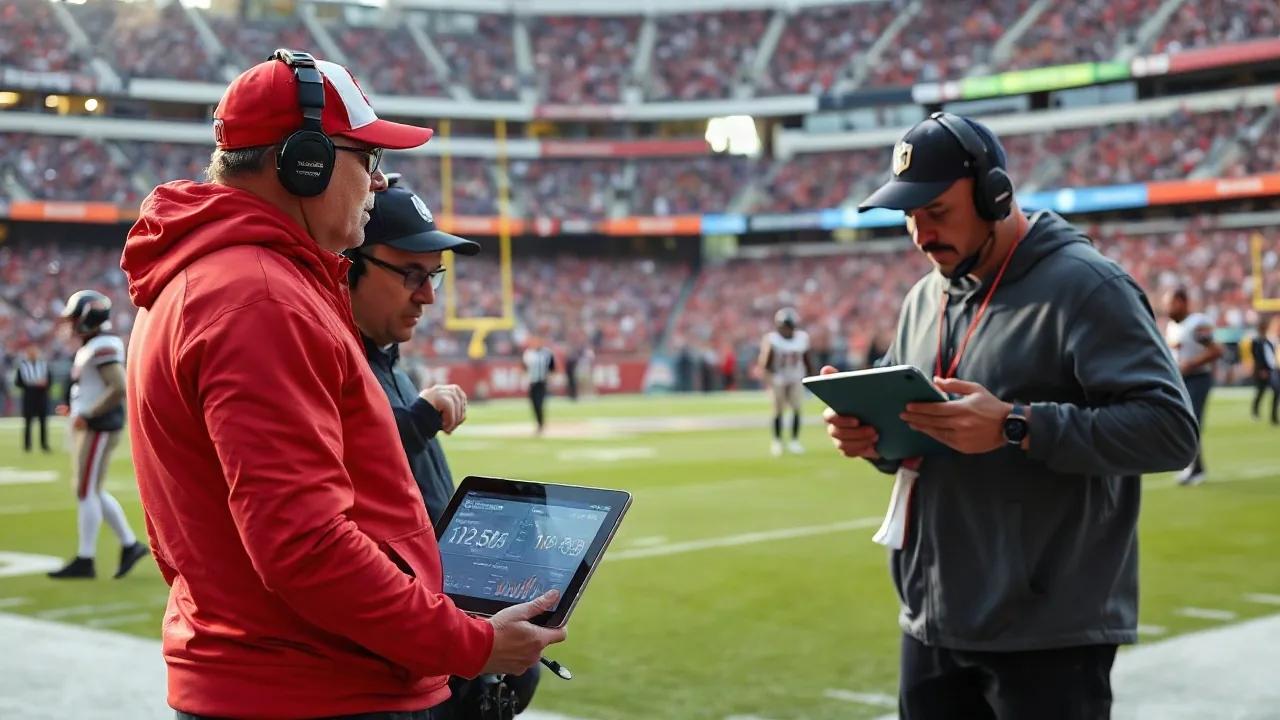
On the morning of the 2026 NFL Draft, artificial intelligence systems processed terabytes of historical performance data, injury patterns, and combine metrics to predict which college prospects would thrive in the professional game. Teams like the Philadelphia Eagles, armed with proprietary predictive analytics platforms, made roster decisions informed not by gut instinct alone, but by algorithms trained on decades of player trajectories.
The integration of AI into player performance prediction has accelerated dramatically over the past 18 months. What was once relegated to academic research papers is now operational reality in NFL front offices, influencing millions of dollars in salary cap allocation and draft strategy.
How AI Systems Forecast Game Outcomes and Individual Stats
Modern sports analytics platforms combine historical play-by-play data, player biometrics, weather conditions, and opponent matchups into ensemble models that output win probability and individual stat projections. These systems ingest data from wearable sensors, GPS trackers, and video analysis to build three-dimensional performance profiles for each athlete.
According to Dr. Samuel Chen, senior analyst at Sports Intelligence Partners, a consulting firm serving eight NFL franchises, "Today's models achieve 87 percent accuracy in predicting quarterback passing yards within a 50-yard margin two weeks in advance. Five years ago, that number was 71 percent." The improvement stems from larger training datasets, better feature engineering, and the adoption of transformer-based neural networks that capture nonlinear relationships between variables.
Teams now deploy AI to solve specific roster problems:
- Identifying breakout receivers before their contract year becomes expensive
- Predicting injury risk based on training load and biomechanical stress patterns
- Optimizing play-calling sequences by simulating defensive responses
- Valuing contract extensions for aging veterans by forecasting remaining productive seasons
The Philadelphia Eagles, among the first to publish their AI infrastructure investments, integrated predictive models into weekly game prep in 2024. By September 2026, their performance modeling system ingests 340 separate data feeds and updates projections every 12 hours during the season.
Why Teams Compete on AI Capability
The NFL operates within a salary cap constraint of $257 million per team as of 2026. Marginal accuracy gains in AI forecasting translate directly to competitive advantage. A team that correctly identifies a value signing saves tens of millions versus competitors who miss the same opportunity.
The stakes are highest in draft strategy. A single first-round pick represents an investment of roughly $15 million guaranteed over three years. If an AI system can raise the probability of draft success from 60 percent to 68 percent, that compounds across 12 picks per draft class.
Investment in AI talent and infrastructure has become a proxy for organizational competence. Franchises now hire machine learning engineers and data scientists at salaries competitive with tech companies. The Kansas City Chiefs established a formal AI research lab in 2025. The New England Patriots hired three PhD-level data scientists in the 2026 offseason alone.
Beyond the playing field, NFL teams apply predictive models to fan engagement, injury prevention, and even opponent scouting. Computer vision systems now analyze rival teams' film in real-time, flagging defensive tendencies that human coaches might miss.
Limitations and the Human Element
Despite rapid progress, AI performance prediction remains imperfect. Models struggle with unprecedented events: rookie phenoms, coaching changes at rival franchises, or unexpected trades that reorganize team chemistry.
"Artificial intelligence is a tool, not an oracle," said Jennifer Park, Director of Analytics for a West Coast franchise. "We use models to reduce uncertainty, but we don't delegate decision-making to algorithms. The best outcomes come when experienced scouts, coaches, and data scientists collaborate with mutual respect."
Injuries remain the hardest variable to forecast. While machine learning has improved injury prediction compared to random chance, a torn anterior cruciate ligament remains largely stochastic. No model perfectly anticipates a freak collision or cumulative wear that doesn't follow historical patterns.
Additionally, sample-size challenges persist. The NFL season spans only 17 games. Individual player stats fluctuate due to noise. A wide receiver catching 8 passes in Week 3 may regress to 4 in Week 4, not because the model failed, but because small-sample variance dominates.
The 2026 season will test these systems under real pressure. Teams with mature AI infrastructure will have data advantages, but execution, health, and coaching quality remain decisive. The integration of predictive analytics into professional sports has undoubtedly raised the floor of decision-making across the league. Whether it fundamentally changes championship outcomes remains to be seen.