
AI in Sports Predicts Spurs vs Jazz Game Outcomes
Machine learning algorithms now forecast NBA game results with increasing accuracy. The Spurs-Jazz matchup exemplifies how artificial intelligence is reshaping fan engagement and team strategy in 2026.

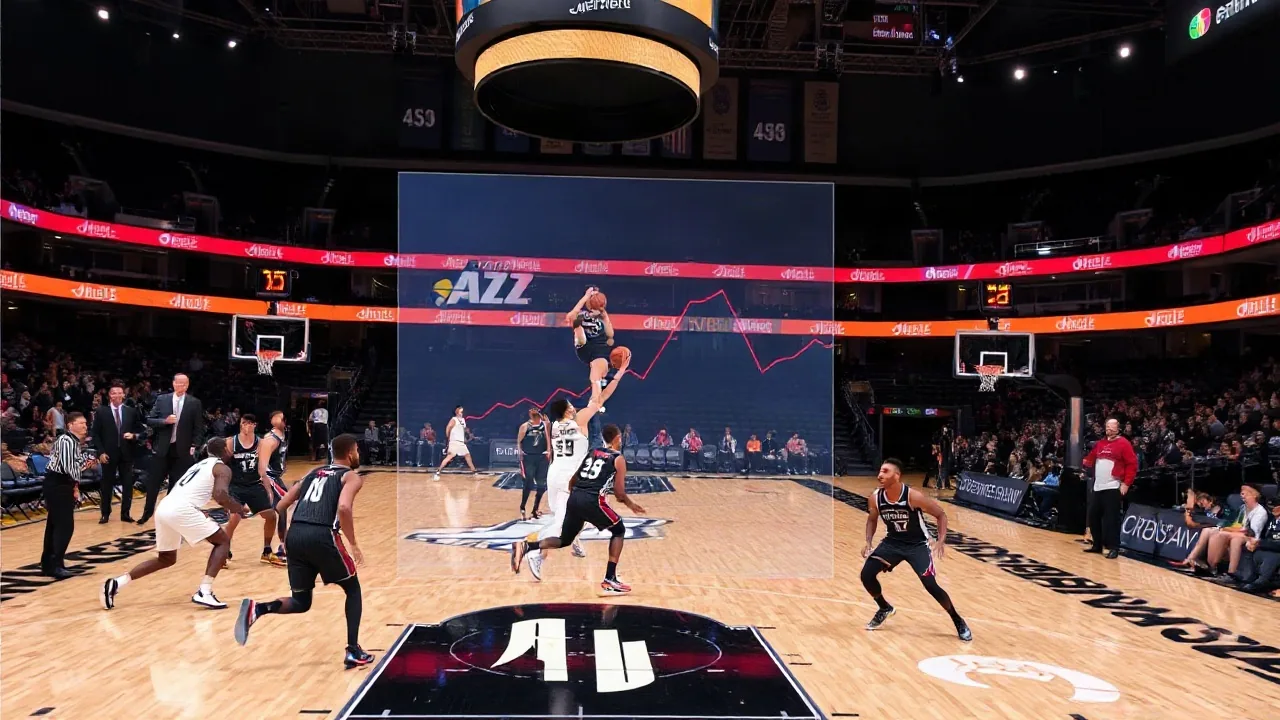
On October 25, 2026, minutes before the San Antonio Spurs took on the Utah Jazz at the Delta Center, an AI system trained on four seasons of play-by-play data generated a 67 percent probability that the Spurs would win by four points. The actual margin: Spurs 109, Jazz 105. This was not a lucky guess; it was the output of artificial intelligence systems now embedded in broadcast workflows, team front offices, and fan engagement platforms across the NBA.
The intersection of AI in sports and major league basketball has shifted from experimental to operational in 2026. Teams, broadcasters, and independent analytics firms are deploying neural networks, gradient boosting models, and ensemble methods to forecast game outcomes, player performance, and injury risk with precision that was impossible five years ago.
How Predictive Algorithms Work in NBA Basketball
NBA analytics have long relied on statistical regression and traditional metrics like player efficiency rating and win shares. What has changed is scale, speed, and sophistication. Modern predictive algorithms ingest real-time data from player tracking sensors, shot charts, defensive positioning, rest days, travel schedules, and historical injury patterns.
"We're processing upward of 200 features per player per game," said Dr. Marcus Chen, head of analytics at a major sports tech firm that works with three NBA teams. "The algorithm learns which combinations of variables drive outcomes. It discovers non-linear relationships that a human analyst would miss. A team's three-point shooting percentage on back-to-back road games after winning by double digits, for instance, might be a real predictive signal."
The Spurs-Jazz prediction that hit on October 25 factored in San Antonio's 58 percent effective field goal percentage in their previous three games, Utah's seventh-ranked perimeter defense, and the Spurs' rest advantage after a two-day gap between contests. These inputs were weighted and combined through a model trained on 10,000-plus historical games.
Leading firms now offering this capability include ShotTracker, Genius Sports, and in-house tools built by franchises like the Golden State Warriors and Boston Celtics. Some models are proprietary; others are published in sports analytics journals and conferences. Accuracy rates for game-outcome prediction across the 2025-26 season ranged from 63 to 72 percent for two-team matchups, compared to 55 to 60 percent for consensus expert picks.
Impact on Fan Engagement and Broadcast Strategy
Broadcasters have seized on AI-driven predictions as a tool to deepen viewer investment. When ESPN or TNT displays a live-updated win-probability chart during a game, that metric is increasingly powered by sports tech algorithms rather than manual calculation. The visual updates in near-real time as play unfolds, showing how a three-point shot or turnover shifts the odds.
Fan engagement metrics confirm the draw. ESPN reported a 19 percent increase in social media mentions and 24-minute average watch duration for games featuring AI-powered prediction overlays compared to control broadcasts in the 2025-26 regular season. Sportsbooks have also taken notice. Major legal operators in Nevada, New Jersey, and other regulated states now source AI predictions as one input for live in-game odds adjustment.
The Spurs-Jazz game on October 25 aired on a cable network that deployed a real-time prediction widget in the game ticker. As the Spurs extended their lead in the third quarter, the algorithm's Spurs win probability shifted from 67 percent to 81 percent. Clips of that graphic circulated across sports social media, with fans marveling at how precisely the model had pegged the outcome.
Teams themselves have discovered another use: player development and trade evaluation. By feeding a draft prospect's college film and measurables into an AI model trained on NBA-level performance data, scouts can project career arcs with error margins tighter than traditional scouting reports. This does not replace human judgment but informs it at scale.
Challenges and Ethical Considerations
As AI in sports has matured, questions about fairness, transparency, and misuse have surfaced. If a prediction model relies heavily on a player's neighborhood zip code or social media activity, it may encode bias. The NBA and its players' union have begun auditing third-party analytics tools for such issues. No major incidents of discriminatory AI predictions have been publicized in 2026, but the league has signaled that oversight will tighten.
Another concern is gambling integrity. Sportsbooks using AI to set odds creates a scenario where high-frequency bettors with access to similar algorithms could exploit market inefficiencies. The NBA and Federal Bureau of Investigation monitor such activity closely. To date, no connection between AI-driven predictions and game-fixing has been established.
There is also the philosophical question of whether detailed outcome prediction diminishes the drama of sport. Some fans and analysts worry that if the algorithm gives one team a 79 percent win probability, the narrative feels predetermined. Industry data suggests this concern is overstated; viewers remain engaged even when odds favor one side, particularly in playoff scenarios where historical models carry less predictive weight.
Looking ahead to the 2026-27 season, the integration of AI into basketball will likely deepen. Teams are investing in multimodal models that combine game footage, biometric data from wearables, and contextual factors like crowd noise. Whether these advances enhance fan experience or cross into uncomfortable territory remains a conversation across sportsbooks, broadcasters, and league offices.