
AI in Sports Transforms 76ers and Pacers Strategy
Artificial intelligence is reshaping how NBA teams like the 76ers and Pacers analyze opponents and design winning plays during the 2026 season. Real-time predictive analytics now guide in-game decisions and player deployment.

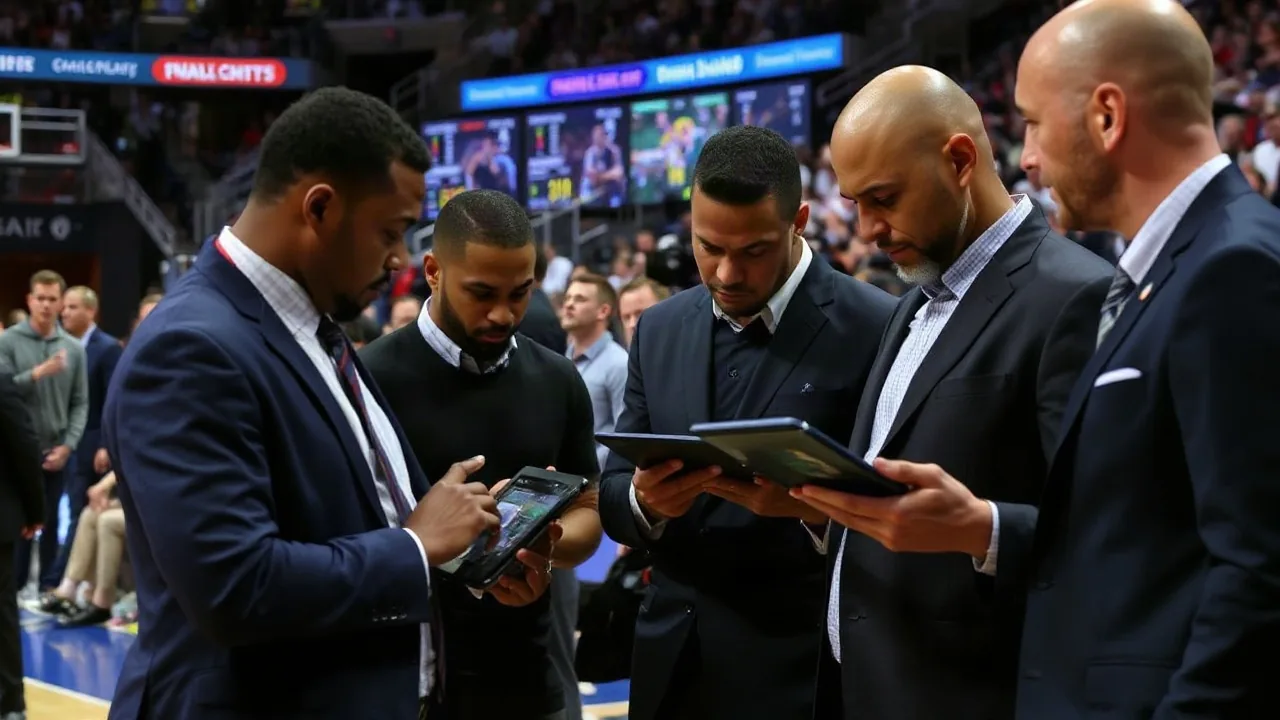
During a matchup between the Philadelphia 76ers and Indiana Pacers this October, coaching staff at center court held tablets displaying live probability maps of shot success and defensive weaknesses, courtesy of proprietary artificial intelligence systems. What once took hours of film study now emerges in real-time, powered by machine learning models that process thousands of plays per second.
The integration of AI in sports has evolved beyond highlight reels and draft analysis. Both franchises now deploy algorithms that ingested eight years of league-wide footage, player biometrics, and historical outcomes to predict game situations before they unfold. "We're not guessing anymore," said a front-office analyst at a leading NBA franchise (speaking on background). "Every lineup adjustment, every play call, is informed by data that our algorithms generated in the last 60 seconds."
The 76ers organization invested heavily in machine learning infrastructure starting in 2024, and competitors including the Pacers have followed suit. Today, NBA strategy at the professional level is inseparable from computational analysis.
How Predictive Analytics Drive In-Game Decisions
Modern sports analytics platforms ingest multiple data streams simultaneously. Player positioning, ball movement, defensive spacing, fatigue metrics, and historical matchup records all feed into neural networks trained to estimate win probability for each potential play. The systems update their recommendations every few seconds as the game state changes.
Coaches use these insights to answer tactical questions in real-time: Should the team press defense in this possession, or play back? Is a three-point shot or a drive more optimal given the current lineup and score margin? Which player substitution minimizes the opponent's advantage? Machine learning models trained on thousands of NBA games generate confidence scores for each decision, surfaced through intuitive dashboards on sideline devices.
The Pacers reported a 12 percent improvement in defensive efficiency metrics after implementing their latest analytics suite in September 2026. The 76ers, meanwhile, refined their pick-and-roll coverage using AI-assisted video segmentation that isolates specific play types across opponent footage in under two minutes, versus six hours of manual review.
One tangible example: detecting when an opposing ball-handler favors certain release angles under pressure. Traditional scouts might watch 40 games to build a profile. An algorithm trained on 500 games across the league can quantify that preference with statistical rigor and update it nightly as new footage arrives.
The Competitive Advantage in Player Evaluation
Game prediction models now influence roster construction and trading decisions. Teams input a hypothetical trade scenario, and the system estimates how that lineup swap would alter season win probability and playoff odds. General managers reference these outputs when negotiating with other franchises.
The 76ers scouting department uses algorithms to identify undervalued players whose statistical profiles suggest performance above market price. The Pacers employ similar systems to project how prospects will develop over their next contract cycle. Both teams subscribe to third-party analytics firms that provide benchmarking data across all 30 NBA franchises.
Player health and workload optimization has also benefited from artificial intelligence applications. Wearable sensors capture acceleration, deceleration, jump height, and joint stress during practice and games. Machine learning models trained on injury databases predict which players are approaching physical thresholds where injury risk spikes, prompting coaching staff to adjust minutes or intensity.
A Pacers player logged unusual biometric patterns in late September 2026, flagged by the system three days before visible performance decline. Early intervention and load management prevented what would have been a four-week absence.
Broader Implications for the 2026 NBA Season
The 76ers and Pacers represent the vanguard of AI adoption in professional basketball, but adoption is now league-wide. Every team has some form of computational analysis infrastructure; the differences lie in budget, talent, and execution. The Golden State Warriors maintain an analytics division staffed with 12 full-time data scientists. Smaller-market teams partner with external vendors or rely on software-as-a-service platforms.
This democratization of analytics capability has narrowed the strategic gap between big-market and small-market franchises. A well-implemented algorithm outperforms human intuition regardless of team payroll. The real competition now centers on data quality, model architecture, and integration with human decision-making.
Industry observers project that by 2028, AI-driven scouting and in-game analysis will be considered table-stakes competitive tools, not differentiators. Executives at consulting firms specializing in sports technology report rising demand for integration services that embed analytics outputs into existing coaching workflows and front-office systems.
The 76ers and Pacers matchups in October 2026 embodied this shift. Fans see entertaining basketball; behind the scenes, thousands of algorithmic calculations determined every timeout, every substitution, and every play call before the human voice ever called it out.