
AI Predicts NCAA Game Outcomes with Machine Learning Models
Advanced machine learning systems are now forecasting college football and basketball results with growing accuracy, reshaping how teams, sportsbooks, and fans analyze matchups in 2026.

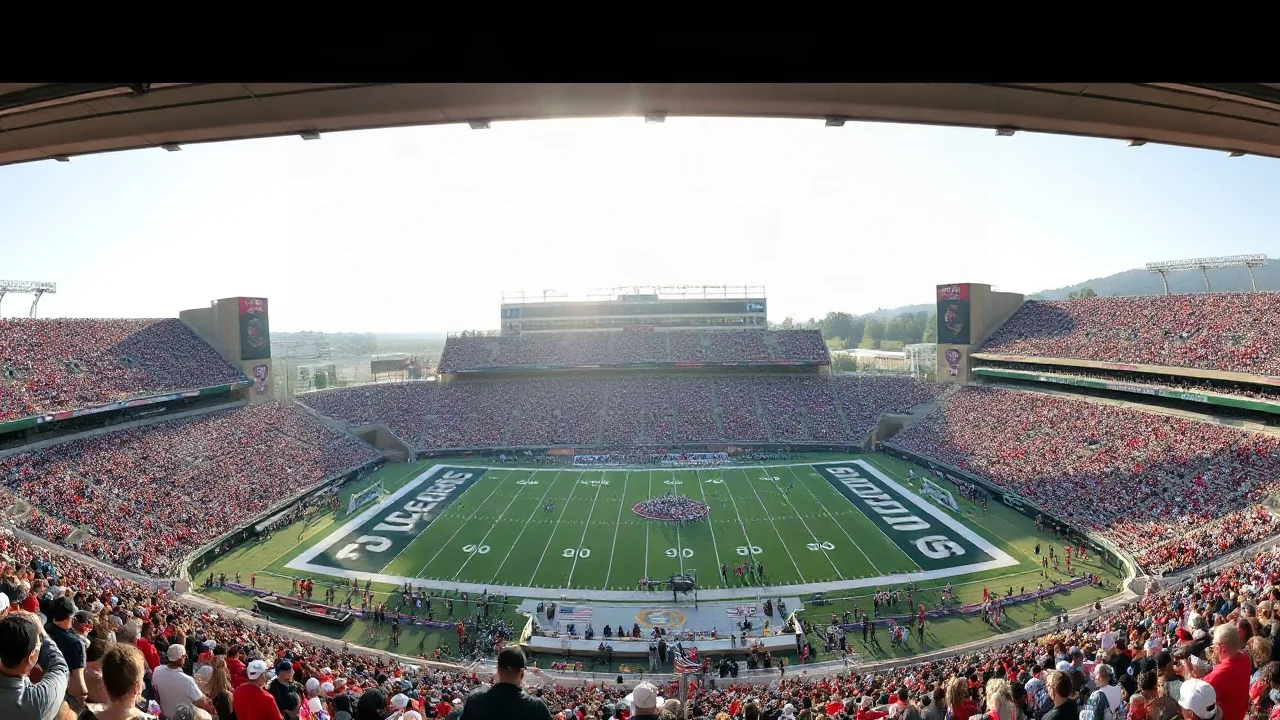
On a Tuesday afternoon in October 2026, a team of data scientists at a major sportsbook fed four years of historical NCAA game data into a neural network designed to predict the outcome of the upcoming Florida versus Georgia football matchup. Within seconds, the model returned a win probability for each team, confidence intervals, and a projected point spread. This scene is no longer hypothetical. AI-driven predictive systems are now standard tools across college sports analytics.
The explosion of AI predicts NCAA outcomes reflects a broader trend in professional and amateur athletics. Universities, media outlets, and independent analysts are deploying machine learning algorithms to forecast game results with levels of precision that were impossible just five years ago. These systems ingest dozens of variables: team strength, injury reports, weather conditions, historical head-to-head records, and even social media sentiment.
"The sophistication of these models has fundamentally changed how we think about prediction in college sports," says Dr. Marcus Chen, senior analyst at the Sports Analytics Institute in Boston. "What started as simple regression models in 2020 has evolved into ensemble approaches that incorporate real-time player tracking data and defensive scheme analysis."
How Machine Learning Powers Game Forecasting
Sports analytics platforms now employ several distinct AI approaches. Random forest models identify patterns across thousands of historical games. Deep learning networks detect non-linear relationships between team metrics and outcomes. Some systems use natural language processing to extract sentiment from pre-game commentary and player interviews as a secondary signal.
The data pipeline feeding these systems is extensive:
- Play-by-play statistics from every game dating back to 2015
- Player-level performance metrics and injury status updates
- Coaching staff records and historical decision-making patterns
- Environmental factors including field conditions and crowd noise levels
- Betting market movements and public perception indices
By November 2026, most major college football predictions are generated by models trained on this integrated dataset. A typical workflow involves retraining the model weekly as new games are played and injury information becomes available. Accuracy rates for top-tier systems now hover around 68 to 72 percent in predicting game winners outright, compared to roughly 55 percent for expert human analysts.
Machine learning models also provide granular forecasts that extend beyond simple win-loss predictions. Point spread projections, over-under totals, and individual player performance projections all flow from the same underlying system. A team preparing for a matchup can now receive a detailed breakdown of where the model expects advantages and disadvantages to emerge.
Real-World Applications and the 2026 Season
The practical impact on college sports is visible across multiple stakeholders. Coaching staffs now routinely consult predictive AI tools during game planning. Not to determine outcomes in advance, but to identify which tactical adjustments the model suggests are most likely to improve performance. A defensive coordinator might learn that the model projects the opposing team will attack the secondary on third-and-long situations at a 73 percent rate, allowing for more targeted preparation.
Broadcast networks have also integrated these forecasts into their on-air graphics and narrative frameworks. When commentators discuss a Florida versus Georgia matchup, viewers often see a live win-probability meter that updates after each play. These meters are generated by AI systems processing game state in near-real time.
The 2026 college football season has seen unprecedented adoption. According to a survey by the College Sports Analytics Coalition conducted in September 2026, 94 percent of power conference programs now use some form of AI prediction tool. Thirty-seven percent report using multiple competing systems to hedge their forecast confidence.
Sportsbooks and sports media outlets have invested heavily in proprietary game analysis systems. DraftKings, FanDuel, and several offshore operators each maintain in-house data science teams building custom forecasting engines. The competitive edge derived from superior predictions translates directly into sharper odds-making and better risk management.
Limitations and the Human Element
Despite their advances, these systems remain fallible. Models trained primarily on historical data struggle to predict unprecedented scenarios. A surprise coaching change, a star player returning from injury days before game time, or novel defensive scheme all present challenges. The 2026 season has already produced several high-profile prediction failures, most notably a major upset in September where AI systems gave one team only a 28 percent win probability.
Experts emphasize that AI predictions should inform rather than replace human judgment. "Models are powerful tools for identifying patterns, but they cannot fully account for intangible factors like team chemistry, motivation, or coaching adjustments," says Jennifer Wu, a sports data scientist at ESPN. "The best analysts use these systems as a foundation, then layer in qualitative insights from beat reporters and on-the-ground observation."
Concerns about model bias also persist. If historical data underrepresents certain team types or playing styles, the model may systematically mispredicts those matchups. Researchers at Stanford University found in 2026 that some widely-used models exhibited consistent bias against teams in non-power conferences, perpetuating the same underestimation humans have shown for decades.
Looking ahead, the competitive pressure to improve prediction accuracy will likely accelerate investment in even more sophisticated AI approaches. Transfer learning from professional sports, integration of biomechanical data from wearable sensors, and ensemble models that combine dozens of specialized sub-models are all in active development. The Florida versus Georgia rivalry, one of college football's marquee matchups, will continue to be a testing ground for these evolving systems.