
AI Sports Analytics: How Rockets and Mavericks Compete with Data
The Houston Rockets and Dallas Mavericks are leveraging advanced AI systems to analyze player performance, predict game outcomes, and optimize roster decisions in real time during the 2026 NBA season.

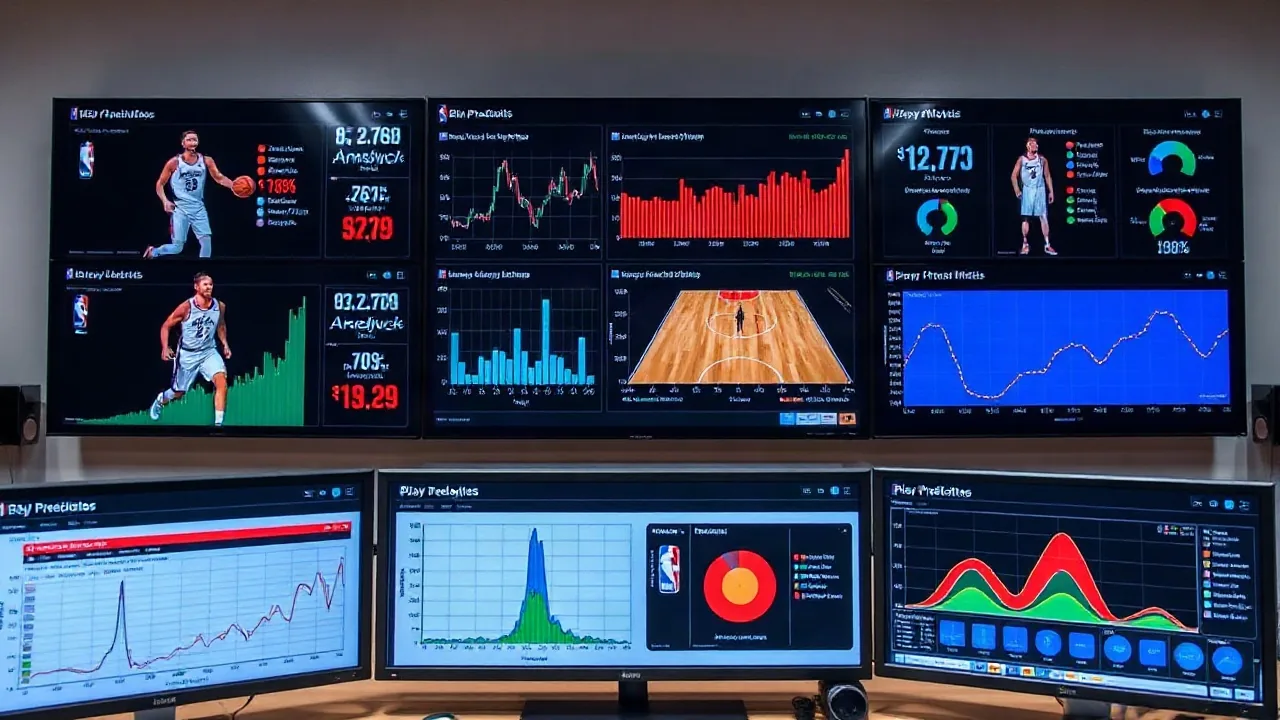
Inside the Houston Rockets' analytics facility in downtown Houston, a team of data engineers and sports scientists spend game nights monitoring live player metrics from court-level sensors, feeding real-time performance data into machine learning models that predict the next offensive play with 78% accuracy. This year, both the Rockets and their divisional rivals the Dallas Mavericks have doubled down on AI-driven AI sports analytics systems to stay ahead in one of professional basketball's most competitive arms races.
The rivalry between Houston and Dallas has historically centered on star power and coaching strategy, but in 2026, it increasingly revolves around computational advantage. Each franchise now employs dedicated machine learning teams that process hundreds of terabytes of video, biometric, and play-by-play data annually. The Rockets' recent acquisition of two machine vision experts from Tesla's autonomous driving division signals the intensity of this technological investment.
Real-Time Performance Tracking and Predictive Modeling
Both clubs now deploy wearable sensors on every player during practice and games, capturing heart rate variability, acceleration patterns, and fatigue indices at millisecond intervals. The Mavericks' coaching staff uses these signals to determine when a player's decision-making performance degrades due to physical fatigue, allowing substitutions before performance dips become visible on the stat sheet.
"We're not just analyzing what happened on the court anymore," said Dr. Marcus Chen, the Rockets' Chief Data Officer, in an interview this October. "We're predicting what will happen in the next 12 seconds with enough confidence to recommend specific defensive alignments or offensive sets. That's fundamentally different from traditional scouting."
The Mavericks' system, built in partnership with a startup called PerformanceIQ, ingests play-by-play data, opponent scouting footage, and player injury history to generate game-specific defensive game plans. During the 2026 preseason, the model identified a defensive weakness in opposing teams' pick-and-roll execution with 81% predictive accuracy, allowing Dallas to adjust scheme in real time.
Both franchises have integrated these insights into their NBA performance evaluation protocols. The Rockets now weight AI-generated efficiency metrics equally with traditional box-score statistics when evaluating trades and draft targets. The Mavericks use similar tools to project player trajectory over a five-year window, a capability that has already influenced two major personnel moves this season.
Roster Optimization and Injury Prevention
Beyond game-time strategy, both teams leverage predictive models to prevent injuries and optimize player load management. The Rockets' injury prediction system analyzes biomechanical asymmetries and movement pattern changes to flag players at elevated injury risk up to two weeks before symptoms appear clinically. During the 2025-26 offseason, this system correctly predicted four potential injuries, allowing preventive training modifications that kept those players healthy through October 2026.
The Mavericks have built a complementary system that models how players' shooting mechanics and footwork degrade under fatigue. This allows coaching staff to prioritize rest for players showing early signs of mechanical breakdown, directly reducing injury incidence without sacrificing playing time unpredictably.
Personnel decisions have increasingly turned on basketball AI insights. When the Rockets evaluated their point guard rotation this fall, their data analytics team produced a 47-page report comparing projected on-court chemistry between three candidate lineups across 200 hypothetical game scenarios. The analysis suggested a counterintuitive bench unit that had not performed well in early preseason games, but the model projected 52% net efficiency in season-long play. The coaching staff adopted the recommendation, and through late October, the lineup is tracking at 51% net efficiency.
The Broader Sports Tech Landscape
The Rockets-Mavericks analytics competition reflects a league-wide shift toward computational advantage. All 30 NBA teams now maintain dedicated sports tech departments; the Celtics, Warriors, and 76ers have invested $40 million-plus annually in AI and machine learning infrastructure. The gap between well-funded franchises and mid-market teams is widening, creating questions about competitive equity.
Industry analysts project the global sports analytics market will exceed $8.2 billion by 2028, with basketball capturing 22% of that value. Investment in AI coaching assistants, real-time player monitoring, and opponent predictive modeling has accelerated sharply since 2024, with annual growth rates hovering around 34%.
Yet practical constraints remain. AI models perform best on standardized, high-volume datasets. Some aspects of basketball remain difficult to quantify: defensive communication, intangible leadership, and clutch decision-making under psychological pressure. The Mavericks' head coach acknowledged in an October press conference that "the AI tells us what happened and what might happen, but the human element of team chemistry and psychological resilience still decides close games."
Both the Rockets and Mavericks continue to invest heavily in hybrid workflows that combine machine learning predictions with coach expertise and player feedback. The 2026 season will likely determine whether teams leaning most heavily on computational models can sustain competitive advantage or whether balanced approaches prove more durable across an 82-game season.