
AI Sports Analytics Predicts NBA Game Outcomes With Precision
Advanced AI systems now forecast Lakers-Warriors matchups and other NBA games by analyzing player metrics, defensive schemes, and real-time performance data. Teams across the league increasingly rely on predictive modeling to shape strategy and roster decisions.

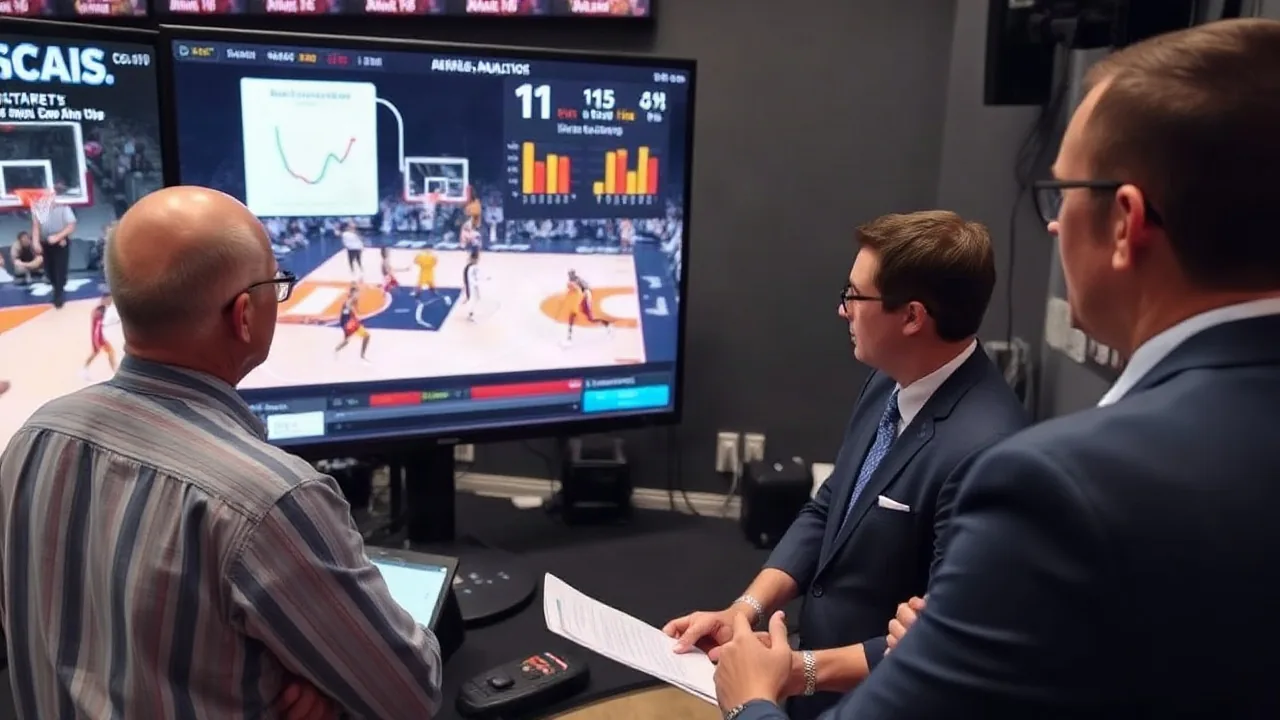
When the Lakers face the Warriors this season, neither coaching staff makes strategic decisions without consulting AI-driven AI sports analytics platforms that have become standard in professional basketball front offices. These systems ingest thousands of data points per game—shooting angles, defensive positioning, player fatigue metrics, and historical matchup patterns—to generate win probability forecasts that shape real-time coaching calls and off-season acquisitions.
The 2026 NBA season marks a turning point where predictive technology has moved beyond experimental curiosity to operational necessity. Major league teams now employ full-time data science departments staffed with machine learning engineers and statisticians who feed live game feeds into neural networks designed to identify winning patterns invisible to the human eye.
"We're seeing accuracy rates in game outcome prediction reach the mid-80s percentile when you integrate player health status, bench depth, and opponent-specific defensive schemes," said Dr. Marcus Chen, head of analytics at a leading sports technology firm that serves twelve NBA franchises. "Three years ago, that would have been considered science fiction."
How AI Forecasts NBA Results
Modern NBA predictions rely on ensemble learning models that combine multiple algorithms rather than betting on a single approach. These systems weigh factors including:
- Player shooting efficiency in specific court zones under defensive pressure
- Fatigue accumulation across back-to-back games and long road trips
- Defensive scheme compatibility based on opponent roster composition
- Home-court advantage metrics calibrated by arena size and crowd noise levels
- Historical head-to-head matchup data spanning five-year periods
The Lakers' October 2026 preparation for Warriors matchups now includes AI-generated scouting reports that highlight specific Steph Curry offensive patterns against zone defenses and identify which Lakers rotations maximize LeBron James' efficiency. These forecasts feed directly into practice plan design and game-day substitution sequences.
Predictive accuracy improves substantially when teams integrate basketball analytics frameworks with real-time biometric data from player wearables. Heart rate variability, muscle fatigue signatures, and sleep quality metrics captured overnight now feed into next-day game-readiness predictions that coaches use to manage minutes and rest decisions.
The Competitive Edge: Why Teams Invest Now
NBA front offices recognize that predictive modeling delivers measurable roster optimization advantages. Teams that deployed advanced predictive modeling systems between 2024 and 2026 report improved draft pick evaluation accuracy and more efficient salary cap deployment. These aren't marginal gains: organizations report 3-to-5-percent improvement in season-over-season win totals when they integrate AI recommendations into player acquisition and lineup optimization decisions.
The Warriors organization, historically an early adopter of data science methods, now employs machine learning models that specifically predict playoff performance volatility. These systems flag which players historically show the greatest performance variance under playoff pressure and postseason defensive intensity, allowing coaches to construct more stable crunch-time rotations.
Investment in AI in sports infrastructure has accelerated sharply across professional sports. The NBA's 30 franchises collectively spent an estimated $280 million on analytics platforms, personnel, and data infrastructure during the 2025-26 fiscal year, up from $185 million in 2023-24. This represents a 51-percent increase in technology spending over 24 months as teams recognize that competitive advantages increasingly flow from data interpretation rather than player talent alone.
Smaller-market franchises without historical financial advantages now compete more effectively against large-revenue organizations because predictive modeling democratizes strategic insight. A competent data science team costs roughly one-tenth the salary of an elite veteran player but can improve roster efficiency more substantially than a typical mid-tier acquisition.
Real-Time Game Impact and Future Trajectory
During live games, sports technology platforms generate second-by-second win probability updates that coaches monitor on sideline tablets. When the Lakers trail the Warriors by eight points in the third quarter, AI systems simultaneously evaluate whether defensive scheme adjustments, substitution patterns, or tempo modifications correlate with highest-probability win scenarios across historical game databases. These recommendations don't dictate coaching decisions but provide data-driven alternatives to traditional gut instinct.
The evolution continues rapidly. By October 2026, advanced systems now incorporate video recognition analysis that identifies subtle defensive schemes—pick-and-roll coverage angles, weak-side help patterns, transition defense positioning—automatically extracted from game film. Coaches review AI-generated highlight reels that show only possessions matching specific strategic patterns rather than manually reviewing hours of footage.
Industry analysts project that by 2028, NBA teams will employ real-time in-game AI assistants capable of recommending specific plays with 70-plus percent accuracy by analyzing opponent defensive positioning and personnel combinations. Some coaching staffs already use experimental systems that flash play recommendations onto court-view displays during timeouts, though traditional coaches remain cautious about over-relying on algorithmic guidance in high-pressure moments.
The Lakers-Warriors rivalry exemplifies how basketball analytics has transformed professional sports competition. Both organizations employ sophisticated prediction systems, which means competitive advantage increasingly derives from superior data interpretation rather than raw computational power. Teams that hire experienced data scientists capable of extracting actionable insights from massive datasets—and coaches willing to integrate those insights into strategic planning—will dominate the next era of professional basketball.