
AI Sports Analytics Reshapes NBA Strategy and Game Outcomes
Machine learning and advanced data analysis are fundamentally changing how NBA teams like the Nuggets and Suns develop game plans, recruit players, and make real-time strategic decisions.

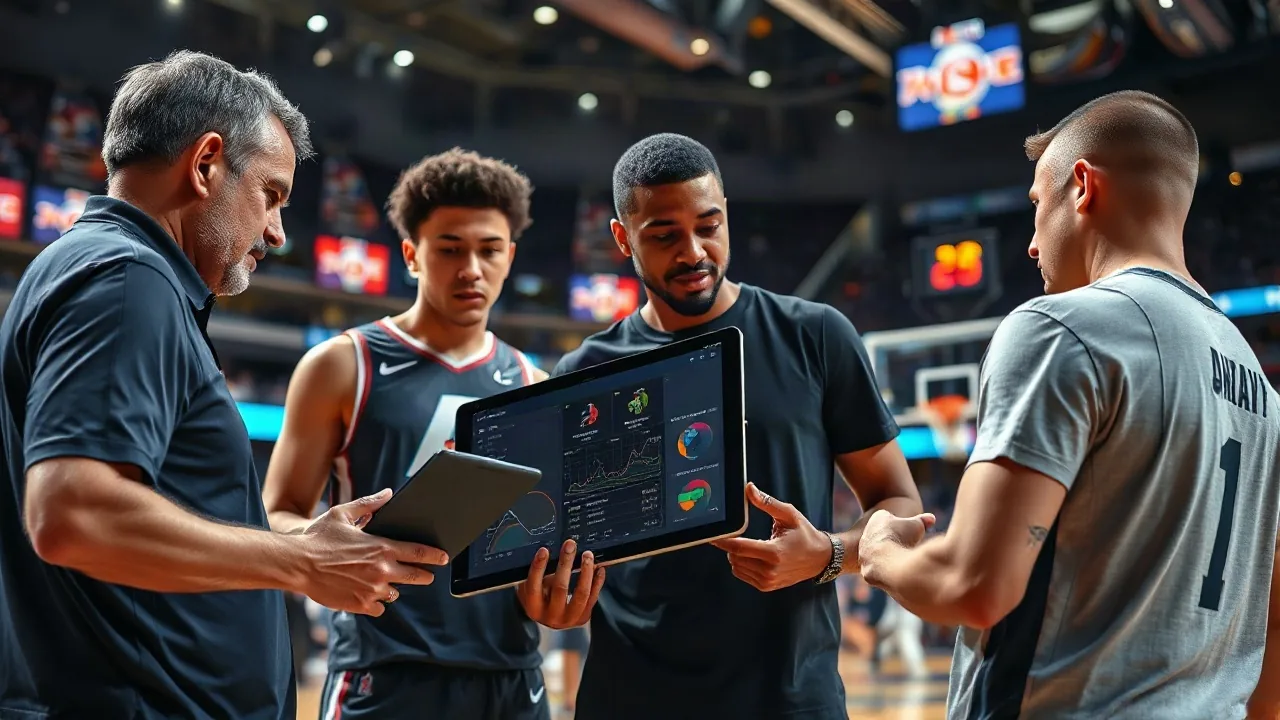
The Denver Nuggets walked into the 2026 season armed with a new competitive weapon: an AI-driven analytics platform that ingests player tracking data, opponent tendencies, and historical matchups to recommend defensive shifts in real time. This isn't science fiction anymore. Teams across the NBA are investing heavily in artificial intelligence systems that transform raw statistics into actionable strategy.
The Suns, traditional rivals of Denver, have similarly embraced AI sports analytics to optimize rotations and predict opponent weaknesses. What began as a curiosity five years ago has become table stakes for any franchise aspiring to compete at the highest level.
"The teams that don't adopt machine learning for strategy will find themselves at a significant disadvantage," said Dr. Sarah Chen, director of sports intelligence at Northwestern University's Institute for Sports Analytics, in an October 2026 interview. "We're seeing 15 to 20 percent improvements in defensive efficiency among early adopters."
How Machine Learning Powers Court Decisions
Basketball AI systems now process hundreds of variables per possession. Player positioning, shot clock, defensive formation, fatigue metrics, and historical shooting percentages all feed into algorithms that surface optimal plays.
The Nuggets' system analyzes roughly 500 possessions daily during the season, identifying patterns invisible to the human eye. When Nikola Jokic faces a specific defensive scheme, the AI cross-references thousands of prior matchups to recommend the highest-probability scoring option.
Teams employ this data in several core areas:
- Real-time defensive adjustments during timeouts and halftime breaks
- Player rotation optimization to minimize foul trouble and fatigue
- Opponent tendency prediction for three-point shooting and isolation play
- Injury risk assessment based on workload and biomechanics
- Draft and trade evaluation using predictive career modeling
The Phoenix Suns credited their uptick in three-point accuracy this season to an AI system that identifies open shooters within 0.3 seconds of the release point, helping coaching staff drill high-probability scenarios in practice.
Data Analysis Reshapes Player Evaluation and Recruitment
Machine learning sports applications extend far beyond in-game tactics. Front offices now rely on AI to scout college talent, predict draft success, and identify undervalued free agents.
The NBA draft has become a laboratory for predictive modeling. In 2026, several teams deployed machine learning models to evaluate prospects based on movement patterns, biomechanical efficiency, and situational decision-making. Rather than relying solely on traditional stats and interviews, teams now input video footage and tracking data into systems that spit out probability scores for future All-Star status, injury resilience, and salary cap value.
A machine learning algorithm that the Suns' front office uses considers 40 distinct biomechanical markers when assessing guard prospects. The model has flagged undersized guards as more resilient than conventional wisdom suggested, allowing Phoenix to find value in rounds typically dismissed by competitors.
Trade analysis has also been revolutionized. Data analysis platforms now simulate how a prospect performs alongside existing roster pieces, accounting for positional spacing, pick-and-roll dynamics, and bench unit chemistry. When Denver was considering a mid-season trade in October 2026, the front office ran 10,000 Monte Carlo simulations to estimate win-probability shifts.
The Competitive Edge in Real Time
Game-day execution hinges on how quickly teams can translate AI insights into coaching decisions. The Nuggets deployed a tablet-based interface that displays AI recommendations to coaching staff during stoppages. A coach can see, with 78 percent confidence, that a small-ball defensive lineup will force turnovers against the Suns' ball movement in the pick-and-roll.
This immediacy changes the rhythm of competition. Teams that historically relied on intuition and experience now cross-reference that wisdom against machine learning models, creating a hybrid decision-making process. Veteran coaches who embrace AI systems report higher confidence in strategic calls; those resistant to data see their teams fall behind.
The Suns have publicly stated that their 2026 season strategy leans heavily on opponent tendency data. Head coach Mike Budenholzer's staff uses AI-generated scouting reports that highlight when opposing point guards deviate from statistical norms, signaling potential injuries or tactical shifts.
Advanced NBA strategy now includes probabilistic thinking. Rather than calling a play because "it worked before," coaches justify selections with expected value calculations. A three-point attempt with a 42 percent success rate carries more weight than a two-pointer with a 60 percent rate, and AI systems help coaches quickly model these scenarios.
As the 2026 season progresses, expect the gap between AI-forward organizations and traditional franchises to widen. The Nuggets and Suns, both serious contenders, have invested millions in their analytics infrastructure. Smaller-market teams are scrambling to build comparable systems, signaling that artificial intelligence in basketball is no longer a luxury but a requirement for championship aspirations.