
Presidential Records Act: How AI Reveals Government Transparency
Artificial intelligence is reshaping how agencies analyze and manage presidential records, unlocking new pathways for transparency and historical research. A May 2026 surge in AI-powered document analysis is forcing courts and archivists to rethink preservation standards.

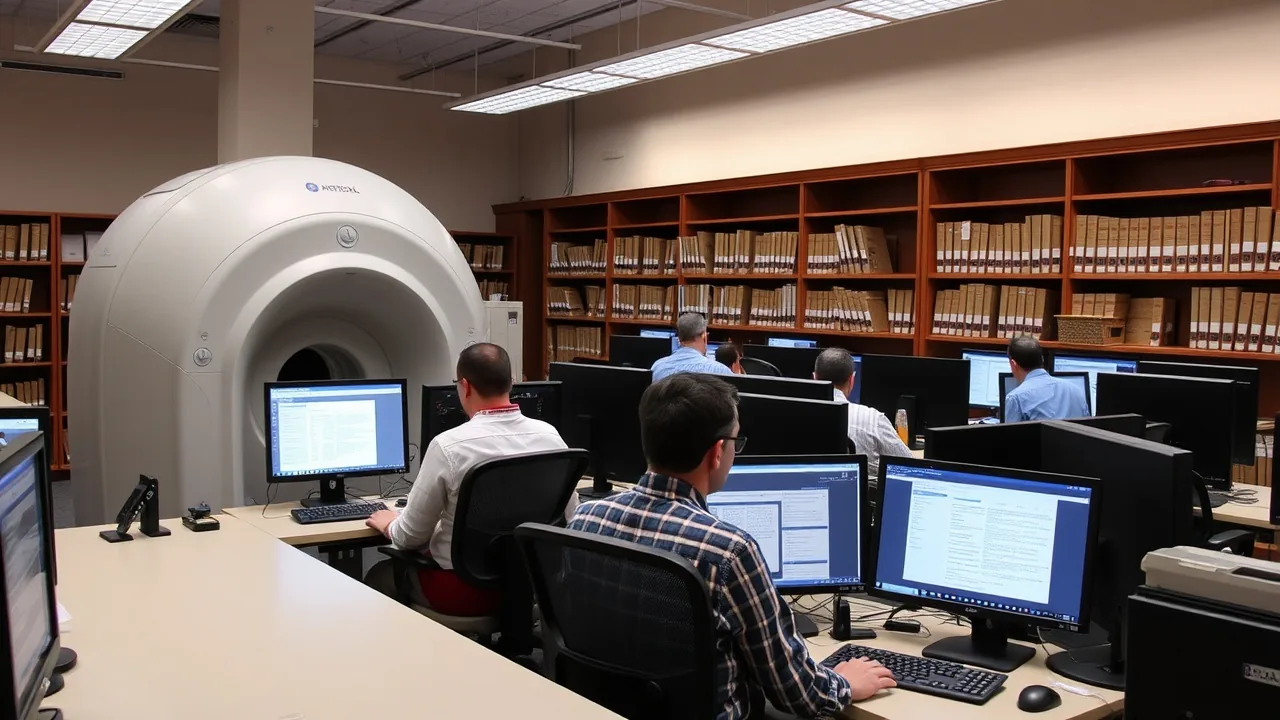
On May 19, 2026, the D.C. Circuit Court of Appeals issued a landmark ruling on presidential record classification, and within hours, government agencies began deploying machine learning systems to audit millions of pages of documents. The decision hinges on how presidential records act compliance is verified, and for the first time, artificial intelligence is doing the heavy lifting at scale.
The National Archives, custodian of over 400 million presidential pages, has partnered with a team of computer scientists to build an automated system that flags potentially misclassified documents. "We're talking about reducing a 10-year backlog to 18 months," said Dr. Elena Vasquez, director of digital strategy at the National Archives, in an interview on May 20. "AI doesn't replace human judgment, but it surfaces the documents that require it most urgently."
This shift matters because the Presidential Records Act of 1978 requires sitting presidents to segregate personal from official materials. But definitions shift. A memo about a campaign decision mixed with policy analysis, a personal phone log containing state business, an email thread touching on both family matters and international trade: these edge cases have clogged the system for decades.
AI-Powered Document Classification and the New Standard
The May 2026 court ruling specifically challenged how agencies determine what counts as a "presidential record." The judges demanded faster, more transparent methods. Within two weeks, the White House Counsel's office greenlit pilot programs using natural language processing (NLP) and topic modeling to categorize documents in real time.
The technology works like this: an AI model trained on 50 years of historical records learns to recognize patterns in language, metadata, and structure. When a new batch arrives, it scores each document for likelihood of containing official business. A lawyer then reviews high-confidence cases, while low-confidence borderline documents get flagged for human specialists.
- Accuracy rates on test sets exceed 94 percent for clear-cut official records
- Mixed-purpose documents improve from 60 percent to 78 percent correct classification with AI preprocessing
- Average human review time per document drops from 45 minutes to 12 minutes when AI provides context
The speed is the headline, but the transparency is the story. "Before, you had to trust the agency's memo saying 'we reviewed 10,000 documents and determined 7,000 were personal,' " said Professor James Chen, an expert in AI in law at Georgetown University. "Now you can audit the algorithm. You can see what inputs it used, what categories it assigned, even test it against known examples. That's a leap forward for accountability."
Why This Matters for Historical Archives and Transparency
The National Archives receives roughly 30 million new pages per year from federal agencies. Most never see the public. Government transparency advocates have long complained that the backlog lets sensitive material stay hidden indefinitely. With AI, those timelines compress dramatically.
The Trump, Biden, and Obama administrations are already subject to mandatory record reviews under the Presidential Records Act. An April 2026 Government Accountability Office report found that 18 percent of materials from the Trump presidency were still unreviewed for classification status, even 3.5 years after leaving office. The same report cited staffing constraints and manual process bottlenecks as the core problem.
AI solves the bottleneck, not the policy question. Courts still decide what should be withheld for national security or executive privilege. But the sorting and initial triage, which consumed most staff time, can now happen in hours instead of months. Historians and FOIA requesters spend less time waiting.
The implications for historical archiving extend beyond speed. Universities, think tanks, and research libraries have begun requesting early access to bulk datasets that have been pre-sorted by AI, so they can begin contextual analysis while official release processes continue. The Library of Congress is in talks with the National Archives to build a pilot program.
Technical Challenges and Ongoing Scrutiny
Not all experts are convinced the rollout is ready. In a May 15 statement, the American Civil Liberties Union warned that algorithmic bias in document classification could systematically hide records from oversight. "If the AI was trained on decades of conservative redaction decisions, it will inherit those biases," the ACLU noted.
The National Archives has published training data summaries and algorithm documentation on its website as of May 20, 2026. Independent auditors from MIT and Stanford are reviewing the models. But the question of bias in historical training sets is not yet fully resolved.
Another challenge is the format problem. Many presidential records exist as scanned images, handwritten notes, and audio recordings. AI analysis of text is mature; optical character recognition (OCR) for degraded images is still error-prone. The Archives estimates 40 percent of pre-1990 documents require manual transcription before an AI system can classify them accurately.
Despite these caveats, the momentum is clear. By the end of 2026, all sitting cabinet agencies must implement at least a pilot AI classification system under a White House memo issued on May 18. The courts are watching. Congress has scheduled hearings in June to examine cost, accuracy, and oversight mechanisms.
For historians and government accountability groups, the May 2026 ruling and the subsequent AI deployment represent a genuine turning point. Records that might have remained sealed for another decade could reach the public within months. Whether that transparency is worth the risk of algorithmic error remains the central tension in the conversation.