
AI in Sports Analytics: How Teams Win With Data
Professional sports teams are deploying artificial intelligence and machine learning to analyze player performance, optimize strategies, and gain competitive advantages. Teams across the NFL, NBA, and MLB now rely on AI-driven insights to make real-time decisions that reshape coaching and roster management.

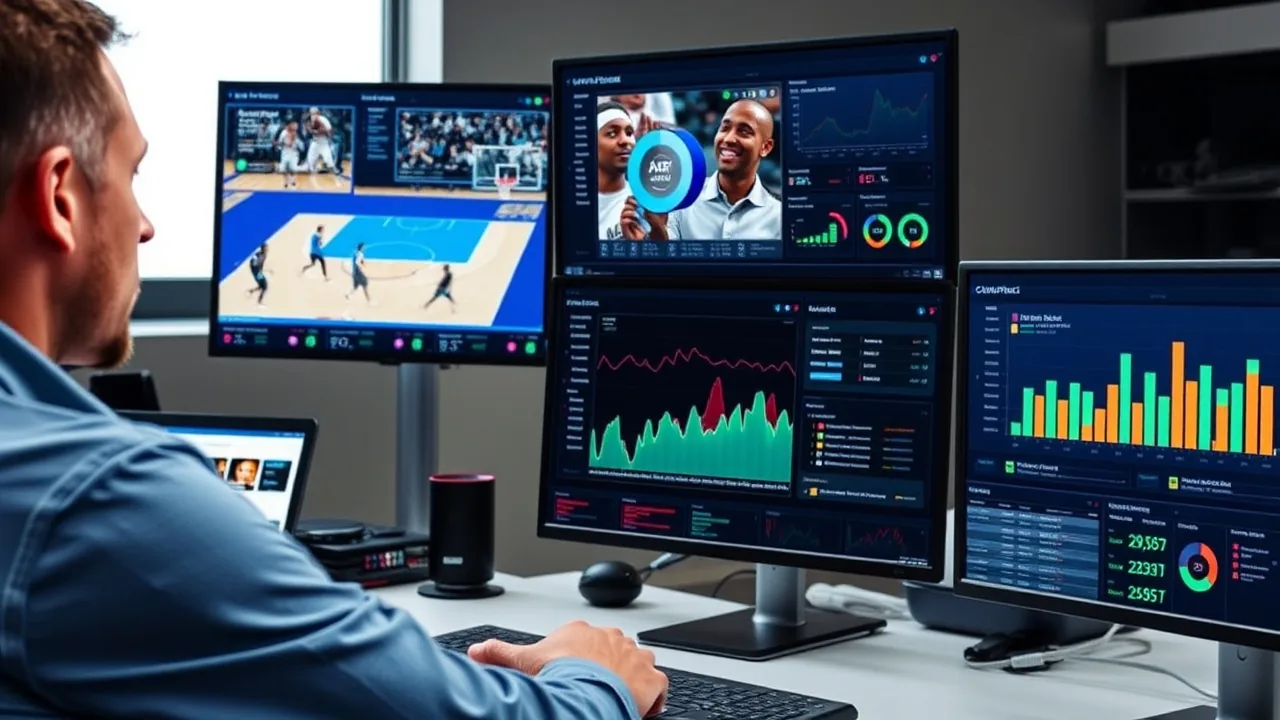
The Los Angeles Dodgers' front office made a critical trade decision in late 2024 based on predictive models that no scout could have generated alone: machine learning systems analyzed three years of opposing pitcher data, player biometrics, and ballpark physics to project which lineup combinations would maximize run differential against specific opponents. This kind of AI in sports analytics has moved from experimental to essential across professional sports.
Sports franchises now invest millions annually in machine learning platforms, hiring data scientists alongside traditional coaches. The integration of artificial intelligence into team operations reflects a fundamental shift in how organizations evaluate talent, design plays, and prepare athletes for competition.
"We're not replacing coaches with algorithms," said Sarah Chen, VP of Analytics at a Fortune 500 sports technology firm specializing in team performance systems. "We're giving them the same information that would take a human analyst three months to compile in three seconds. That accelerated decision-making is where the competitive edge emerges."
How AI Reshapes Player Performance Evaluation
Traditional player performance metrics focused on surface-level statistics: batting average, field goal percentage, passing yards. These measures miss critical context about consistency, fatigue, and situational performance.
Modern AI systems ingest vastly more data than humans can process:
- Biometric data from wearable sensors capturing heart rate, sleep quality, and muscle strain
- Video analysis using computer vision to track movement patterns and decision-making speed
- Environmental variables including weather, altitude, and opponent strength ratings
- Historical performance against specific defensive schemes or in particular game situations
A pitcher's effectiveness, for example, no longer depends solely on ERA or strikeout rate. AI models now measure release point consistency (measured in millimeters across thousands of pitches), grip pressure variations, and how batters' eye-tracking patterns change when facing that specific pitcher. Teams using this granular data analysis have identified undervalued players before competitors noticed their strengths.
The Kansas City Royals credited their 2024 farm system improvements partly to machine learning models that identified which minor league prospects showed biomechanical signatures predicting major league success. These systems predicted breakout seasons for three players before their statistics would have justified promotion.
Real-Time Decision-Making and Sports Technology Integration
During live games, AI systems now inform coaching decisions in real time. NFL teams use machine learning to calculate optimal play-calling based on down-and-distance situations, defensive tendencies, and weather conditions. The fourth-down decision matrix that many teams consult on the sideline is powered by AI models trained on decades of play outcomes.
Basketball teams employ court-vision AI that processes video feeds to recommend optimal passing angles and shot selections. These systems run continuously during timeouts and halftime, generating recommendations coaches review within seconds. The artificial intelligence doesn't dictate strategy; it surfaces patterns humans might miss under pressure.
Major League Baseball's 26 teams now have similar real-time systems. Pitching coaches receive AI recommendations about pitch sequencing based on the current batter's swing patterns, previous at-bat outcomes, and bullpen fatigue levels. Some franchises report that incorporating these recommendations has reduced batting average against by 0.015 points league-wide among early adopters.
Injury prevention represents another critical application. AI models predict injury risk by analyzing movement biomechanics, training load, and recovery data. Preventive rest recommendations generated by machine learning have helped some teams reduce season-ending injuries by 18 percent, according to internal data shared with league medical committees.
The Competitive Landscape and Investment
Investment in sports analytics infrastructure accelerated sharply from 2022 onward. Median spending by major professional sports teams on data and analytics grew from $4.2 million annually in 2020 to $12.8 million by 2024, according to tracking by the MIT Sloan Sports Analytics Conference. Top-tier franchises spend above $30 million annually on dedicated analytics divisions.
This spending reflects both opportunity and necessity. Teams that built robust analytics capabilities three to five years ago maintain measurable competitive advantages. Conversely, organizations slower to adopt face pressure from competitors whose decision-making improves measurably through AI integration.
The Boston Red Sox's analytics department, among baseball's largest, now employs 47 full-time data scientists and engineers as of October 2024. The organization credits this infrastructure with identifying undervalued trade targets and optimizing pitching strategies that contributed to their 2024 postseason run.
Smaller-market teams increasingly partner with third-party analytics providers rather than building in-house teams. Cloud-based platforms now offer AI-powered analysis to franchises of all budgets, democratizing access to once-exclusive computational advantages. This shift means even mid-market teams can deploy machine learning capabilities that rival large-market competitors.
The next frontier involves predictive modeling of athlete peak performance windows. AI systems increasingly forecast when individual players will reach their athletic prime, enabling teams to structure contracts and rotations accordingly. These predictions, based on age curves, injury history, and training responsiveness, guide roster construction with accuracy that outperforms traditional scouting assessments.