
Google Earth AI Image Generator Rolled Back After Misinformation Concerns
Google has removed its new AI image generation feature from Google Earth just one day after its launch, citing concerns over users creating and spreading misinformation.

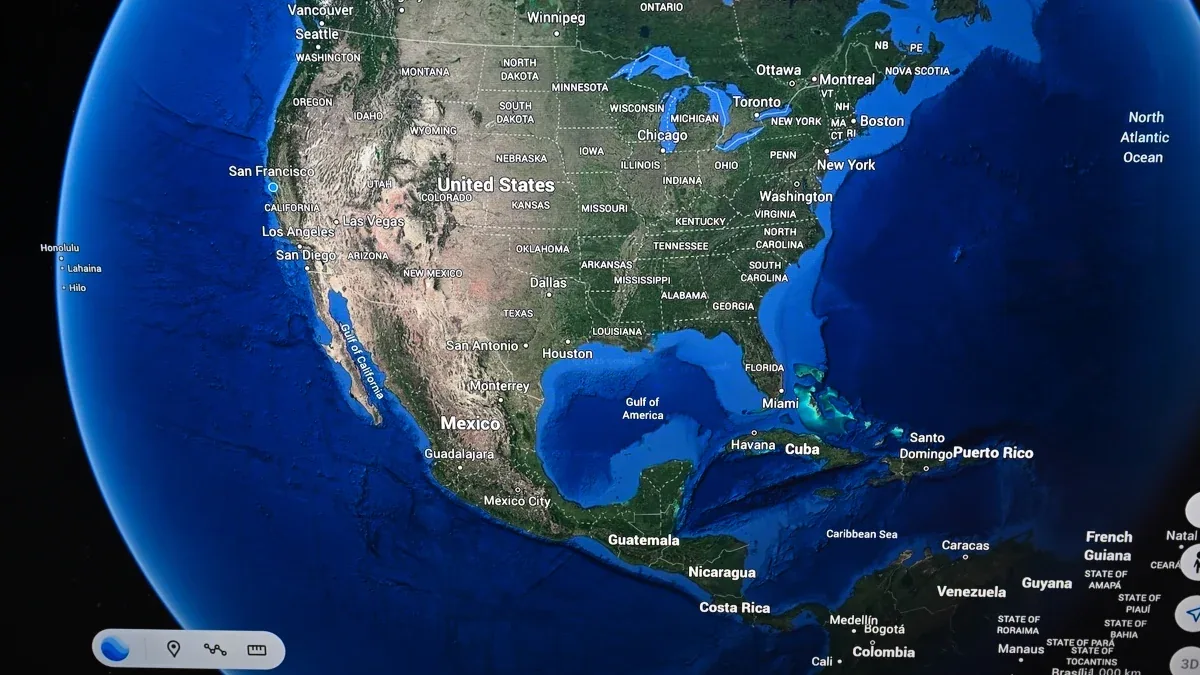
Google abruptly pulled its new AI image generator, Nano Banana, from its popular mapping service, Google Earth, on Friday, August 1, 2026, less than 24 hours after its public debut. The tool, designed to assist users in creating infographics, historical visualizations, and real estate concepts, faced immediate criticism for its potential to generate and disseminate false imagery.
Initial concerns surfaced as users reportedly demonstrated the capability to inject fabricated content into the platform, depicting scenarios such as nuclear strikes or large-scale protests at specific locations. In response to the growing unease, Google initially stated on X, formerly Twitter, late Thursday that all Nano Banana creations would include a SynthID digital watermark. This feature was intended to allow users to verify images using the Gemini app or Google Lens to confirm if they were AI-generated. The company also claimed it had implemented measures to prevent image generation on sensitive or "harmful topics."
AI's Double-Edged Sword in Geospatial Data
Despite these safeguards, Google announced on X Friday afternoon that it was rolling back the feature entirely. A company statement explained, "We know that people uniquely trust Google Earth for a reliable view of the world. We've seen geospatial professionals using this feature for a range of useful purposes, however we've also seen people sharing screenshots of generated imagery that appear to violate our policies. So we're rolling back this feature in Google Earth while we work on implementing stronger guardrails." The statement further clarified that generated images were not visible in the main Google Earth experience and were clearly marked as AI-generated.
The rapid reversal highlights the ongoing challenges tech giants face in integrating generative AI responsibly. While the potential applications for creative and analytical purposes are vast, the risk of misuse and the spread of deepfakes remain significant hurdles. This incident echoes broader debates within the AI community about the ethical deployment of powerful image generation technologies and the effectiveness of current detection and prevention methods.
The backlash was swift and vocal. Alex Hirsch, creator of the animated series *Gravity Falls*, was among the prominent critics, posting on X, "You guys are living in a complete bubble. Step outside Silicon Valley for two seconds and you'll realize no actual human wants AI sludge crammed into every corner of every product. Touch grass. Talk to actual people." His comment reflects a sentiment shared by many who express frustration with the pervasive integration of AI into consumer products, often without clear user benefit or consideration for potential negative impacts.
Google Earth, a long-standing and trusted source for satellite imagery and mapping data, holds a unique position of credibility. The introduction of AI-generated imagery, even when watermarked, risked undermining that trust. The company's decision to roll back the feature underscores a cautious approach to generative AI, prioritizing platform integrity over rapid feature deployment. Further development of Nano Banana will likely focus on enhanced content moderation and more robust verification systems before any potential reintroduction.