
Mitch McConnell's Stance on AI Policy and Regulation
Senate Republican leader Mitch McConnell has signaled cautious support for AI governance frameworks in 2026, emphasizing innovation over heavy-handed regulation. His position reflects broader tensions within Congress over how to balance technological advancement with consumer protection.

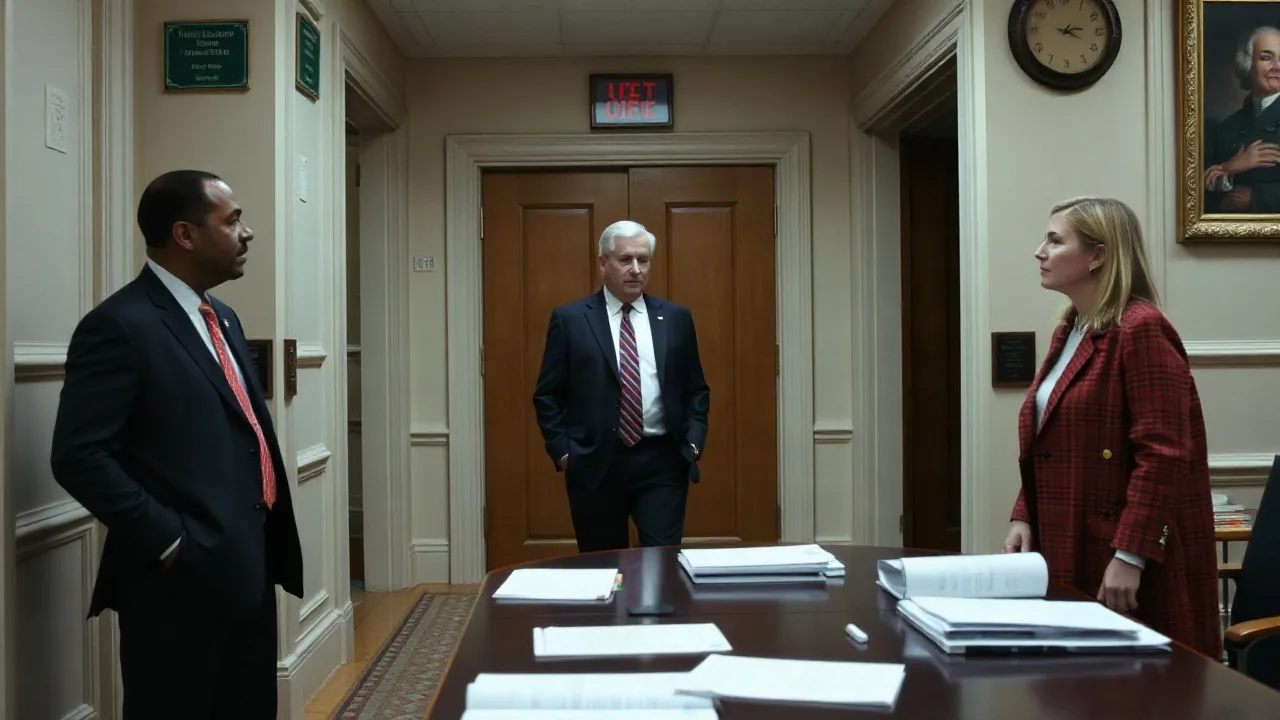
Senate Republican leader Mitch McConnell convened a closed-door meeting with technology executives and policy advisors on September 8, 2026, to discuss artificial intelligence governance frameworks. The gathering, held in McConnell's office, underscored his emerging role as a key voice shaping Republican positions on AI policy during a critical election cycle.
McConnell has historically favored market-driven solutions over regulatory intervention, a stance evident in his handling of banking, energy, and telecommunications policy over three decades in the Senate. His approach to artificial intelligence reflects this philosophy, but with notable nuance acknowledging cybersecurity and national defense dimensions.
"We need guardrails, not gridlock," McConnell told reporters on September 10, 2026, summarizing his position. "American companies are leading the AI revolution globally. Overregulation risks handing that advantage to China and Europe." His comments signaled skepticism toward comprehensive federal frameworks while leaving room for targeted intervention in high-risk sectors.
The Regulatory Tension in Congress
Congressional Democrats, particularly members of the Senate's AI oversight caucus, have pushed for mandatory impact assessments, algorithmic transparency requirements, and liability rules for AI developers. These proposals echo calls from civil rights organizations concerned about bias in hiring, lending, and criminal justice applications.
McConnell's stance puts him at odds with some moderate Democrats but aligns him with venture capital interests and established tech firms. Companies like OpenAI, Google, and Meta have quietly lobbied for light-touch regulation that avoids prescriptive design standards.
Industry analysts and policy experts note the practical friction. "McConnell's position essentially locks Republican votes against any broad-based regulation," explained Dr. Sarah Chen, director of the Technology Policy Institute at Georgetown University. "That gives tech companies tremendous leverage in negotiations." Chen's September 2026 testimony before a Senate committee emphasized that without GOP support, Democratic proposals face certain filibuster.
McConnell has publicly endorsed three narrow legislative initiatives:
- Enhanced cybersecurity standards for AI systems used in critical infrastructure
- Export controls on frontier AI models classified as potential weapons technology
- Intellectual property protections for companies training models on proprietary datasets
These proposals satisfy defense hawks in his caucus while avoiding prescriptive mandates on how companies build or deploy AI systems internally.
Why This Matters for Technology's Future
McConnell's influence extends beyond symbolic authority. As Republican leader, he controls which bills reach a floor vote and which die in committee. His tacit approval is essential for any AI legislation to pass the Senate in the divided 118th Congress, where Republicans hold a slim majority.
The broader implication is that 2026 will likely see a patchwork of sector-specific government guidance rather than unified national standards. Financial regulators, healthcare agencies, and the FTC may each issue their own AI expectations, creating compliance complexity for businesses.
McConnell's position also reflects genuine generational concerns within his party. Some Republican senators, particularly younger members, worry that unchecked corporate AI deployment threatens election integrity and social cohesion. Others fear China's state-directed AI investment will outpace American private sector innovation if regulation slows product timelines.
International dynamics add urgency. The European Union's AI Act, which entered enforcement phase in 2024 and is fully operational in 2026, has set global compliance standards. Companies face a choice: build two separate systems, one for the EU and one for the US, or adopt EU standards globally. McConnell has argued this proves American regulatory hesitation allows allies to set rules unilaterally.
Within the technology sector, McConnell's messaging has created space for self-regulation initiatives. Major AI labs have announced commitments to internal audit boards, third-party testing, and transparency reports. These voluntary measures appeal to Republicans as alternatives to statutory requirements.
Looking forward, McConnell's faction is monitoring specific high-risk applications closely: deepfake election interference, autonomous weapons systems, and algorithmic discrimination in hiring. Should incidents emerge linking AI to documented harm, bipartisan pressure for intervention could override his resistance to regulation. His September 2026 private meetings suggest contingency planning is underway.
The senator's cautious approach leaves technology policy in flux as the 2026 legislative calendar progresses. Neither comprehensive regulation nor complete deregulation appears likely. Instead, targeted interventions in defense, elections, and critical infrastructure may emerge from Congress, while most AI deployment remains essentially self-governed by the private sector. For companies building artificial intelligence systems, this uncertainty itself presents a strategic question: invest in compliance infrastructure now, or wait to see whether regulation crystallizes.