
Rare Nanotyrannus Fossil Sells for $47.3 Million in NYC
A remarkably complete fossil skeleton of a Nanotyrannus, a smaller relative of the Tyrannosaurus Rex, has been sold at auction in New York for $47.3 million. The sale occurs amidst ongoing scientific debate over the private ownership of such significant paleontological finds.

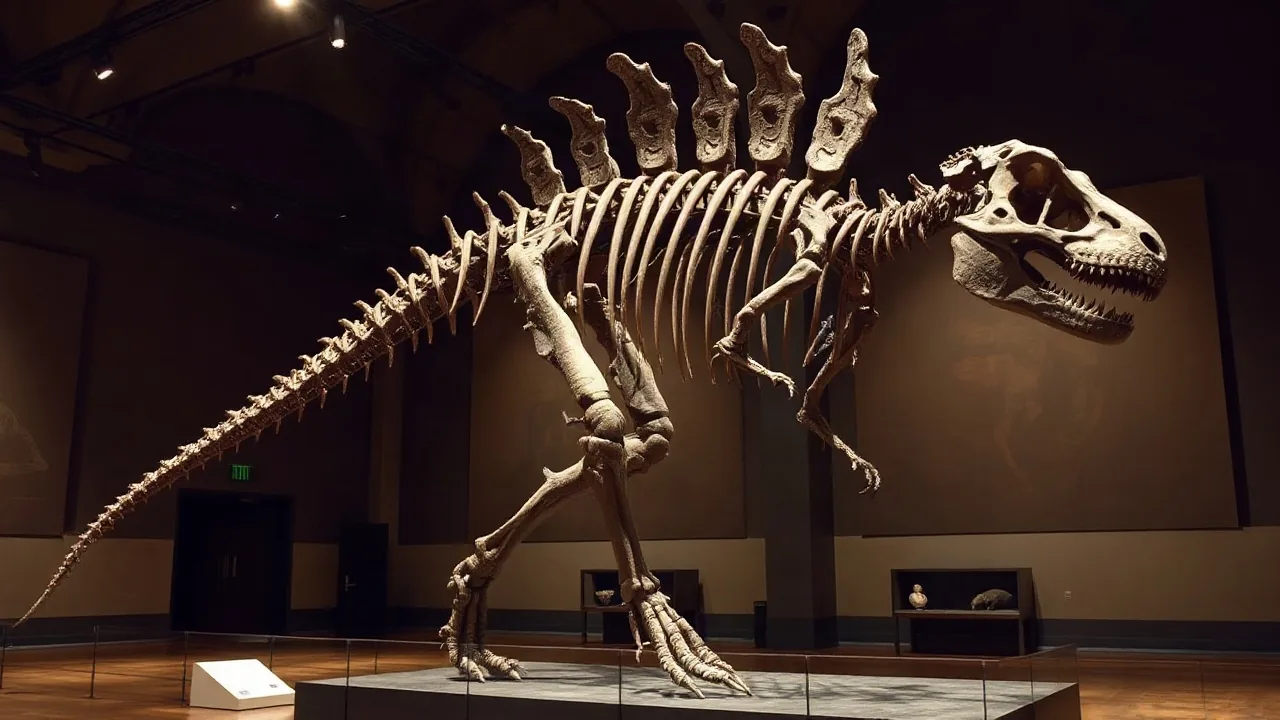
A rare and exceptionally preserved fossil skeleton of a Nanotyrannus, a dinosaur often described as a smaller cousin to the Tyrannosaurus Rex, commanded a staggering $47.3 million at a New York auction. The sale highlights the immense value placed on prehistoric artifacts, while simultaneously fueling a contentious debate within the scientific community regarding the privatization of significant paleontological discoveries.
The specimen, unearthed in Montana in 2019 by a rancher, represents one of the most complete skeletons of its kind ever discovered. Bidding reached heights previously unseen for dinosaur fossils, underscoring the specimen's unique rarity and condition. The auction house, which has not publicly disclosed the buyer's identity, facilitated the record-breaking sale.
A Fierce Debate Over Fossil Ownership
The sale of the Nanotyrannus skeleton has intensified the ongoing discussion among paleontologists and researchers about the ethics and implications of private fossil collecting and sales. Critics argue that such significant scientific resources should reside in public institutions, like museums, where they can be studied, preserved, and made accessible to the public and researchers worldwide. They express concern that private ownership can lead to these invaluable pieces of Earth's history being hidden away or inaccessible for scientific research.
However, proponents of private sales emphasize that the significant financial investment required for fossil excavation and preservation often falls to private individuals and companies. They argue that auctioning such finds can provide the necessary capital for further exploration and conservation efforts, while also allowing for potentially faster acquisition and preservation than might be available through underfunded public institutions. The discovery of this particular Nanotyrannus fossil, for instance, was made on private land, adding another layer to the ownership dispute.
The scientific classification of Nanotyrannus itself has also been a subject of debate. Some paleontologists propose that the specimens are not a distinct species but rather juvenile Tyrannosaurus Rex. However, anatomical differences, including a more slender build and longer skull, lead many to believe it represents a separate genus. The sale of this specimen, regardless of its precise taxonomic status, represents a significant acquisition for whoever now possesses it.
The emergence of this fossil comes at a time when the dinosaur fossil market continues to grow, with increasingly rare and complete specimens fetching millions of dollars. This trend raises important questions about the future of paleontology and how the scientific community will navigate the intersection of private enterprise and public scientific heritage. The $47.3 million price tag for this Nanotyrannus is a stark reminder of the high stakes involved in this unique intersection of science, commerce, and history.