
NVIDIA RTX GPUs Get Major AI Boost From Modder-Unlocked Compute
Enthusiasts have discovered a way to unlock hidden potential in NVIDIA's GeForce RTX 20, 30, and 40 series graphics cards, significantly increasing AI compute performance.

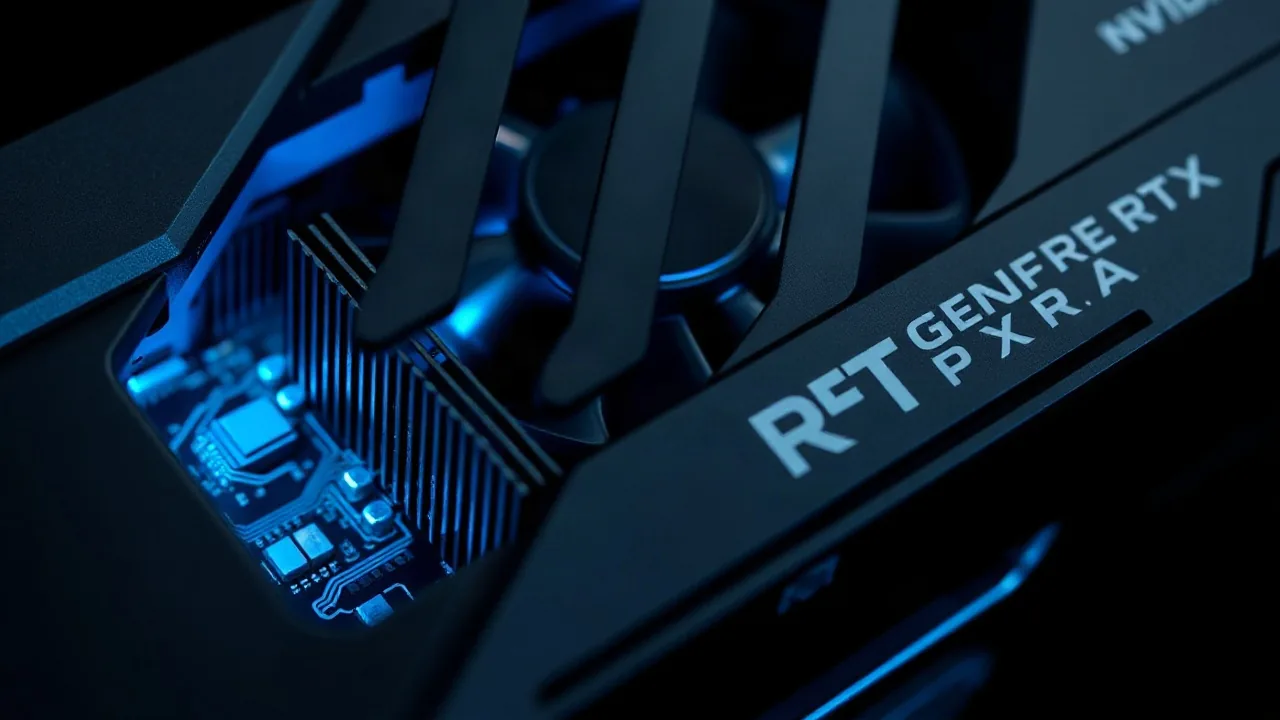
Enthusiasts and modders have successfully unlocked significant compute performance gains in NVIDIA's GeForce RTX 20, 30, and 40 series graphics cards. This breakthrough allows for up to double the AI compute performance on these GPUs, a feat previously thought impossible without hardware modifications.
The discovery, shared across several tech forums and publications in late 2026, centers on enabling BF16 (bfloat16) precision compute capabilities. While NVIDIA officially reserves these advanced features for its professional-grade data center and workstation cards, modders have found a software-based method to activate them on consumer-grade GeForce RTX GPUs. Early reports suggest that users can achieve performance increases ranging from 60% to as much as 100% in certain AI workloads.
Unlocking Hidden Potential
The process reportedly involves modifying specific firmware or driver settings, effectively tricking the graphics card into recognizing and utilizing its latent BF16 processing power. This is particularly impactful for artificial intelligence and machine learning tasks, which often benefit from the reduced precision of BF16 for faster training and inference without a substantial loss in accuracy. For example, an older RTX 3090 GPU, when unlocked, has demonstrated capabilities reaching approximately 129.6 TFLOPS in BF16 precision.
This development is a significant boon for AI researchers, developers, and hobbyists who rely on powerful GPUs for their projects. Access to enhanced compute power on readily available consumer hardware can accelerate innovation and lower the barrier to entry for complex AI model development. The ability to achieve such substantial gains without purchasing new, more expensive professional hardware makes this a particularly noteworthy achievement for the modding community.
The implications extend beyond just AI. While the most dramatic improvements are seen in BF16-accelerated applications, the general increase in compute efficiency could potentially benefit other computationally intensive tasks. However, the primary focus and most immediate impact are undeniably within the burgeoning field of artificial intelligence and its subfields like deep learning and neural network training.
It is important for users considering these modifications to understand the potential risks. Altering firmware or driver configurations can sometimes lead to instability, reduced lifespan of the hardware, or voiding manufacturer warranties. However, the allure of doubling compute performance on existing hardware is a powerful incentive for many in the tech enthusiast space.
This unlock is a testament to the ingenuity of the hardware modding community and highlights the often-untapped potential residing within consumer electronics. As AI continues its rapid advancement, such discoveries ensure that the tools needed to push its boundaries remain accessible and powerful for a wider range of users.