
OpenAI Launches First Branded Device: A $230 Light-Up Keyboard
OpenAI has unveiled its first branded hardware, the Codex Micro, a $230 mini-keyboard designed to manage multiple AI agents. This limited-run collaboration features color-coded keys for real-time feedback.

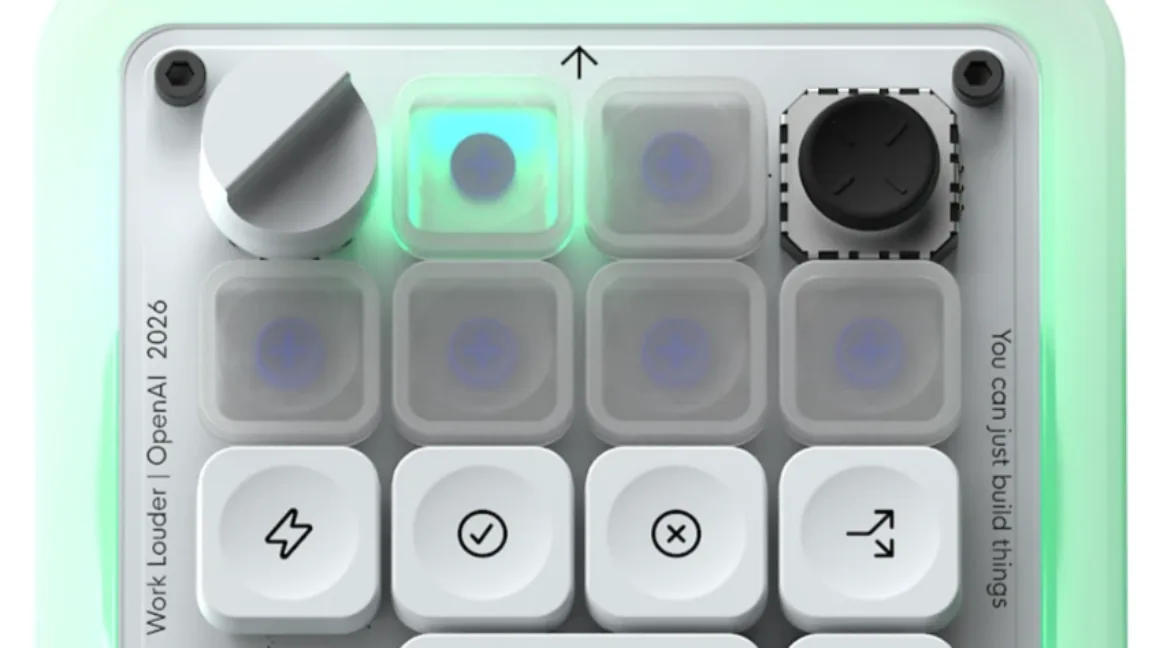
OpenAI, the artificial intelligence research giant, has officially launched its first piece of branded hardware: the Codex Micro. This specialized mini-keyboard, priced at $230, is designed to offer users a streamlined way to monitor and interact with multiple AI agents simultaneously. The device is a limited-run collaboration with Work Louder, a company known for its Creator Micro line of customizable keyboards aimed at creative professionals. The Codex Micro distinguishes itself with six frosted keys in the top rows that provide color-coded, real-time visual feedback on up to six distinct Codex agent threads.
These illuminated keys are intended to convey the status of AI tasks at a glance. Ideally, they will cycle from white when a thread is idle to blue when the AI is processing information, and green upon successful task completion. The keys can also flash amber, signaling that human input or a decision is required, or turn red to indicate an error within a thread. A simple tap on a lit key brings the corresponding Codex window to the forefront on the user's screen. This direct interface aims to simplify the monitoring of continuously running AI agents, a common practice for users who keep dedicated applications open.
Expanding Beyond Software Ambitions
While the Codex Micro is essentially a modified version of existing third-party hardware, its prominent OpenAI branding and a tagline referencing their Super Bowl ad, "You can just build things," signal a broader strategic move. The company has reportedly been exploring hardware ambitions since at least 2023, with initial collaborations rumored to involve former Apple design chief Jony Ive. OpenAI's acquisition of Ive’s design firm, LoveFrom, last May was reportedly focused on developing a unique, screenless handheld device capable of processing audio and visual input from its surroundings. However, reports from late 2025 indicated that this ambitious project faced significant technical and design challenges, potentially delaying its anticipated 2026 launch. Adding to these complexities, Apple initiated legal action in early July 2026, alleging the theft of trade secrets by a former employee pertinent to hardware manufacturing, which could impact OpenAI's hardware initiatives.
Below the status indicator keys, the Codex Micro includes six buttons pre-mapped for common Codex operations such as accepting or rejecting AI-generated changes, branching conversations, and a push-to-talk function for voice commands. Users can further customize these functions through software adjustments and by physically swapping keycaps, with 32 additional keycaps included. The device also supports five other programmable layers for general computing shortcuts, in addition to the primary layer dedicated to Codex agents.
The launch of the Codex Micro marks a significant step for OpenAI as it ventures into the hardware market, aiming to complement its powerful language models with tangible devices. This move underscores OpenAI's intent to integrate its AI capabilities more deeply into users' daily workflows and environments. The company has described the keyboard as a "limited run," with orders being taken "while supplies last," suggesting that its long-term availability remains uncertain. A company representative did not immediately provide details on the total production volume as of press time.
Orders for the Codex Micro are now open, with shipments expected to begin shortly after purchase, according to a company spokesperson. This foray into hardware, despite potential challenges and the device's niche appeal, signifies OpenAI's commitment to exploring new avenues for AI interaction and integration beyond traditional software interfaces.