
AI Decodes Human DNA "On Switch" Sequence
Researchers used artificial intelligence to decode a key DNA sequence, known as the initiator, that acts as an "on switch" for gene expression. The discovery could aid in understanding genetic disorders and designing synthetic gene regulators.

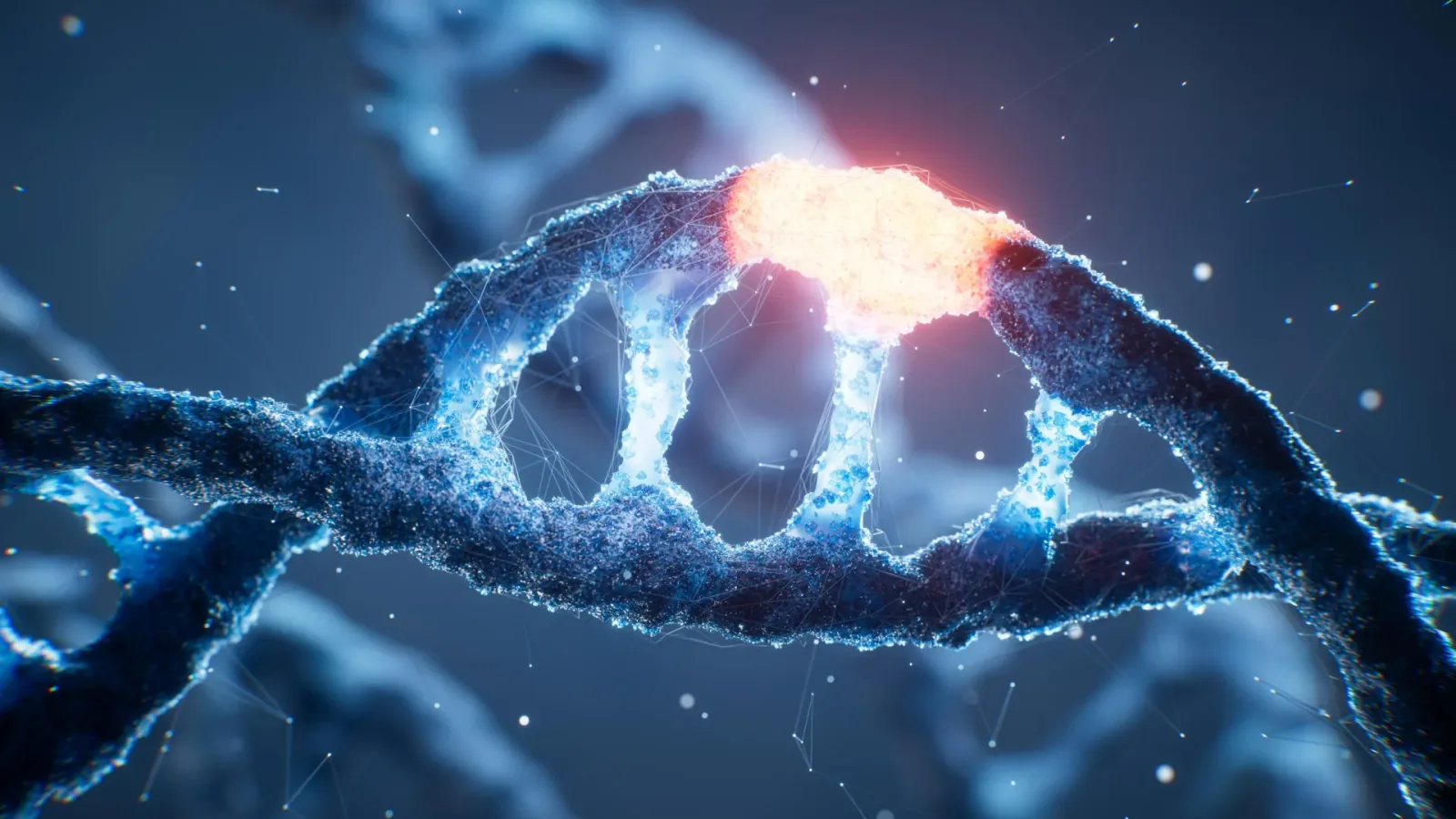
Scientists at the University of California San Diego have successfully used artificial intelligence to decipher a critical DNA sequence that functions as an "on switch" for gene expression. The breakthrough, detailed in a new study, pinpoints the specific DNA pattern of the "initiator," a region that signals where a gene's instructions begin to be converted into functional products within the cell.
The research team, led by graduate student researcher Torrey Rhyne-Carrigg and overseen by University of California San Diego Professor James T. Kadonaga, employed high-throughput DNA sequencing to analyze approximately 500,000 different variations of the initiator sequence. This extensive dataset allowed them to measure the resulting gene expression activity. Leveraging these experimental results, they trained a machine learning system—a form of artificial intelligence—to recognize the characteristic DNA pattern associated with the initiator's function. Once the AI model successfully decoded this signature, the researchers scanned human genes and found that the initiator sequence is present in roughly 60% of them.
"These AI models were found to provide, for the first time, strong predictions of the presence or absence of the initiator in human genes, and were thus able to decode the DNA base sequence pattern of the initiator," stated Kadonaga, a professor in the UC San Diego Department of Molecular Biology within the School of Biological Sciences. This discovery marks a significant advancement in understanding the intricate regulatory mechanisms within human DNA.
Predicting Gene Activity and Disease Impact
The implications of this AI-driven decoding extend to predicting the impact of genetic mutations. Researchers can now better anticipate how alterations in the initiator sequence might affect gene activity, potentially contributing to the development of various disorders. The study's comprehensive data and sophisticated AI models also offer a foundation for designing custom synthetic promoters. These engineered sequences can be programmed to control gene expression, switching genes on or off for specific therapeutic or research applications.
This research highlights a powerful synergy between traditional laboratory experiments and cutting-edge artificial intelligence in unraveling the complex information encoded within human DNA. "More globally, this work is a step forward in the combined use of laboratory experiments and AI to decipher the information that is embedded in the sequence of the DNA bases in humans," Kadonaga explained. He further elaborated on the long-term vision: "Ultimately, within the six billion bases of DNA in each of our cells, there is a gene expression code that specifies when, where and to what extent each of our genes should be turned on or off. If we had an AI model for the entire gene expression code, we would be able to predict the activity of each of the different variants of genes in different people. The new AI model for the initiator sequence is a small but important part of this gene expression code, and I am optimistic that we will expand our AI models of the human gene expression code in the not-too-distant future." The ability to predict gene activity across diverse individuals represents a significant leap towards personalized medicine and a deeper understanding of genetic variation.
The successful decoding of the human DNA initiator sequence by artificial intelligence opens new avenues for genetic research and therapeutic development. By understanding precisely how gene expression is initiated, scientists can gain unprecedented insights into cellular function and dysfunction. This breakthrough could pave the way for novel treatments for genetic diseases and advanced biotechnological tools, underscoring the transformative potential of combining biological experimentation with sophisticated AI analysis. The precise identification of the DNA sequence pattern that governs gene activation is a foundational step in mapping the complete gene expression code.