
Bees Demonstrate Tool Use in Novel Problem-Solving Study
New research reveals bumblebees can use tools to solve complex problems, challenging long-held assumptions about insect intelligence. The findings suggest miniature brains can achieve flexible solutions to novel challenges.

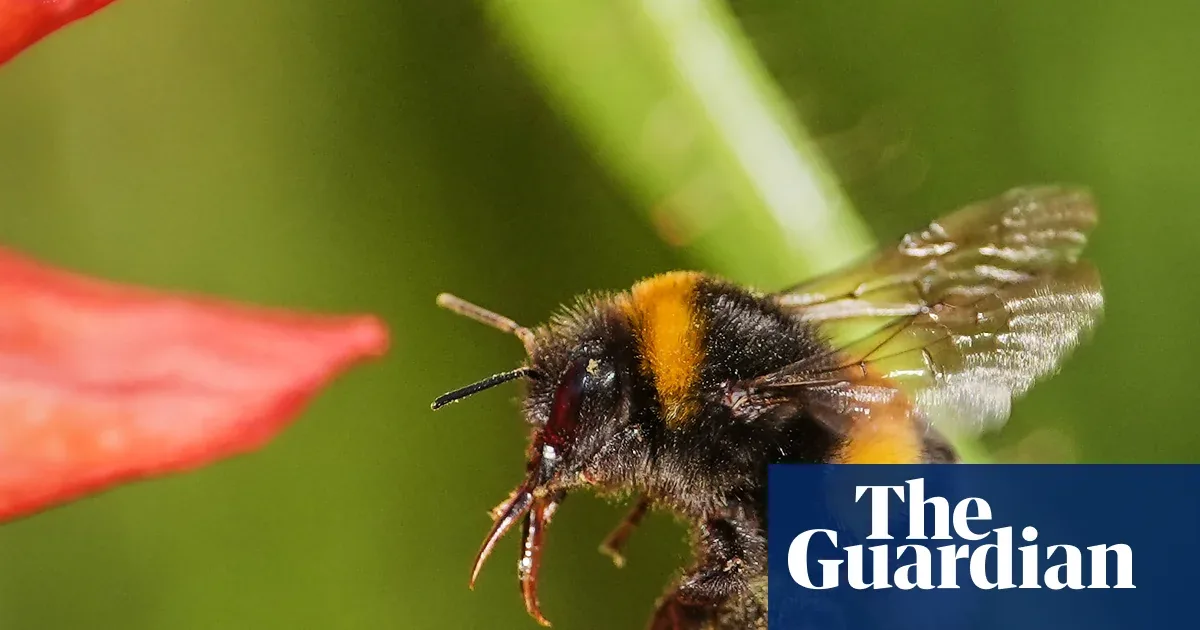
In a groundbreaking study published in June 2026, researchers have demonstrated that bumblebees possess the remarkable cognitive ability to use tools to solve novel problems. This finding challenges the prevailing notion that insects operate solely on instinct and basic trial-and-error learning, placing these small creatures in a cognitive league previously thought to be exclusive to more complex animals.
The experiment, conducted by scientists at the University of Oulu in Finland, adapted a classic problem-solving task first used to test chimpanzees a century ago. In the original "box-and-banana" experiment, primates learned to stack boxes to reach an out-of-reach food reward. Since then, similar problem-solving capabilities have been observed in other species like elephants and crows.
For the bee study, researchers presented the insects with a transparent chamber. On the ceiling, an artificial blue flower, previously associated with a sugary reward, was placed too high for the bees to reach, and too high to hover effectively. A small polystyrene ball was also introduced into the chamber. The bees were tasked with rolling the ball to a specific location and then climbing on top of it to reach the artificial flower.
The behavioral sequence required—understanding that an object could be repositioned and utilized as a tool to achieve an inaccessible goal—was entirely new to the bees. Despite this, approximately 75% of the bees successfully navigated the challenge, demonstrating a level of insight previously unobserved in insects. "This is essentially an insect version of the classic ‘box-and-banana’ problem," stated Dr. Olli Loukola, a behavioral ecologist at the University of Oulu and senior author of the study. "The animal must realise that an object can be repositioned and then used as a tool to reach an otherwise inaccessible goal. What stands out about the result is that this kind of spontaneous problem solving is now demonstrated in an insect."
Challenging Perceptions of Insect Intelligence
Initial success led researchers to consider alternative explanations. It was possible the bees were not strategically using the ball but were merely attracted to rolling it or the blue flower independently, with their actions being fortuitous. To address this, the research team devised more complex scenarios. In one refined test, bees were allowed to explore two chambers, one containing the target flower, before the ball was introduced. The scientists then obscured the blue flower with red light, forcing the bees to rely on memory to locate the correct chamber and then use the ball as a tool.
Even with these added complexities, a significant majority of bees, 23 out of 30, succeeded. This suggests a genuine comprehension of the task rather than random behavior. "We are not claiming that bees think like humans," Dr. Loukola clarified. "But our findings show that miniature brains can generate flexible solutions to novel problems in ways we are only beginning to understand."
The implications of this research extend beyond understanding bee behavior. It challenges the deeply ingrained assumption that complex cognitive functions, like tool use and spontaneous problem-solving, require large and intricate brains. "There’s a general perception that intelligent behaviour requires big brains because we are big-brained and relatively intelligent among animals," commented Professor Lars Chittka, a behavioral ecologist at Queen Mary University of London, who was not involved in the study but is a noted expert on bee cognition. "Bees are a model of how much intelligence you can squeeze into a small nervous system."
Professor Chittka, author of "The Mind of a Bee," added that while his own laboratory has documented various impressive bee behaviors, including basic counting and object manipulation, the current findings are particularly striking. "We’ve seen bees do all kinds of remarkable things in our lab: counting, impressive object manipulation – but they surprise me every time. This is the clearest demonstration yet of some kind of comprehension of what’s at stake." The study underscores the need to reconsider our understanding of animal intelligence and the cognitive capacities of species with vastly different neurological structures. It serves as a potent reminder of the sophisticated capabilities that can exist within even the smallest nervous systems, advocating for greater respect for these often-underestimated creatures.