
Bespoke Wax Cradles Shape Queen Bee Development, Study Finds
Scientists have discovered that the unique wax composition and structure of queen bee cells are critical for the survival and development of new queens, going beyond just the royal jelly diet.

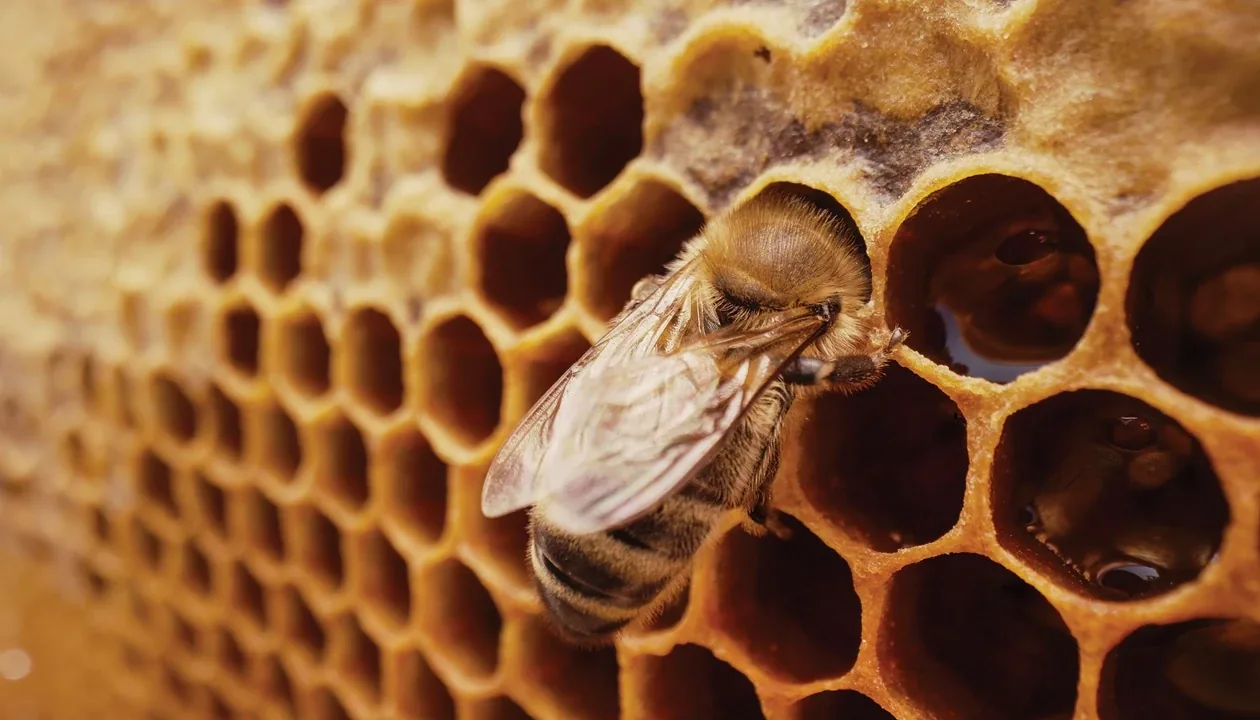
Scientists have uncovered that the cradles in which honeybee queens develop are far more than simple wax containers. New research reveals that these specially engineered queen cells, crafted from a "bespoke" wax with distinct chemical and physical properties, are crucial for the survival and proper development of future queens. For years, the prevailing scientific understanding attributed queen development solely to an exclusive diet of royal jelly, but this latest study highlights the significant role of the queen's nursery environment.
The investigation, published in the journal Nature, focused on the western honeybee (Apis mellifera). Researchers, led by entomologist Boris Baer from the University of California, Riverside, examined the differences between the wax used for queen cells and the hexagonal cells typically built by worker bees. Using advanced techniques like scanning electron microscopy and gas chromatography-mass spectrometry, they found that queen cell wax is notably richer in unsaturated fatty acids, including oleic acid, linoleic acid, and α-linolenic acid. Conversely, it contains fewer n-alkanes, such as pentacosane, and wax esters. The structural integrity also differs: queen cell wax is less dense, softer, and mechanically weaker than worker cell wax, yet possesses a higher peak melting temperature.
Dedicated Builders Alter Royal Nursery Chemistry
Further analysis revealed a specialized group of younger bees are responsible for constructing these unique queen cells. These builder bees actively alter their own body temperature to nearly 40 °C to process the wax and fundamentally change its chemical composition, creating a highly specific environment for the developing queens. This contrasts with the standard fare provided to worker larvae.
To confirm the critical role of these specialized cells, Baer's team conducted a grafting experiment. They transplanted newly hatched queen larvae into cells constructed with standard worker bee wax. The results were stark: 62.5% of these grafted queen larvae did not survive. A similar experiment with eastern honeybees (Apis cerana) yielded comparable outcomes, reinforcing the idea that the wax environment is vital.
"We suspect that developing larvae are responding to a combination of chemical cues and physical properties of the wax, much like developing embryos in other animals respond to signals from their environment," Baer explained. This suggests a complex interplay between the larva and its immediate surroundings, where the bespoke wax acts as a signaling medium.
The findings challenge the long-held focus on nutrition alone. While royal jelly is undoubtedly a factor, the engineered nature of the queen cell wax presents a previously underestimated element in determining a larva's fate. This specialized wax may provide specific physical support, regulate temperature more effectively, or deliver crucial chemical signals that guide the intricate process of queen bee differentiation. Understanding these specialized construction techniques provides deeper insights into the complex social structure and reproductive strategies of honeybee colonies.
Gene E. Robinson, a renowned honeybee biologist at the University of Illinois Urbana-Champaign, who was not involved in the study, described the work as "compelling" and an "outstanding example" of interdisciplinary research. He noted that the evidence strongly supports the existence of a specialized cohort of worker bees dedicated to the crucial task of queen rearing, aligning with his own earlier research on distinct worker genotypes and their rearing preferences.