
Exoskeleton Helps Hiker With Spinal Stenosis Tackle Grand Canyon Trail
A man with spinal stenosis used the Hypershell X Ultra S exoskeleton to hike the Grand Canyon and keep up with his daughter, finding it offered endurance support.

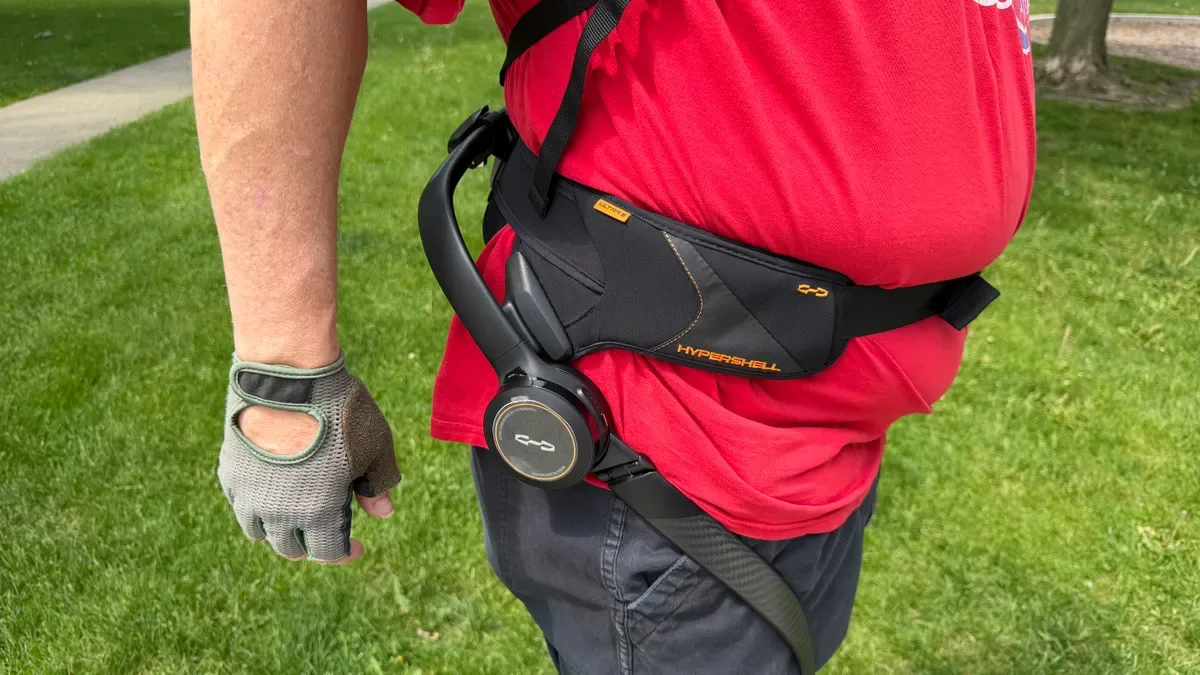
In the dramatic landscape of the Grand Canyon, Arizona, a 50-year-old hiker, who typically relies on a cane due to spinal stenosis, tested the new Hypershell X Ultra S exoskeleton. Strapped to his waist and legs, the $1,999 device aims to extend endurance and reduce fatigue, allowing him to navigate a challenging 100-foot trail climb alongside his athletic 15-year-old daughter. While the technology did not grant superhero abilities, it provided a noticeable assist during the strenuous ascent.
The hiker, who also carries the added challenge of weighing 270 pounds, exceeding the exoskeleton's recommended limit, found the experience illuminating. "The tech will be ready eventually, but for now, we have more humble aspirations of endurance extension," explained Angus Fan, Hypershell's chief product officer, in an interview. This sentiment proved true; the exoskeleton made his leg movements feel lighter and the machine assisted with leg pushes, though it did not eliminate the physical exertion entirely.
Understanding the Hypershell X Ultra S Technology
The Hypershell X Ultra S is part of a new line of exoskeletons from Hypershell, launching alongside the $1,499 X Max S and $999 X Pro S models, each offering varying levels of support and capability. The hardware, constructed from lightweight carbon fiber and titanium, weighs just under five pounds. A 5,000-mAh battery, located in a unit at the small of the back, powers motors at each hip. These motors drive arms that extend down the thighs, attaching via adjustable straps positioned above the knees. Notably, the design limits the use of front pockets and makes sitting, especially in vehicles, uncomfortable due to the rear battery pack.
Each exoskeleton comes with a spare battery, offering approximately 30 kilometers (18.6 miles) of assistance on a full charge. The core function is to lighten the effort of leg movements, enabling users to travel farther and with less strain. The device is controlled via a smartphone app and a button on the hip, offering several modes. 'Eco' and 'Hyper' modes adjust the level of assistance, 'Transparent' mode idles the machine for normal movement, and 'Fitness' mode adds resistance to help users build strength. A new feature, 'Hyperintuition,' uses an algorithm to automatically detect and adapt to different activities like walking, cycling, or climbing stairs, enhancing user convenience.
The assistance provided by the exoskeleton was described as feeling like being a marionette, with significantly lighter leg lifts. This sensation was more pronounced during cycling, particularly on an uphill climb, where the leg-pushing assistance was more readily apparent than on the trail.
Fan emphasized that the primary goals of Hypershell's technology are to increase endurance and reduce fatigue, fostering greater confidence in tackling physical challenges rather than bestowing superhuman strength. This focus aligns with the experience on the Grand Canyon's rim, where the hiker embarked on a two-mile trek and deliberately left his cane behind. Despite the hike not being overly strenuous, the preceding 100-foot climb had been taxing, and the total 12,000 steps far exceeded his usual daily average. In similar situations, such as at CES, he typically requires a cane.
Quantifying the exoskeleton's impact presented a challenge, but heart rate monitoring served as a key metric. During the climb, the hiker's heart rate ranged from 89 to 136 beats per minute (bpm), while his daughter's was between 86 and 130 bpm. For the two-mile hike, his rate was 106 to 118 bpm, compared to his daughter's 98 to 92 bpm. While the numbers showed a closer performance than anticipated, the most significant difference emerged post-exertion. The hiker reported needing 27 minutes to feel recovered after the climb and 15 minutes after the hike, whereas his daughter bounced back within two minutes. This stark contrast in recovery time highlighted a critical benefit, though the direct impact of the exoskeleton on this specific aspect remains to be fully determined.