
Full Moon May 2026: Viewing Guide and Lunar Event Details
The Flower Moon reaches peak illumination on May 31, 2026, offering optimal viewing conditions across North America. Learn timing, visibility, and what makes this lunar event noteworthy for stargazers.

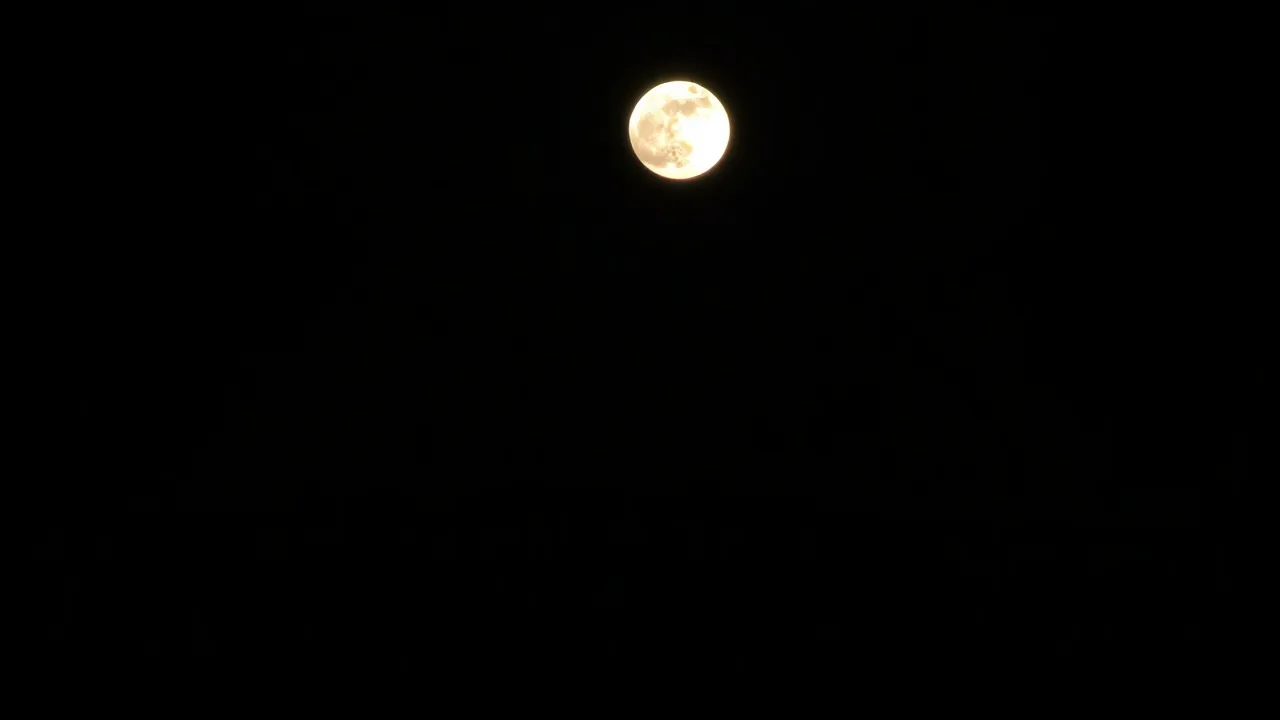
The full moon on May 31, 2026, will reach peak illumination at 11:44 PM Eastern Daylight Time, marking the month's brightest lunar event and one of the most accessible night sky phenomena for casual observers across the United States. Commonly known as the Flower Moon by indigenous and colonial North American traditions, this full moon arrives as spring transitions toward summer, making it highly visible from dusk through dawn across most populated regions.
"The May full moon is particularly notable this year because it occurs just days before the astronomical onset of summer on June 20," explains Dr. Sarah Chen, an astronomer at the Planetarium Association of America. "Observers should position themselves away from light pollution by 10 PM local time to experience maximum luminosity and the distinctive golden hue that often characterizes spring full moons."
No special equipment is required to view the Flower Moon. The naked eye provides sufficient detail to observe craters, mountains, and broad lunar features across the moon's face. Binoculars or a modest telescope (4 to 8-inch aperture) will reveal considerably more texture and depth. The moon will rise in the eastern sky shortly after sunset on May 31 and will remain visible throughout the night, reaching its highest point in the southern sky around midnight local time.
Timing and Visibility Across North America
Exact times for moon rise and moon set vary by geographic location within the continental United States. East Coast observers will witness the full moon appearing over the horizon around 8:15 PM EDT, while West Coast viewers will see moonrise closer to 8:45 PM PDT. The peak illumination moment at 11:44 PM EDT converts to 8:44 PM PDT for Pacific-region watchers and 10:44 PM CDT for those in the central time zone.
Weather conditions play a decisive role in successful viewing. Partly cloudy skies will still permit moon observation since the bright lunar disk often remains visible through light cloud cover. Clear skies without atmospheric haze offer the best experience. The moon's apparent size remains relatively constant throughout May; there is no "supermoon" effect in 2026, as the full moon occurs near apogee (the farthest point in its elliptical orbit around Earth).
Urban light pollution can significantly impact the viewing experience. Residents of metropolitan areas should travel 15 to 30 miles outside city centers to see the moon's lighter regions clearly and observe subtle color gradations. Rural and semi-rural locations offer noticeably superior contrast and detail without additional equipment.
Lunar Features Worth Observing
The Flower Moon on May 31 presents excellent opportunities to examine specific lunar geography with basic optical aid. The moon's major impact basins—Mare Tranquillitatis, Mare Imbrium, and the Ocean of Storms—appear as darker gray regions that are actually flat plains of ancient volcanic material. Brighter highland regions, particularly the lunar south pole, exhibit dense crater patterning from billions of years of astronomical collisions.
Several named features are easily located with binoculars:
- Tycho Crater: a bright young impact site with prominent ray systems emanating outward, located in the southern highlands
- Copernicus Crater: a major impact structure in the Ocean of Storms with terraced walls and central peaks
- The Straight Wall (Rupes Recta): a dramatic escarpment in the moon's central highlands visible under certain illumination angles
- Plato Crater: a large basin on the northern frontier, sometimes appearing as a dark depression depending on lighting
Astronomy clubs and planetariums often host organized viewing sessions coinciding with significant full moons. The Astronomical League's member organizations across all 50 states typically arrange public observation events, offering telescopes and experienced guides to help identify lunar features. Checking local university physics departments or science museums may reveal additional community viewing opportunities in late May 2026.
Scientific Context and Lunar Monitoring
The May 2026 full moon occurs during a period of renewed scientific interest in celestial observation. NASA's Lunar Reconnaissance Orbiter and similar spacecraft continue mapping the moon's surface with unprecedented resolution, providing context for ground-based visual observation. Data from these missions has revealed that space weathering processes continually alter the moon's surface properties, which affects how light reflects and how craters appear to Earth-based observers.
The Flower Moon's timing in late May makes it particularly relevant for seasonal phenology in temperate North America. Historical records show that indigenous peoples and early colonists timed planting schedules by the May full moon's position and brightness, treating it as both a celestial landmark and a practical agricultural indicator. This traditional association with plant flowering and growth patterns persists in modern usage of the "Flower Moon" designation.
For observers interested in longer-term lunar tracking, May 31, 2026, provides a baseline measurement point. The moon's orbit experiences measurable recession from Earth at a rate of about 1.5 inches annually. Over centuries, this affects eclipse frequency, tidal patterns, and the apparent size of the moon as seen from Earth's surface. Casual observers documenting the Flower Moon's appearance via smartphone photography can contribute to citizen-science initiatives that track these slow but measurable changes.
Clear skies and steady viewing conditions should favor most of North America on May 31, 2026. Those planning observation sessions should finalize viewing locations and equipment by late May to ensure readiness for one of the year's most accessible astronomical events.