
Why Humans Have Unique Lips: Biologist Explains Primate Difference
Humans possess distinct, outwardly turned lips, a feature unique among primates. Biologists explore evolutionary reasons for this trait, from feeding and speech to social signaling.

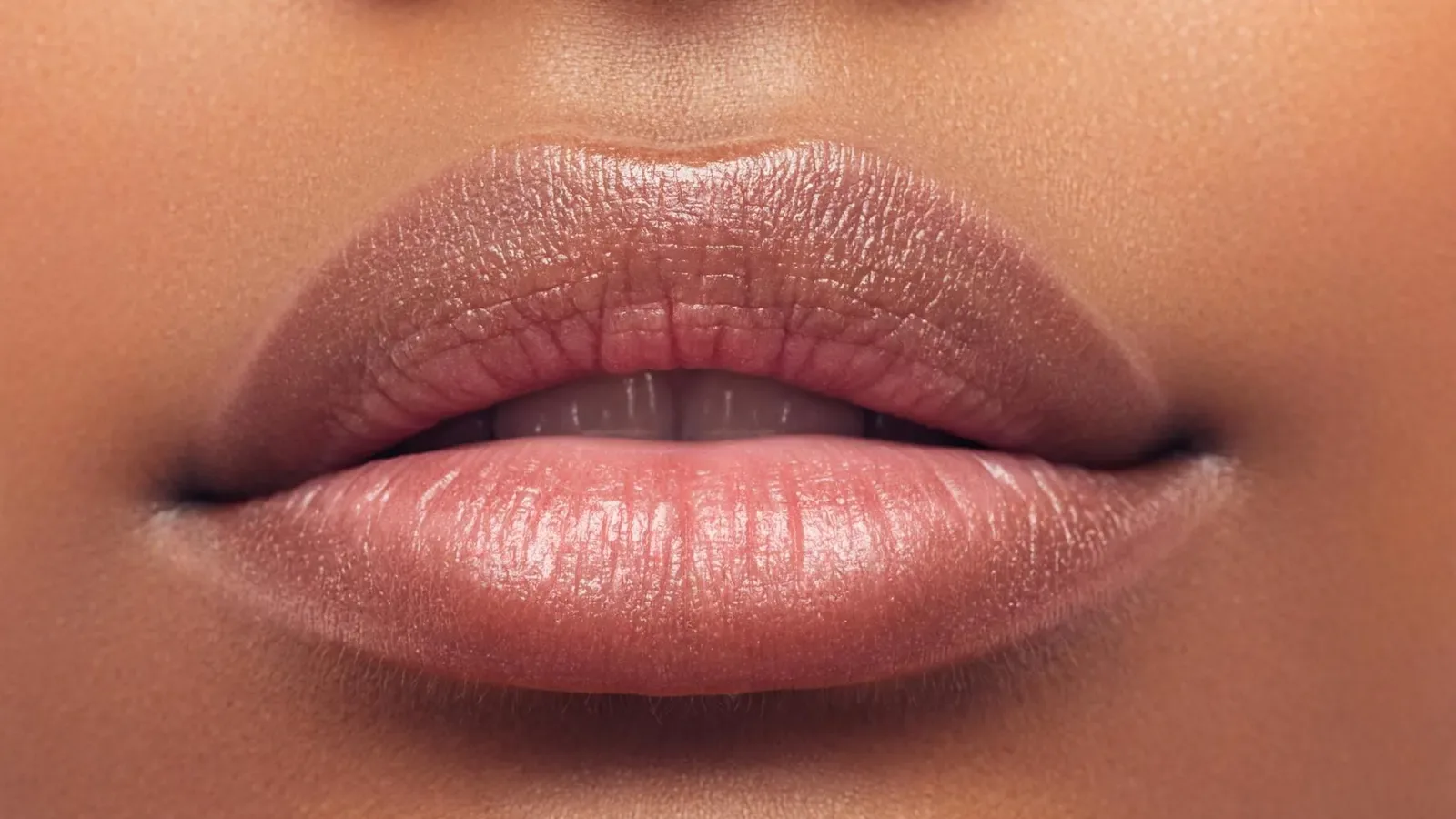
Humans possess a distinctive facial feature – outward-turned, brightly colored lips – that sets them apart from all other primates. While other apes have lips, they lack the prominent, red vermilion border that is a hallmark of Homo sapiens. Biologists are still exploring the evolutionary pressures that led to this unique trait, with several compelling theories emerging.
Anatomically, human lips are remarkable. The vermilion border, the visible red band, is essentially the moist inner lining of the mouth folded outward and exposed to the air. This thin tissue, which lacks oil glands, allows the underlying blood vessels to show through, giving lips their characteristic color. This coloration changes with circulation, becoming paler in the cold and flushing with exertion, but also makes them susceptible to drying and sun damage.
Evolutionary Drivers Behind Human Lips
The unique structure of human lips has prompted significant scientific inquiry, with researchers proposing multiple explanations for their development. One prominent theory centers on infant feeding. Unlike other primates whose infants nurse from protruding teats, human newborns latch onto a relatively flat breast. This requires the muscular, outward-turned lips of infants to create an effective seal, a crucial adaptation for early survival.
However, this feeding hypothesis doesn't fully explain the outward turning or the color. While other primate infants successfully nurse without such specialized lips, the muscularity of human lips is undeniable and vital for tasks beyond feeding. Their role in shaping sounds is another key area of investigation. As the final valve for air before it forms words, lips are essential for producing consonant sounds like 'p,' 'b,' and 'm.' Studies have even suggested that the rhythmic lip-smacking observed in some monkeys shares similarities with the syllabic structure of human speech, hinting at a potential evolutionary link between primate facial gestures and the development of spoken language.
A third significant explanation focuses on the communicative role of lip color. With humans having lost most body hair and sporting bare faces, lips become a prominent visual signal. Their color, influenced by blood flow, can convey information about health, emotional state, and even age. While this social and sexual signaling aspect is widely considered a contributing factor, its evolutionary impact is difficult to quantify directly, as such non-fossilizable traits are challenging to trace through history.
It is important to note that romantic kissing, often associated with lips, is not a universal human behavior. Research indicates that a majority of cultures do not practice romantic kissing, suggesting that lips evolved for reasons predating or independent of this act. Instead, the heightened tactile sensitivity of the lips, approaching that of fingertips, points to another crucial function. This sensitivity is vital for infants exploring their environment and for adults in complex social interactions, highlighting how lips serve as a nexus for eating, speaking, touching, and social signaling.
Ultimately, the evolution of human lips may not stem from a single factor but rather a confluence of adaptations. They represent a complex interplay of survival needs, communication strategies, and sensory perception, embodying a remarkable example of how anatomical features can serve multiple, overlapping evolutionary purposes. The feature we see every day might be a result of pressures in infant feeding, the development of speech, and the need for nuanced social communication.