
Specialized Honeybees Build Queen's Home Using Unique Wax
Researchers discovered a specialized group of worker honeybees that construct elaborate queen cells using a unique wax blend. This finding suggests a queen bee's environment plays a crucial role in her development, not just her diet.

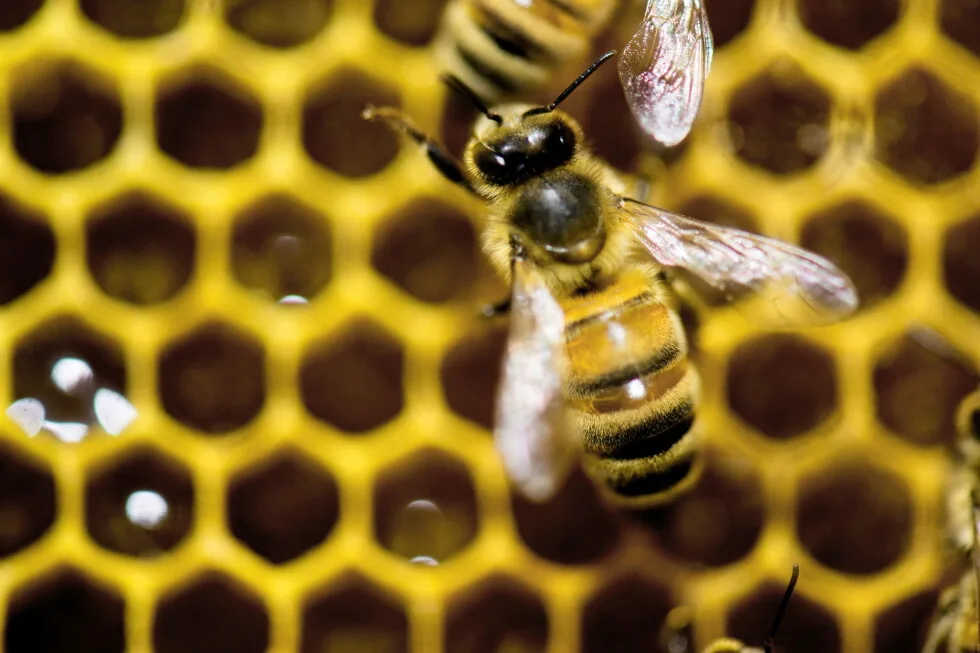
Scientists have uncovered a previously unknown division of labor within honeybee colonies, identifying a specific cohort of worker bees meticulously tasked with constructing the queen's dedicated dwelling. These specialized bees, distinct from their nestmates performing foraging and brood-rearing duties, create the queen's residence from a specially formulated wax, effectively running a low-grade "fever" to aid in its creation. The discovery, published in the journal Nature, challenges long-held assumptions about what makes a honeybee a queen.
For decades, the prevailing wisdom in entomology centered on the royal diet – exclusively fed a rich substance known as royal jelly – as the sole determinant of a bee's royal status. However, this new research indicates that the physical environment, specifically the construction of the queen's cell, is equally critical. The peanut-shaped queen cells are built with a softer wax that possesses a higher melting point compared to the wax used for standard worker bee cells.
A Unique Approach to Royal Housing
The research team, led by scientists from the Chinese Academy of Agricultural Sciences, observed that these builder bees are typically younger and exhibit distinct genetic expression patterns, priming them for their unique architectural role. "No one had ever thought that there might be a specialized group of workers that were building these queen cells," commented Julia Bowsher, a bee researcher at North Dakota State University who was not involved in the study. She added that further investigation into the specific chemical makeup of this specialized wax is warranted. "I would really like to know more about the specific chemical composition of this wax and which active ingredients are directly affecting the growth of the queens," Bowsher stated.
To test the environmental hypothesis, researchers conducted an experiment where nascent queens were raised in cups lined with either standard worker wax or the specialized queen wax. Even when provided with the same royal jelly diet, queens housed in worker wax exhibited stunted growth and reduced survival rates. This underscores the significance of their immediate surroundings in development. "For centuries, we believed ‘you are what you eat’ was the only rule for making a queen bee. Our study rewrites that rule to say ‘you are where you live, too,’" explained Kai Wang, a co-author of the study. This finding highlights a complex interplay between genetics, diet, and environmental factors in the development of honeybee royalty.
The implications of this research extend beyond basic entomology. Honeybees are indispensable pollinators for a vast array of agricultural crops, including vital staples like blueberries, squash, watermelon, and almonds. Understanding the intricate social structures and developmental pathways within a hive is crucial for appreciating and potentially bolstering these essential insects' populations. The specialized labor and building techniques employed by these bees offer a fascinating glimpse into the sophisticated, yet often hidden, workings of a honeybee colony. Future studies aim to further elucidate the precise chemical properties of the wax and the full spectrum of factors contributing to queen development.