
Michigan Election Security: Protecting Voter Data in 2026
Michigan officials deploy advanced cybersecurity measures to safeguard voter information during the 2026 elections, including real-time threat monitoring and encrypted databases. State agencies work with federal partners to prevent breaches and ensure election integrity.

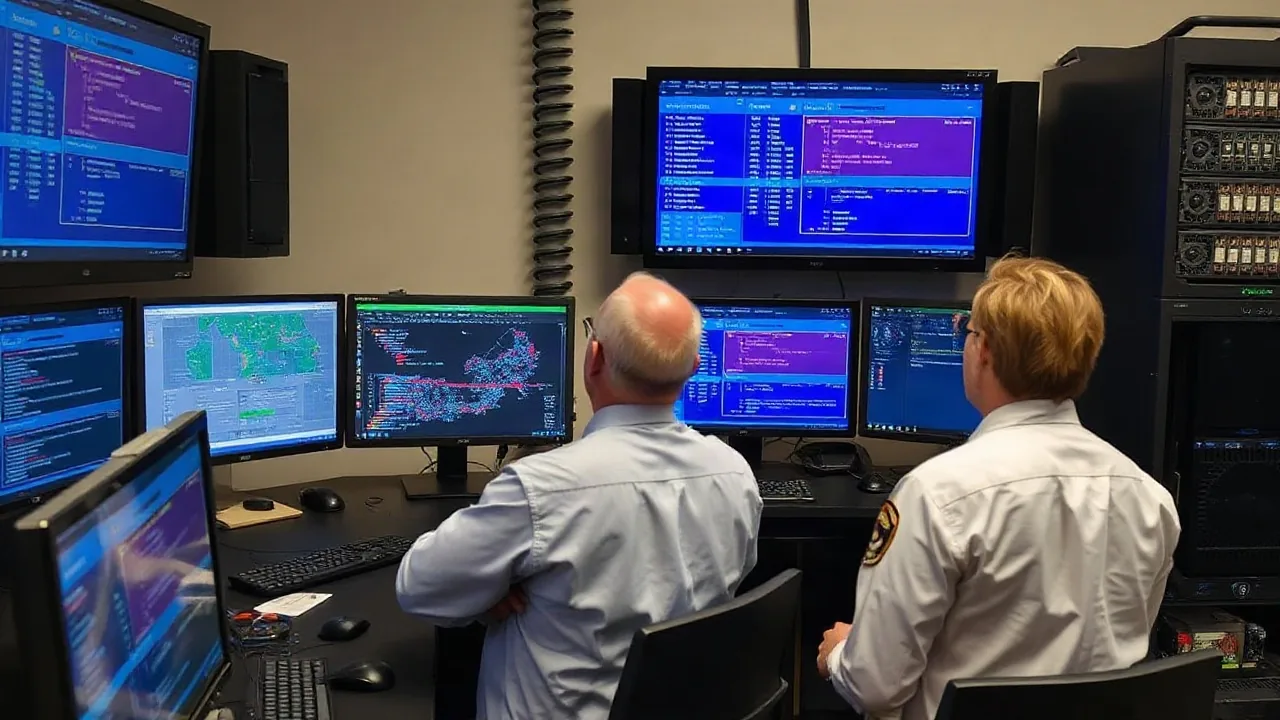
Michigan's Secretary of State office activated enhanced cybersecurity protocols across all 83 counties on November 1, 2026, marking the most comprehensive voter data protection effort in the state's electoral history. The initiative responds to growing threats targeting election infrastructure nationwide and follows multiple attempted breaches in 2024 and 2025 that exposed vulnerabilities in voter registration systems.
Election officials in Lansing have implemented a multi-layered security architecture designed to isolate sensitive voter databases from external networks. "We've segmented our systems so that even if one county's voter registration platform is compromised, the others remain protected," said Jeanette Kasson, Michigan's Election Security Director, in an October briefing to county clerks.
Voter data protection now includes real-time intrusion detection at all county clerk offices. Each jurisdiction runs continuous network monitoring software that flags unusual access patterns, failed login attempts, and unauthorized data queries. The state has invested $4.2 million in these systems since July 2026.
Encryption and Database Hardening
Digital safeguards center on end-to-end encryption for all voter information stored on state and county servers. Michigan adopted AES-256 encryption standards, the same level used by the U.S. Department of Defense, across all voter registration databases. Voter names, addresses, birthdates, and driver's license numbers are encrypted both at rest and in transit.
The state also mandated multi-factor authentication (MFA) for every employee with access to voter records. County clerks and poll workers now use hardware security keys or authenticator apps to log in, eliminating passwords as a single point of failure. This requirement affected approximately 8,400 election workers across Michigan.
Database hardening extends to removing unnecessary data fields. The Secretary of State's office instructed counties to delete voter Social Security numbers from local systems by October 15, 2026, keeping only the last four digits where legally required. This reduced the surface area for potential theft significantly.
Coordination with Federal Agencies and Threat Intelligence
Cybersecurity collaboration now links Michigan directly to the U.S. Cybersecurity and Infrastructure Security Agency (CISA). The state receives daily threat intelligence briefings and has deployed CISA's Election Security Operations Center toolkit to detect malware and phishing attempts targeting election staff.
Michigan's election security team includes representatives from the FBI's Detroit field office, who conduct quarterly security audits and provide real-time incident response. Since January 2026, the FBI has identified and blocked 47 phishing campaigns targeting Michigan county election offices, preventing credential harvesting that could have exposed voter databases.
The state also participates in CISA's Critical Infrastructure Protection Program, which provides vulnerability scans and penetration testing at no cost to counties. Participating jurisdictions receive detailed reports of system weaknesses before election day, allowing time for remediation. Kent County, Macomb County, and Wayne County completed their assessments by mid-October 2026.
Information sharing occurs through secure channels. County election officials now submit incident reports and security concerns to a dedicated portal at the Secretary of State's office, which aggregates data to identify patterns. In September 2026, this system detected a coordinated scanning attempt across six counties in the southern Lower Peninsula.
Voter Privacy and Public Confidence
Privacy protocols balance security with voter transparency. Michigan publishes a public voter registration database, as required by state law, but the 2026 release removed birthdates and reduced address precision to postal code level rather than street address. Voters can still request individual corrections online through a secure portal.
The state also hired a Chief Privacy Officer in August 2026 specifically to oversee election data handling. This position ensures that security measures do not unnecessarily restrict voter access to their own information or create barriers to registration.
County clerks report that voter confidence in 2026 voting security has increased measurably. In a September 2026 survey of 1,200 Michigan voters conducted by the University of Michigan's Center for Political Studies, 73 percent expressed confidence that their personal data would remain secure during the election, up from 58 percent in a similar 2024 survey.
Training remains ongoing. Michigan requires all county election workers to complete a four-hour cybersecurity certification by November 3, 2026, covering phishing recognition, password management, and incident reporting. Over 7,800 workers completed the course by early November, with the remainder scheduled for completion before Election Day.
The state's commitment to info security reflects lessons learned from previous cycles. Between 2024 and 2025, three Michigan counties experienced ransomware attacks on unrelated municipal systems, prompting state officials to accelerate their election-specific protections. The 2026 framework ensures that election infrastructure operates on isolated networks unavailable to other city or county departments.
Michigan's approach serves as a model for other battleground states managing similar threat landscapes. Election officials from Pennsylvania, Wisconsin, and Nevada have requested briefings from Michigan's Secretary of State office on encryption protocols and threat detection methods employed during the 2026 cycle. Federal officials expect these safeguards will set a standard for election security nationwide through 2028 and beyond.