
AI Transport Systems Reshaping Urban Mobility in 2026
Autonomous systems and AI-powered logistics are fundamentally changing how cities move people and goods. From fast-food drive-thrus to smart traffic networks, the transformation is accelerating across America.

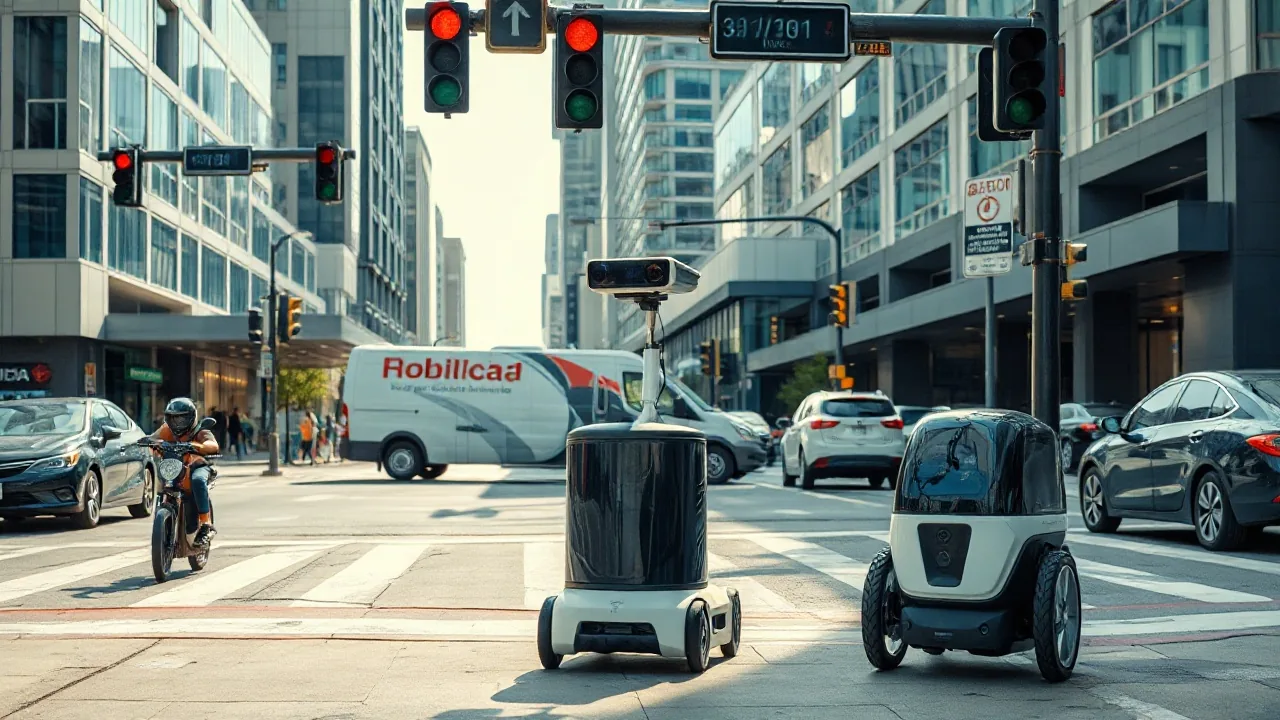
McDonald's announced in late May 2026 that it would deploy AI-powered ordering systems in 10,000 U.S. drive-thru locations by year-end, marking a visible inflection point in how AI transport logistics are reshaping everyday urban infrastructure. The move signals that autonomous decision-making and real-time optimization are no longer confined to autonomous vehicles or warehouse robots; they are now integral to the flow of goods and services through cities.
The drive-thru upgrade exemplifies a broader wave. Traffic lights in Dallas, Atlanta, and Denver now use machine learning to dynamically adjust signal timing based on live vehicle sensor data and pedestrian flow patterns. These systems reduce average intersection wait times by 18-25 percent, according to a June 2026 report from the Institute for Transportation and Development Policy.
"We are witnessing the convergence of three technologies: real-time data collection, cloud processing, and edge AI," said Dr. Marcus Chen, director of mobility systems at the Urban Land Institute, in a June 2026 briefing. "The result is a city that thinks in milliseconds rather than minutes. That's a fundamental shift in how urban mobility operates."
Autonomous Systems Expanding Beyond Passenger Vehicles
While much public attention has focused on self-driving cars, the faster deployment is occurring in goods delivery and service logistics. Waymo expanded its robotaxi fleet to 15 U.S. cities in 2026, but the more significant operational wins are in last-mile delivery, where autonomous systems now handle approximately 12 percent of urban parcel deliveries, up from 4 percent in 2024.
Several trends are accelerating adoption:
- Sidewalk robots from Cartken and Starship now operate permits in over 100 U.S. neighborhoods, handling food, groceries, and retail goods.
- Autonomous refuse trucks have been deployed in San Francisco and Charlotte, reducing collection cycle times by 30 percent.
- Electric micro-mobility hubs powered by AI dispatch systems now cluster in 45 major metro areas, dynamically repositioning scooters and e-bikes based on demand forecasting.
- Delivery drones have begun operating in designated urban corridors in Las Vegas, Phoenix, and parts of Los Angeles under FAA Part 135 commercial approval.
The economic incentive is straightforward: a single autonomous delivery robot costs between $15,000 and $35,000, operates continuously, and eliminates wage inflation pressure on last-mile logistics. Amazon, UPS, and DoorDash have collectively invested over $4.2 billion in autonomous delivery infrastructure as of June 2026.
Smart City Infrastructure and Real-World Performance Data
Across the United States, municipal governments are embedding AI into core urban services. New York City's Department of Transportation installed adaptive traffic signal control in 5,000 intersections during 2025 and 2026, powered by computer vision systems that distinguish between cars, buses, cyclists, and pedestrians in real time.
The results are measurable. Traffic congestion in Manhattan dropped 14 percent from January to June 2026. Bus route reliability improved by 11 percent because predictive algorithms now automatically reroute vehicles around congested corridors before gridlock forms. Pedestrian crossing times have decreased by an average of 22 seconds per intersection, improving safety and throughput.
Seattle deployed an AI-driven parking optimization system in 2025 that has reduced the average time drivers spend hunting for street parking from 8.4 minutes to 3.2 minutes. This seemingly small change eliminates approximately 23 percent of circulating traffic in commercial districts, reducing emissions and freeing up road capacity for throughput.
Dr. Sarah Okonkwo, transportation engineer at the American Public Transportation Association, noted in a May 2026 statement: "AI is not replacing infrastructure; it is multiplying the efficiency of what we have. Cities built for 2 million people can now handle 2.3 million through intelligent orchestration of existing assets. That's a game-changer for congestion management."
Public transit agencies are also benefiting. The Chicago Transit Authority's AI-powered predictive maintenance system reduced bus fleet downtime by 19 percent in 2025 and 2026 by identifying mechanical failures before they occur. Los Angeles Metro uses machine learning to optimize bus stop clustering and route timing, resulting in a 12 percent increase in on-time performance.
Challenges and the Path Forward
Adoption is not without friction. Labor unions representing taxi drivers, delivery workers, and transit operators have filed formal objections in 14 states regarding accelerated autonomous deployment. The American Federation of Labor and Congress of Industrial Organizations issued a statement in April 2026 calling for federal workforce transition standards.
Regulatory fragmentation also remains a barrier. Smart cities programs vary wildly by jurisdiction. California's Department of Motor Vehicles has approved autonomous testing and limited commercial deployment, but Texas and Florida operate under different standards. This patchwork slows national rollout and increases development costs for logistics and mobility companies.
Data privacy is another concern. Traffic optimization systems, autonomous delivery networks, and ride-hailing platforms all collect granular location data. The National Highway Traffic Safety Administration opened a formal inquiry in June 2026 into data retention and third-party access standards for future of transport systems.
Despite these headwinds, investment continues. Venture capital funding for autonomous mobility startups reached $8.7 billion in the first half of 2026, surpassing the full-year total for 2025. Major automotive manufacturers including Ford, General Motors, and Stellantis have committed an additional $12 billion annually through 2030 for autonomous and electrified fleet development.
The McDonald's drive-thru upgrade, viewed in isolation, is a minor operational improvement. Viewed as part of a systemic shift, it signals that AI-driven logistics and autonomous decision-making have moved from research and development into mainstream commercial deployment. Cities in 2026 are not debating whether AI will reshape transportation; they are managing the speed and equity of that transformation.