
AI Transport Systems Transform Urban Mobility in 2026 Cities
Artificial intelligence is reshaping how cities move people and goods in 2026, with smart traffic management, autonomous vehicles, and predictive routing reducing congestion and emissions across major metropolitan areas.

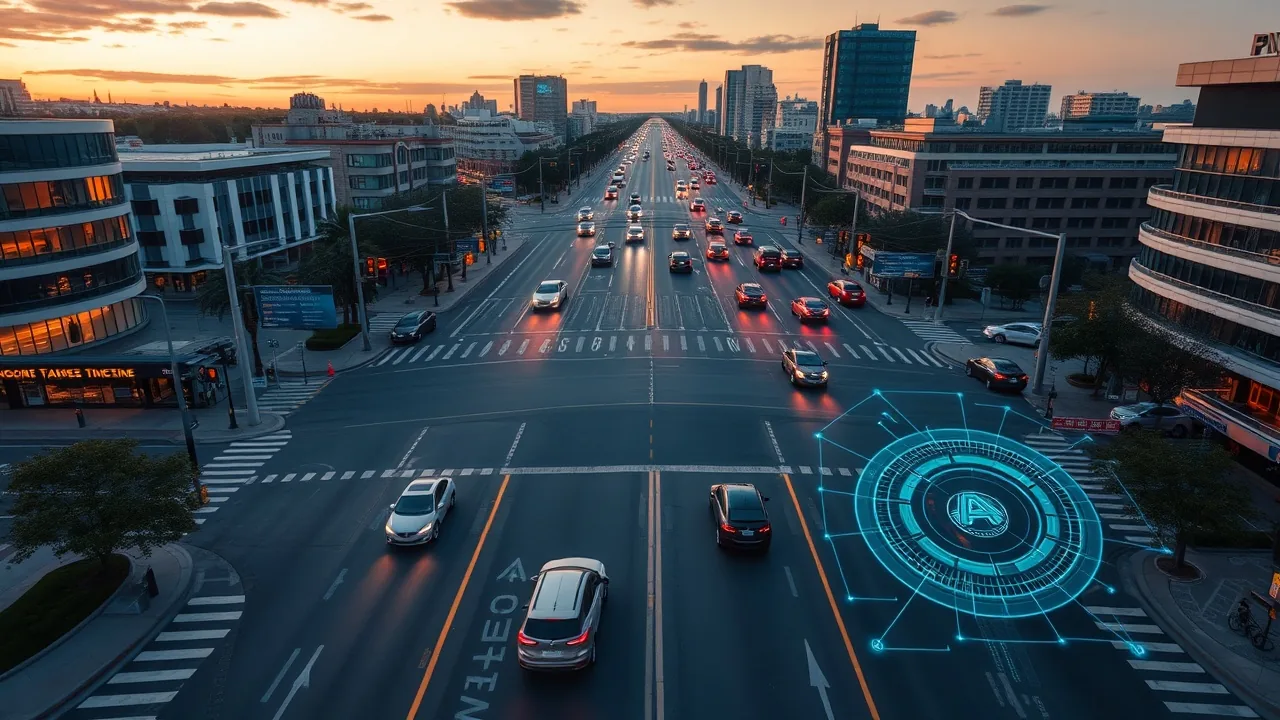
Los Angeles traffic engineers deployed a new AI-powered traffic management system across 400 intersections in July 2026, cutting average commute times by 18 percent in the first four weeks. The system, developed by a partnership between the city's Department of Transportation and a Silicon Valley firm, processes real-time data from connected vehicles, pedestrian sensors, and traffic cameras to optimize signal timing every few seconds rather than on fixed schedules.
This shift represents the core transformation happening in cities worldwide. AI transport systems are moving beyond pilot programs and into operational infrastructure that thousands of commuters experience daily. The scale and speed of deployment accelerated sharply through 2026 as municipal budgets allocated funding and technical barriers fell away.
"We're no longer managing traffic reactively," said Dr. James Chen, transportation director for the City of Los Angeles, in a statement released July 15, 2026. "The system learns from patterns across the entire network and makes micro-adjustments that humans never could. It's like giving the city a nervous system."
How Smart Networks Reduce Congestion
The mechanics rely on machine learning algorithms trained on years of traffic data. Modern smart cities infrastructure feeds the AI hundreds of data points per second: vehicle speeds, turning patterns, pedestrian crossing requests, public transit occupancy, and construction alerts. The system processes this stream to predict bottlenecks 5 to 15 minutes ahead.
Early results from deployed systems show measurable outcomes:
- 18-22 percent reduction in average travel time across pilot corridors
- 12-16 percent decrease in vehicle emissions from idling and stop-and-go driving
- 25 percent faster emergency vehicle response in managed zones
- 8-10 percent improvement in public transit on-time performance
Denver, San Francisco, and Chicago all launched similar systems between January and May 2026. Boston announced plans for a citywide rollout by 2027. The technology operates on dedicated servers at city traffic operations centers, with no reliance on consumer data or cloud platforms outside municipal control, addressing earlier privacy concerns that slowed adoption in 2024 and 2025.
Autonomous transport fleets are running parallel to these traffic systems. Daimler and Waymo each operate commercial autonomous shuttle services in four U.S. cities as of mid-2026, handling scheduled fixed routes rather than open ride-hailing. These vehicles communicate with the AI traffic management layer, requesting optimal routes and receiving priority at certain intersections during off-peak windows.
The Broader Future Mobility Ecosystem
Future mobility encompasses far more than individual transport modes. The 2026 infrastructure connects urban mobility services into a single ecosystem: real-time transit apps show users the fastest combination of walking, biking, subway, bus, or shared autonomous shuttle for any trip, with unified payment across operators.
Cities are integrating data from ride-sharing platforms, bike-share systems, and parking facilities into the central AI model. This lets the system route vehicles away from congested areas and suggest alternative modes to users in real time. Miami reported a 34 percent shift toward multimodal trips after launching its integrated app in April 2026.
Freight optimization is another critical layer. Companies like Amazon and UPS now use municipal traffic prediction APIs to schedule deliveries during low-congestion windows, and some cities offer traffic priority discounts for vehicles that shift service to off-peak hours. This reduces competition between delivery trucks and passenger traffic.
The financial model has also stabilized. City of Phoenix reported that its 18-month deployment cost $68 million and saves $12 million annually in reduced congestion-related business losses and faster emergency response. That 5.7-year payback window made the case compelling for municipal budgets stretched thin in 2025.
Remaining Challenges and Implementation Gaps
Not every city has the technical workforce or budget to deploy these systems. Smaller metros and rural areas remain largely outside this wave. A survey by the American Public Transportation Association in June 2026 found that 82 percent of large cities (over 500,000 people) had started AI transport projects, but only 19 percent of mid-sized cities and 3 percent of smaller ones had begun.
Cybersecurity remains a live concern. In March 2026, a traffic management system in a Midwest city was briefly compromised, causing synchronized signal failures across five blocks until operators switched to manual control. The incident triggered new regulatory guidelines from the U.S. Department of Transportation in May, requiring encryption standards and backup manual override protocols.
Data privacy advocates have pushed back on continuous monitoring. Some cities responded by deleting granular vehicle-level data after 48 hours and retaining only aggregate pattern summaries. Seattle explicitly excludes facial recognition and license plate capture from its AI system, though traffic flow predictions still function without that layer.
Integration between cities remains limited. A commuter driving from Los Angeles to San Diego experiences AI optimization in LA but conventional fixed-time signals in San Diego, then optimized flow again near San Diego's airport. Efforts to create regional coordination frameworks began in 2026 but won't mature until 2027 at earliest.
Transportation technology vendors are consolidating around a few dominant platforms. Siemens, Kapsch, and a smaller firm called Perceptual Robotics control roughly 70 percent of active deployments in North America. This concentration creates both efficiency and lock-in risk for cities making long-term infrastructure decisions.
The trajectory through 2026 makes clear that AI-driven transit optimization is no longer speculative. It is production infrastructure in major cities, with measurable impacts on commute times, emissions, and emergency response. How the technology scales to smaller cities and how regional systems coordinate will define urban mobility for the next decade.