
EV Charging Infrastructure: The Foundation of Mass Adoption
Experts warn that expanding charging networks across America is essential to meet surging electric vehicle demand. Without adequate infrastructure, mass adoption of EVs faces a critical bottleneck.

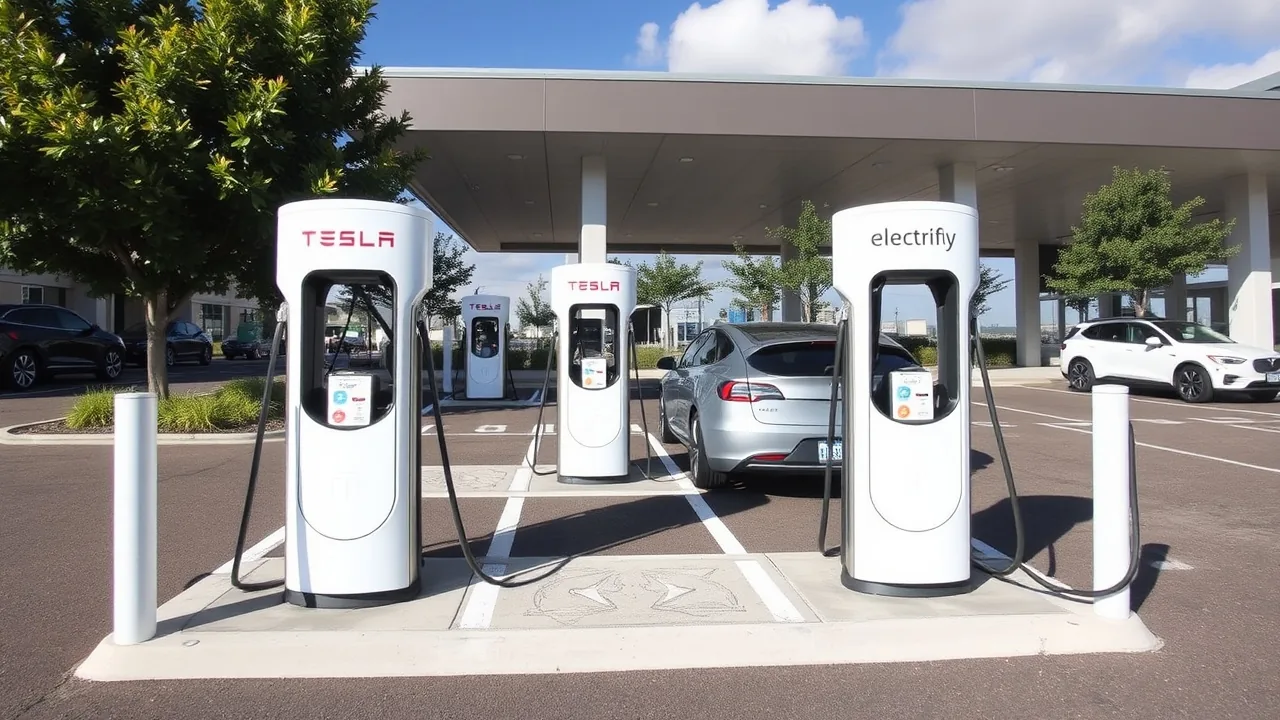
Eileen Wang, a transportation analyst tracking EV market dynamics, recently highlighted a growing tension in the U.S. auto industry: manufacturers are rolling out new electric models faster than charging infrastructure can support them. With over 2 million electric vehicles now registered on American roads and that number climbing 40 percent year-over-year, the availability of reliable charging stations has become the limiting factor preventing mainstream adoption.
Wang's analysis points to real bottlenecks. In rural regions and lower-income urban neighborhoods, drivers still face hours of travel to reach a working charger. Even in coastal cities celebrated for EV adoption, queues at busy stations now stretch into evening hours as demand outpaces available outlets.
"The charging network is where the rubber meets the road," Wang stated in recent interviews with fleet operators. "You can build all the vehicles you want, but if drivers can't charge them reliably, adoption hits a wall."
Current State of Charging Networks
Today's U.S. public charging landscape consists of roughly 50,000 outlets across 10,000 locations. The Department of Energy maintains a database tracking real-time availability; data from January 2025 shows significant clustering in California, New York, and Washington, with sparse coverage across the Great Plains and Southeast.
Major networks dominate the space:
- Tesla's Supercharger network operates over 10,000 stations with proprietary connectors.
- Electrify America manages approximately 1,000 fast-charging sites.
- EVgo operates around 1,200 public DC fast chargers.
- ChargePoint lists over 35,000 Level 2 chargers, mostly at workplaces and retail.
Level 2 chargers, which add 25-30 miles of range per hour, dominate residential and commercial settings. Fast chargers capable of 200+ miles in 20 minutes remain concentrated on major corridors like the Interstate 95 corridor and California's central valley.
Home charging remains the preferred option for owners with private parking. However, roughly 40 percent of American households lack reliable off-street parking, forcing reliance on public networks.
Infrastructure Expansion Bottlenecks
Scaling charging stations faces substantial hurdles. Real estate acquisition, grid interconnection permits, and installation costs typically run $250,000 to $500,000 per fast-charging site. Local zoning disputes and utility coordination delays can stretch timelines to two years or longer.
The Biden administration's $7.5 billion EV infrastructure grant program, authorized under the 2021 Infrastructure Investment and Jobs Act, aims to fund 500,000 charging outlets nationwide by 2030. As of Q4 2024, approximately 15 percent of those funds have been deployed.
State-level variation compounds the challenge. California has deployed 30,000+ public chargers with strong rebate programs and mandates requiring new construction to include EV-ready conduits. Texas, by contrast, has promoted private-sector charging through tax incentives rather than direct government infrastructure investment.
Grid capacity presents a hidden constraint. High-powered DC fast chargers demand 150-350 kilowatts per unit. Urban grids already strained during peak hours cannot absorb dozens of new chargers without costly upgrades to substations and transmission lines.
Why This Moment Matters
EV technology has matured rapidly. Battery costs dropped 89 percent between 2010 and 2023, making electric vehicles price-competitive with gas cars before incentives. New models from Ford, GM, Hyundai, and Volkswagen are reaching mainstream price points below $40,000.
Consumer surveys consistently show charging anxiety as the primary barrier to purchase, outweighing cost concerns among those already considering a switch. A December 2024 JD Power study found that 68 percent of prospective EV buyers cite "lack of convenient charging" as a deal-breaker.
Fleet operators, traditionally conservative, are now moving aggressively into electric trucks and vans. Amazon, UPS, and FedEx have committed to electrifying their delivery networks. Private fleets require dedicated fast-charging infrastructure at depots and along routes, adding urgency to public charging expansion.
The competitive landscape is shifting. Ford, GM, and Volkswagen have begun pooling capital into fast-charging joint ventures, recognizing that manufacturer-led networks will be faster than waiting for fragmented public investment. Tesla's 2024 decision to open Superchargers to other brands signals that charging availability now trumps proprietary advantage as a business strategy.
Mass adoption also hinges on standardization. The SAE J3400 standard, adopted in June 2024, unifies charging connectors across most American EVs and chargers. This removes the adapter burden that plagued early EV owners and simplifies network interoperability.
Analysts project that sustainability mandates from states like California, New York, and Massachusetts will drive 30 percent EV market share by 2030 if charging infrastructure keeps pace. Without it, adoption flattens at roughly 12-15 percent.
Investment in infrastructure is no longer optional. As Wang and other experts have emphasized, the transition to electric transportation depends on the networks that keep them charged.