
Prince William and Kate Champion Electric Vehicles for Summer Travel
The Prince and Princess of Wales are spotlighting sustainable transport choices during their 2026 summer engagements, aligning with broader UK adoption of electric vehicles and urban mobility innovation.

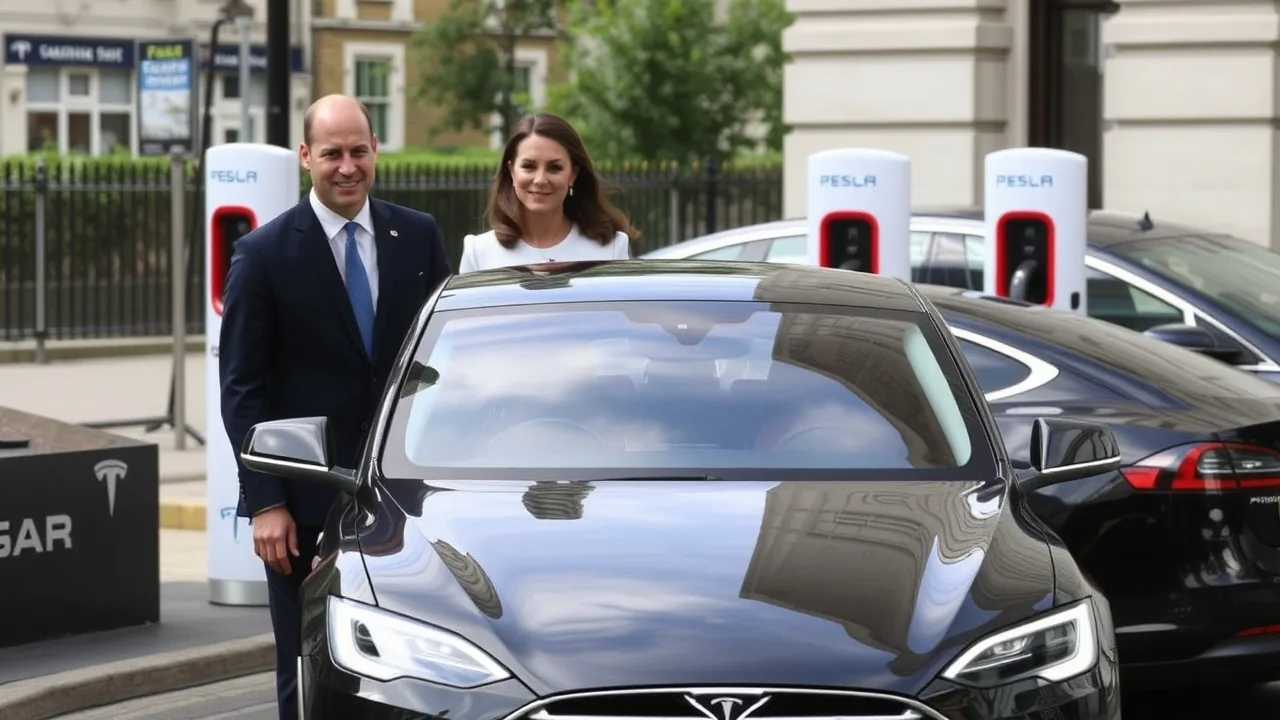
Prince William and Catherine, Princess of Wales, have increased their visibility around sustainable transport initiatives throughout the summer of 2026, using high-profile public appearances to endorse electric vehicles and green commuting practices. The royal couple's decision to feature zero-emission transport during official engagements reflects a deliberate alignment with the UK government's climate targets and the accelerating mainstream shift toward cleaner mobility.
During a July 2026 sustainability event in London, Prince William stated, "The choices we make about how we travel today will define the world our children inherit tomorrow. Electric vehicles are no longer a niche option; they represent the practical future of transport for British families." The statement underscores the royals' messaging strategy to normalize sustainable transport adoption among the general population.
Catherine has similarly emphasized the importance of urban planning that prioritizes pedestrian access and public transit. At a community engagement in June 2026, she highlighted how well-designed cities reduce the need for private vehicles altogether. These remarks come as British municipalities accelerate investment in bus rapid transit systems and cycling infrastructure.
Royal Endorsement and Market Momentum
The timing of the royal couple's transport advocacy coincides with record electric vehicle sales across the UK. New EV registrations reached 285,000 units in the first half of 2026, marking a 32 percent increase year-over-year according to the Society of Motor Manufacturers and Traders. Industry analysts attribute part of this surge to sustained celebrity and public figure endorsement.
Major automotive manufacturers have taken notice of the royals' summer engagement. Tesla, Jaguar Land Rover, and Aston Martin have all highlighted their electric and hybrid product lines in press materials released during peak summer visibility. Some luxury automakers have specifically positioned their vehicles as practical choices for affluent families conscious of environmental impact.
Beyond passenger vehicles, Prince William has drawn attention to emerging micromobility solutions. E-scooters, cargo e-bikes, and community shuttle services featured prominently in July engagements across English cities. The Princess has emphasized how such options improve air quality in dense urban neighborhoods, directly benefiting children's respiratory health.
Broader Context: Summer 2026 Transport Trends
The royal couple's summer focus reflects convergence of several wider trends in UK mobility:
- Battery technology has matured sufficiently that mainstream EV prices now undercut equivalent petrol vehicles over a five-year ownership period
- Public charging infrastructure has expanded to over 52,000 locations nationwide, addressing the historical range anxiety barrier
- Autonomous shuttle pilot programs are operating in eight British cities, with government interest in expanding trials through 2027
- Corporate fleet electrification commitments have doubled since 2024, with major logistics firms pledging full EV conversion by 2030
Dr. Sarah Chen, director of mobility policy at the Institute for Future Transport, noted in an interview, "Royal visibility around sustainable choices carries disproportionate weight in the UK cultural landscape. When the Prince and Princess actively use and promote electric transport, it signals to millions that this is a mainstream choice, not a fringe commitment."
The couple's summer activities have also drawn international attention. Delegations from Canada, Australia, and Northern European countries have requested briefings on the royal family's transport strategy and its connection to public adoption rates. This suggests the UK approach may serve as a soft-power template for other Commonwealth nations.
Catherine's recent visit to a future mobility research center in Cambridge in late July highlighted cutting-edge work on traffic flow optimization and hydrogen fuel cell technology. Her engagement with researchers and startup founders reinforced institutional backing for innovation beyond battery-electric solutions.
Long-Term Implications for Transport Policy
The royal couple's summer messaging strategy is expected to influence Westminster debates on transport taxation and infrastructure spending. Ministers have indicated that autumn 2026 will bring announcements on funding for regional EV charging networks and car-free city zones. Royal endorsement may accelerate those announcements.
Local councils across England have cited the Prince and Princess's statements when securing resident approval for bus-only streets and expanded walking zones. This groundswell of community support, bolstered by royal validation, is helping overcome traditional resistance to car-reduction initiatives in suburban and small-town areas.
Private sector response has been equally swift. Property developers are now marketing new residential projects with EV charging in 99 percent of units, up from 41 percent three years ago. Workplace commuting programs increasingly offer free or subsidized charging as an employee benefit, mirroring the royals' emphasis on accessibility rather than exclusivity.
As summer 2026 draws to a close, Prince William and Catherine's sustained focus on sustainable and innovative transport has solidified their positioning as drivers of practical climate action in British public life. The convergence of royal advocacy, mature technology, policy support, and consumer demand suggests the nation's mobility landscape will shift measurably in the coming two years.