
Barnes Ice Cap Thins Rapidly in Early 2026 Melt
Canada's Barnes Ice Cap experienced an unusually rapid and early melt this summer. Scientists are closely monitoring the remnant ice sheet, a key indicator of Arctic climate change.

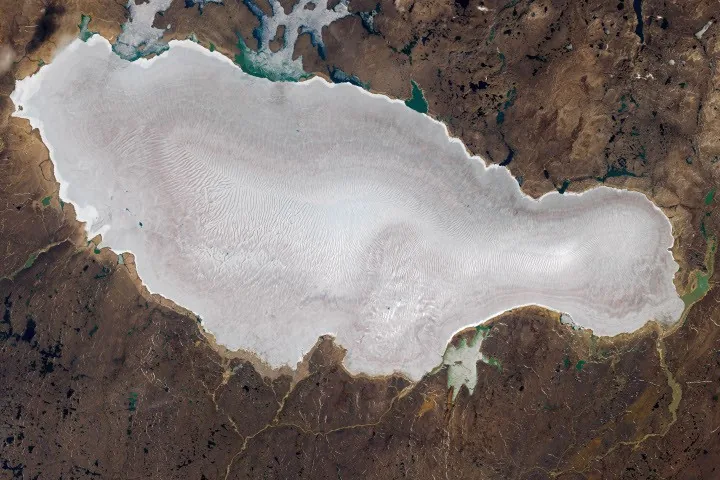
The Barnes Ice Cap, a significant geological remnant in Canada's Arctic, has undergone a notably accelerated melt season in the summer of 2026. Located at the heart of Baffin Island, this ice cap, which is a surviving piece of the vast Laurentide Ice Sheet that once dominated much of northern North America, is currently spanning approximately 5,700 square kilometers. Its ice thickness reaches up to 730 meters in places. However, like many glacial bodies in the Canadian Arctic, the Barnes Ice Cap is exhibiting clear signs of thinning and retreat, a trend exacerbated by this year's early and intense melt.
During a typical summer, the snow cover on the Barnes Ice Cap recedes, revealing the bare ice beneath. This exposed surface is characterized by the emergence of brilliant turquoise melt ponds and a network of flowing meltwater channels. This year, however, the transformation occurred with unusual speed and intensity. Data gathered by NASA’s Earth Observatory indicated that the melt season commenced significantly earlier than in previous years, leading to a more extensive exposure of the ice cap's surface throughout the summer months.
Accelerated Melt and Climate Indicators
The accelerated melting observed at the Barnes Ice Cap serves as a critical indicator of broader climatic shifts occurring in the Arctic region. Glaciologists and climate scientists are particularly concerned by the rapid retreat, as these ice masses act as sensitive barometers for global temperature changes. The Laurentide Ice Sheet, from which the Barnes Ice Cap originates, was a defining feature of Earth's cryosphere during the last glacial period. Its remnants, like Barnes, hold valuable paleoclimate data within their ice layers.
Dr. Helen Vance, a senior glaciologist at the Arctic Research Institute, commented on the findings: "What we're seeing at Barnes this year is alarming. The melt rates are exceeding projections, which suggests that our understanding of Arctic amplification might need recalibration. This isn't just about sea-level rise; it's about fundamental changes to Arctic ecosystems and global weather patterns." The rapid thinning has implications not only for regional hydrology but also for the potential release of trapped greenhouse gases as permafrost thaws, a phenomenon linked to receding ice and glaciers.
Scientists are utilizing satellite imagery and ground-based measurements to track the ice cap's changes. These efforts are crucial for refining climate models and predicting future scenarios. The Barnes Ice Cap's response to warming temperatures provides a stark visual representation of the challenges posed by climate change. The insights gained from studying this ice cap contribute to a global effort to understand and mitigate the impacts of rising global temperatures on vulnerable environments.
The long-term trend for the Barnes Ice Cap points towards continued reduction in mass and area. The early start and high intensity of the 2026 melt season underscore the urgency of addressing the root causes of global warming. As this ancient ice continues to diminish, it carries with it not only historical climate data but also a warning about the future of our planet's icy regions. The Baffin Island ice cap's transformation highlights the dynamic and often unpredictable nature of Earth's response to human-induced climate change, urging continued scientific observation and international cooperation.