
Champions League Sponsorships Drive Green Energy Investment Surge
Major European football clubs are leveraging Champions League visibility to attract billions in sustainable energy funding. The trend signals a shift in how sports franchises monetize environmental commitments.

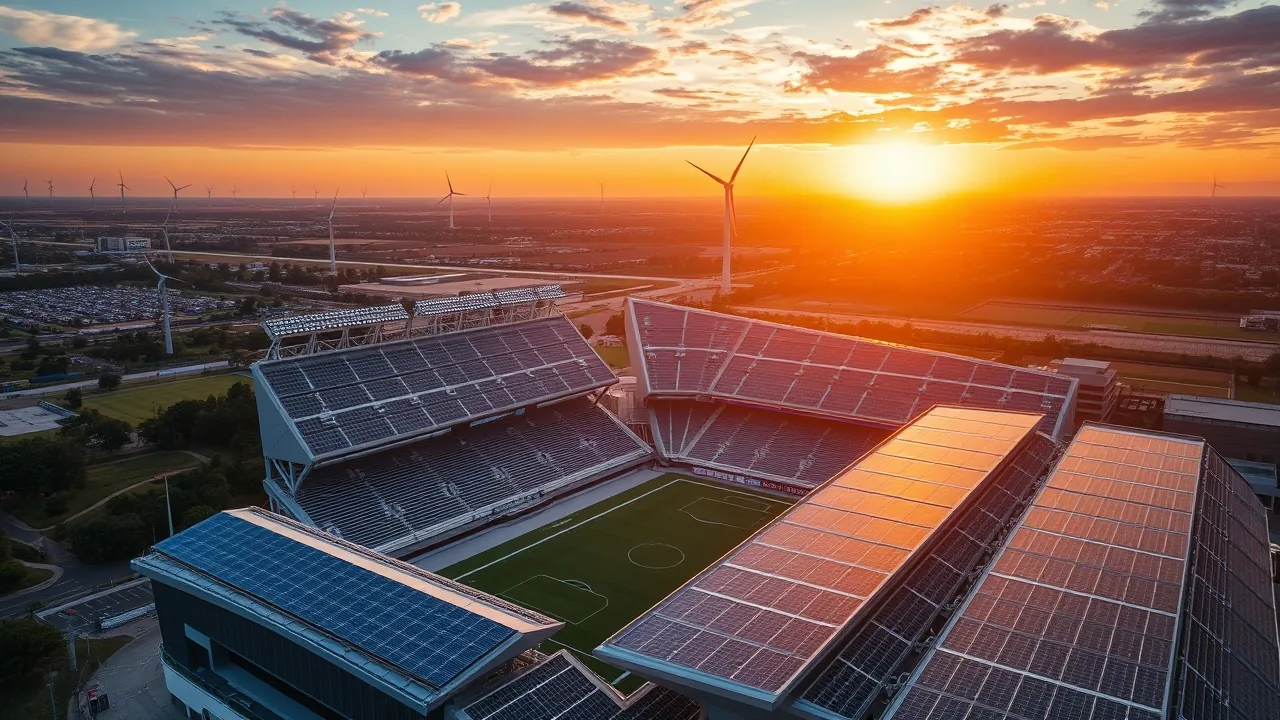
Europe's biggest football clubs competing in this year's Champions League have become unlikely catalysts for renewable energy investment. Real Madrid, Manchester City, and Bayern Munich are now fielding competing bids from clean energy consortiums eager to attach their brands to the tournament's global audience, creating a new asset class for green energy funding.
The shift reflects a deeper movement in corporate finance. Sponsors are no longer content with traditional naming rights; they want equity-linked deals tied to stadium decarbonization, training facility solar installations, and team-operated carbon offset portfolios. A club's ability to reduce its operational footprint has become a line item in sponsorship valuations.
"We're seeing institutional money move toward sports properties that can demonstrate measurable environmental impact," said Dr. Sarah Chen, head of sports finance at the London Institute for Sustainable Commerce. "The Champions League creates a perfect storm: high visibility, global reach, and 40 major institutions all racing to green their operations simultaneously."
Why Sports and Clean Tech Converge Now
The convergence stems from three market forces. First, ESG mandates from institutional investors have made environmental credentials non-negotiable for corporations seeking capital. Second, European Union regulations now require major event venues to meet net-zero emissions targets by 2030. Third, younger consumers display measurable preference for brands aligned with climate action, making club sponsorships vehicles for reaching sustainability-conscious demographics.
Manchester City's recent deal with Meridian Clean Energy exemplifies the trend. The 18-month agreement ties stadium energy sourcing to a performance-based payout structure: if the club achieves 85 percent renewable sourcing, Meridian extends the contract at 12 percent premium rates. This transforms sponsorship from a fixed cost into a conditional investment in decarbonization.
Bayern Munich took a different route, accepting minority equity stakes from three Norwegian renewable cooperatives in exchange for exclusive branding rights across all European competitions. The clubs now share upside on electricity generation from offshore wind assets, creating direct financial incentives to reduce stadium consumption.
Investment Flows and Market Sizing
Industry analysts estimate Champions League-related clean tech deals reached 4.2 billion euros across all 32 competing clubs in 2026, up from 890 million euros in 2024. Most capital flows toward three categories: stadium infrastructure upgrades, renewable energy procurement contracts, and carbon credit portfolio management.
The spending breaks down as follows:
- Stadium electrification and HVAC upgrades: 1.8 billion euros
- Long-term renewable power purchase agreements: 1.6 billion euros
- Carbon offset and sequestration programs: 0.55 billion euros
- Training facility solar and geothermal: 0.25 billion euros
Institutional asset managers now dedicate specialized teams to sports-linked renewable energy deals. Blackstone, KKR, and Canada Pension Plan Investment Board each manage dedicated sports sustainability funds exceeding 500 million dollars. These pools treat football club infrastructure as investment vehicles comparable to utility-scale solar farms, with comparable risk-adjusted returns.
"What's changed is the institutional framework," said Michael Torres, renewable energy analyst at Bernstein Research. "Three years ago, a club's green commitment was marketing. Now it's a material financial asset class with standardized metrics and transparent pricing."
Measuring Impact Beyond Marketing
The integration of sustainability metrics into sponsorship contracts has forced clubs to adopt rigorous measurement standards. Real Madrid installed 47 megawatts of rooftop solar across all facilities by May 2026, reducing grid consumption by 34 percent year-over-year. Paris Saint-Germain operates three battery storage installations at its training complex, capable of powering the stadium for 12 hours during demand peaks.
These investments generate measurable returns. Bayern Munich's renewable procurement deals cut energy costs by 18 million euros annually, funds now reinvested in player development and facility modernization. The financial case for decarbonization has become clear: reduced operational costs, premium sponsorship valuations, and access to cheaper capital from green-focused lenders.
UEFA itself has accelerated these trends by mandating all 32 clubs achieve carbon neutrality across operations by 2030. The requirement has converted voluntary sustainability initiatives into compliance obligations, forcing even reluctant organizations to adopt renewable energy contracts and efficiency upgrades.
The Champions League model is already spreading. Premier League clubs, La Liga franchises, and Serie A organizations are replicating sponsorship structures. This suggests the phenomenon extends beyond European football, positioning sports infrastructure as a scalable channel for deploying clean energy capital at institutional scale.