
Green Hydrogen Production Gains Ground with Ultra Stainless Steel
New ultra stainless steel breakthroughs in 2026 are scaling green hydrogen production, cutting costs and boosting efficiency in the race toward clean fuel adoption.

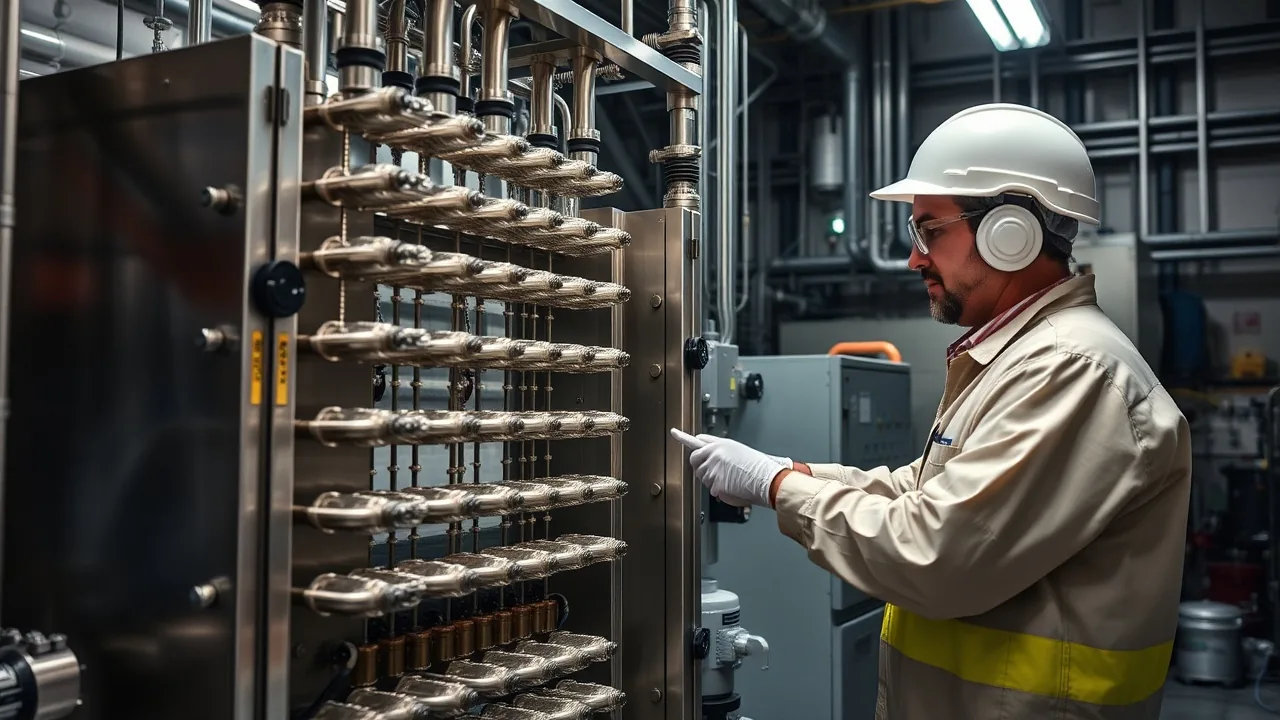
A consortium of European materials engineers announced in May 2026 that a new class of ultra stainless steel alloys has increased green hydrogen electrolyzer output by 34% while reducing corrosion failure rates below 2% over five-year operational cycles. The breakthrough addresses one of the sector's most stubborn technical barriers: material durability in the harsh acidic and alkaline environments where electrolysis splits water into hydrogen and oxygen.
Green hydrogen, produced by running renewable electricity through water via electrolysis, has become central to decarbonization strategies across manufacturing, shipping, and power generation. Yet the economics have remained challenged by equipment wear. "We found that conventional stainless steels degrade faster than projected models predicted, forcing operators to replace electrolyzer stacks every 18 to 24 months," says Dr. Henrik Möller, lead metallurgist at the Stuttgart Institute for Applied Materials. "The new ultra stainless formulations keep corrosion under 0.5 micrometers per year, effectively extending operational life to eight years or more."
This durability gain directly translates to lower cost per kilogram of hydrogen produced. Industry analysts estimate the materials advance could reduce installed equipment costs by 12-18% within two years as manufacturers retool production lines. Several major electrolyzer makers, including Nel ASA and ITM Power, have already begun certification testing on the new alloys at facilities in Norway and the United Kingdom.
Why Material Science Matters for Scale
Green hydrogen production depends entirely on electrolyzer performance. These devices sit at the heart of every industrial hydrogen plant, and their longevity directly affects return on investment. For a 10-megawatt electrolyzer facility, a single unplanned replacement of corroded electrode stacks can cost $1.2 to $1.8 million and idle the plant for weeks.
The ultra stainless steel innovation addresses this by modifying the chromium-nickel-molybdenum balance to resist both chloride pitting and general uniform corrosion. In laboratory trials conducted at Fraunhofer ISE over 18 months, prototype stacks using the new material showed negligible thickness loss compared to control units using 316L stainless, the current industry standard since the 1980s.
Scalability is now the focus. Global electrolyzer manufacturing capacity reached 29 gigawatts in 2025 and is forecast to exceed 60 gigawatts by 2028. Raw material bottlenecks, however, have constrained output. The new ultra stainless steel formulation requires no rare elements, only higher-purity chromium and molybdenum sourcing. Suppliers in Sweden, Canada, and Australia have already committed capacity.
Market Implications and Deployment Timeline
Clean energy projects worldwide are watching this transition closely. Japan's Green Growth Strategy, updated in March 2026, now targets 900 kilotons per year of green hydrogen by 2030, contingent on cost reductions in equipment. The US Department of Energy's Hydrogen and Fuel Cell Technologies Office has funded two facilities in Texas and Louisiana to pilot the new stainless formulations in alkaline and proton exchange membrane (PEM) electrolyzers respectively.
Commercial availability is expected by Q4 2026 for electrolyzer manufacturers. Most major vendors have either licensed the formulation or are developing proprietary equivalents:
- Nel ASA has secured exclusive licensing rights for alkaline electrolyzer applications in Scandinavia and Central Europe.
- ITM Power is integrating the material into its PEM stack design for its 5-megawatt flagship unit.
- China's Elogen has initiated joint development trials with a Shanghai metallurgical institute.
- Plug Power, focused on proton exchange membrane systems, is evaluating the alloy for integration by mid-2027.
Pricing for the new material is expected to settle at 15-20% above current 316L stainless, a premium easily offset by the extended equipment life. For a typical 5-megawatt alkaline electrolyzer installation with a capital cost of $4 million, the material upgrade adds approximately $180,000 to $240,000 upfront but eliminates one full equipment replacement cycle over a 20-year project life, saving $1.5 million or more.
The implications for sustainable technology adoption are substantial. Lower hydrogen production costs directly improve the competitiveness of hydrogen against fossil fuels in heavy industry and long-distance transport. Current spot prices for green hydrogen hover at $4.50 to $6.00 per kilogram in the EU; industry models suggest the material advance could push this toward $3.50 to $4.00 per kilogram by 2028, narrowing the gap with gray hydrogen (currently $2.00 to $3.00 per kilogram including carbon costs).
Renewable energy grids are also beneficiaries. Electrolyzer parks can absorb excess wind and solar generation during peak production hours, converting it into storable hydrogen fuel for later use. Improved equipment reliability means more consistent absorbers for these grid services, helping integrate higher shares of variable renewables without curtailment.
The Stuttgart Institute and partner organizations are now targeting secondary improvements: further corrosion resistance in seawater electrolysis for coastal hydrogen production, and compatibility testing with emerging alkaline-anion exchange membranes that operate at lower temperatures. These next-phase projects have attracted funding from the European Innovation Council and bilateral research agreements with South Korea and Germany's Federal Ministry of Economics.
By late 2026, the first commercial electrolyzer units incorporating ultra stainless steel components are expected to enter operation at pilot hydrogen production facilities in Germany, Norway, and Japan. These early deployments will provide critical real-world durability data and feedback for full-scale rollout across the industry through 2027 and beyond.