
New Ultra Stainless Steel For Green Hydrogen Production Stuns Researchers
Scientists have developed a novel stainless steel, SS-H2, capable of withstanding extreme conditions for green hydrogen production from seawater, offering a cost-effective alternative to titanium.

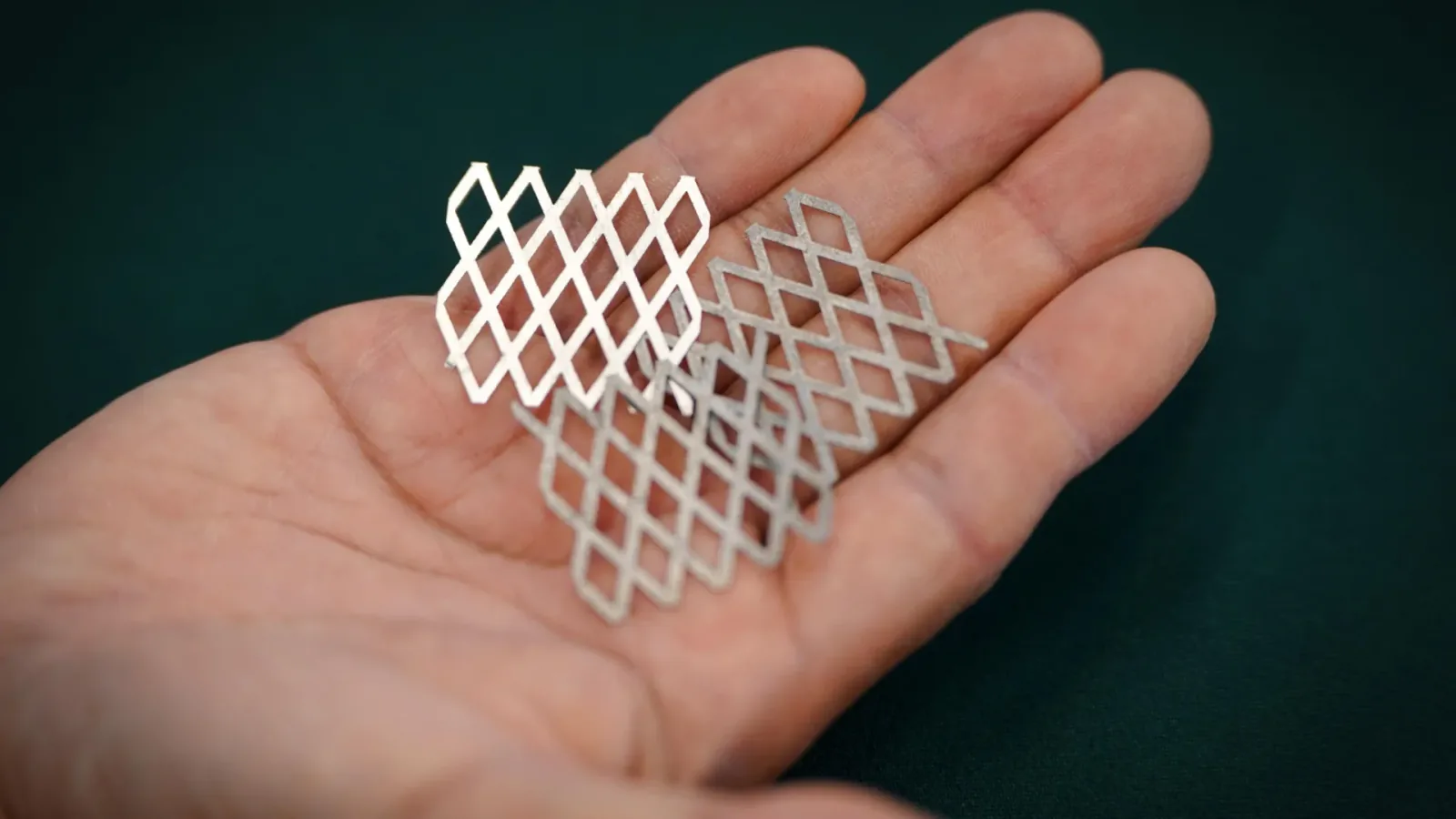
Researchers at the University of Hong Kong (HKU) have unveiled a groundbreaking stainless steel alloy, dubbed SS-H2, engineered to resist severe corrosion and perform exceptionally in the demanding environment of hydrogen production from seawater. The material, developed by a team led by Professor Mingxin Huang in HKU's Department of Mechanical Engineering, addresses a critical obstacle in harnessing green hydrogen from abundant saltwater sources. The findings, detailed in the journal Materials Today, stem from Huang's ongoing "Super Steel" Project, which has previously yielded innovations like anti-COVID-19 stainless steel and ultra-tough Super Steel variants.
Green hydrogen, produced by splitting water using renewable electricity, holds immense promise for decarbonizing industries. However, utilizing seawater as a feedstock presents significant material challenges due to its high salt content and corrosive chloride ions, which rapidly degrade conventional electrolyzer components. Current industrial practices often rely on expensive titanium-based materials, frequently coated with precious metals, to withstand these harsh conditions. The HKU team's SS-H2 aims to provide a dramatically more economical solution.
A Counter-Intuitive Protective Mechanism
Ordinary stainless steel relies on a chromium-based passive film for protection. However, this film breaks down under the high electrical potentials required for water oxidation, leading to transpassive corrosion. Even specialized steels like 254SMO struggle with the extreme electrochemical conditions necessary for efficient hydrogen generation. The SS-H2 alloy, however, employs a novel "sequential dual-passivation" strategy. It forms not only the standard chromium oxide layer but also a secondary manganese-based layer at around 720 mV. This dual shield significantly enhances protection, enabling the steel to withstand ultra-high potentials of up to 1700 mV, far exceeding the requirements for water oxidation and conditions that would typically destroy conventional stainless steels.
This development is particularly striking because manganese has historically been considered detrimental to stainless steel's corrosion resistance. "Initially, we did not believe it because the prevailing view is that Mn impairs the corrosion resistance of stainless steel. Mn-based passivation is a counter-intuitive discovery, which cannot be explained by current knowledge in corrosion science," stated Dr. Kaiping Yu, the article's first author. "However, when numerous atomic-level results were presented, we were convinced. Beyond being surprised, we cannot wait to exploit the mechanism."
The implications for cost reduction are substantial. The HKU team estimated that for a 10-megawatt PEM electrolysis system, structural components account for about 53% of the total cost, which could reach HK$17.8 million. Replacing current costly materials with SS-H2 could slash the expense of structural components by an estimated 40 times, making green hydrogen production more financially viable on a large scale.
The journey from initial observation to publication spanned nearly six years, involving extensive research into the fundamental science behind the alloy's unusual protective properties. Professor Huang highlighted the team's focus on developing high-potential-resistant alloys, a departure from the mainstream corrosion research community. "Our strategy overcame the fundamental limitation of conventional stainless steel and established a paradigm for alloy development applicable at high potentials," Huang said. The innovation has already moved into the practical realm, with patent applications filed internationally and several already granted authorization. Furthermore, significant progress has been made in industrialization, with tons of SS-H2-based wire produced in collaboration with a factory in Mainland China, signaling a tangible step towards market application.
While the SS-H2 study was published recently, the challenges it addresses remain highly relevant. Ongoing research in direct seawater electrolysis continues to grapple with material durability, chlorine-induced side reactions, and long-term system performance. Despite these persistent hurdles, the HKU team's breakthrough offers a unique solution by fundamentally redesigning the alloy's self-protection mechanism, rather than solely relying on surface coatings or catalysts. This advancement in materials science holds significant potential to accelerate the adoption of affordable and scalable clean energy, positioning SS-H2 as a critical component in the future hydrogen economy.