
4GB GPUs May Return Amid AI Chip Shortage, Leaks Suggest
A new AMD Radeon RX 9050 graphics card, potentially with only 4GB of VRAM, has been spotted on ASRock's website, signaling a possible return of lower-memory GPUs due to the ongoing AI flash memory crisis.

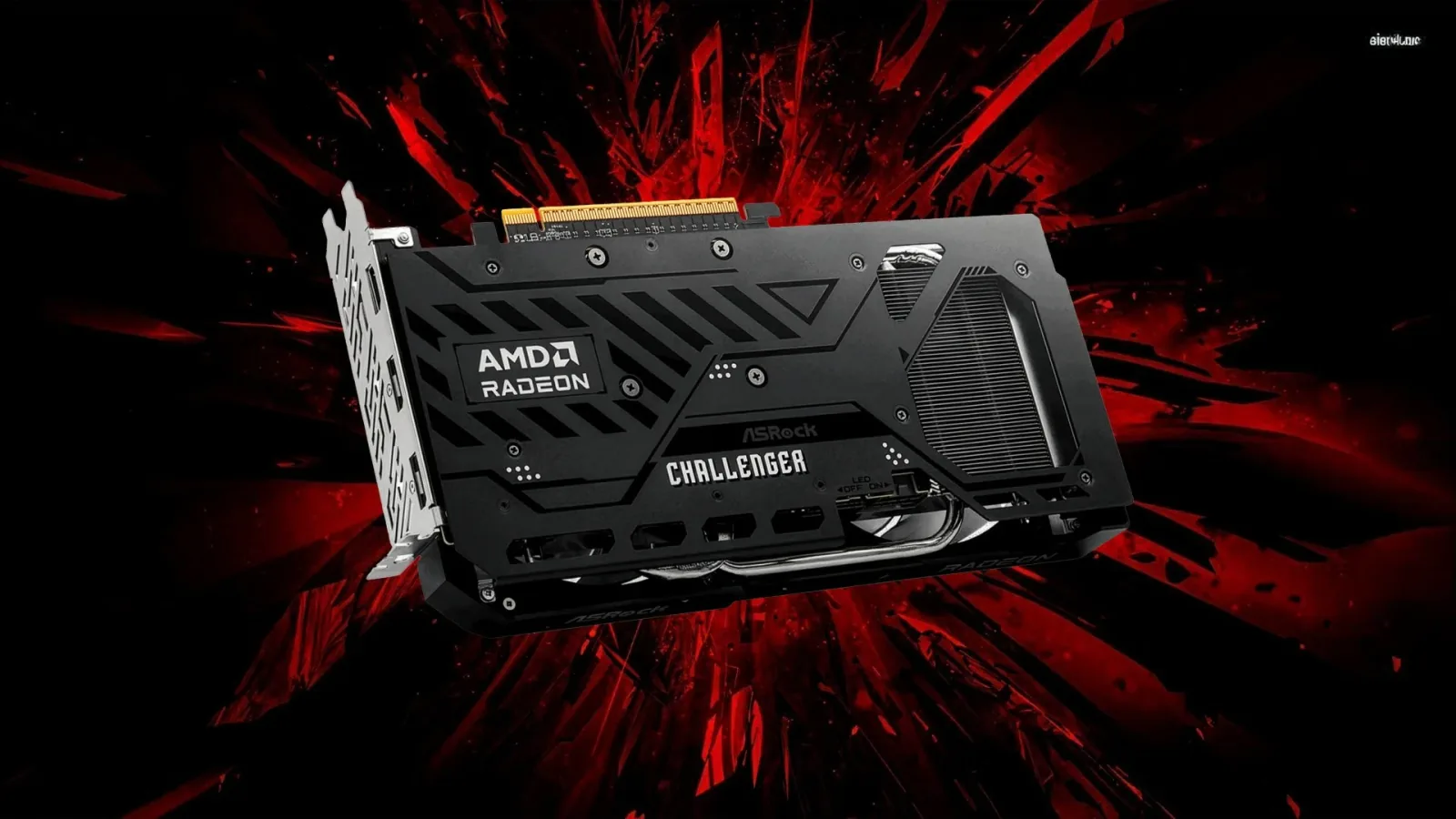
Graphics card manufacturers may soon reintroduce models with only 4GB of video RAM, a significant step back in memory capacity for modern PCs, as the ongoing artificial intelligence chip shortage continues to impact component availability. Leaked information suggests that ASRock, a graphics card maker, has listed a potential AMD Radeon RX 9050 graphics card on its website with both 4GB and 8GB VRAM options. This development, if confirmed, would mark the return of 4GB GPUs in an era where even entry-level cards typically offer more, driven by the escalating demand for AI-specific hardware consuming essential memory components.
The scarcity of flash memory, a crucial component for AI training and deployment, is reportedly forcing manufacturers to re-evaluate their product lines and consider shipping less memory-intensive graphics cards. The ASRock listing, though currently unconfirmed by AMD and featuring placeholder text for the 4GB variant, points to a potential Radeon RX 9050. The last time new graphics cards with 4GB of VRAM were widely available was approximately four years ago, with models such as the Intel Arc A310, Nvidia GTX 1630, and AMD's own Radeon RX 6400 and 6500 XT, which retailed between $99 and $199.
AI Demand Drives Component Scarcity
The current industry-wide component crunch is largely attributed to the insatiable demand for AI hardware, which has prioritized the production of high-bandwidth memory (HBM) and other specialized chips. This has led to a ripple effect across the broader semiconductor market, impacting the supply of more conventional components like GDDR6 memory used in gaming GPUs. Valve itself has described the situation as "still getting worse," indicating that the AI component crisis is far from over and continues to exert significant pressure on the entire PC hardware ecosystem.
Should the AMD Radeon RX 9050 indeed launch with only 4GB of VRAM, it would present considerable challenges for contemporary gaming. Many modern titles struggle to run smoothly with less than 8GB of memory, even at 1080p resolution. The leaked specifications suggest the RX 9050 would utilize a Navi 44 die, similar to the RX 9060 but with a reduced count of 16 compute units. This configuration, potentially paired with a 64-bit memory interface if only two memory chips are used, could severely limit its performance, especially in graphically demanding scenarios. A higher-end 8GB variant with a 128-bit bus is also indicated in the leak.
The estimated total graphics power (TGP) for the RX 9050 is listed between 100-125W, with a possible single eight-pin power connector, suggesting a budget-friendly positioning. However, the inclusion of such limited VRAM in a new product in 2026 raises questions about its viability for future gaming or even current applications that are increasingly memory-hungry. Industry observers are closely watching how manufacturers adapt to this challenging supply landscape, with some speculating that other component shortages, such as flash memory, could also influence product strategies across the hardware sector.
The return of 4GB GPUs highlights the extreme measures being taken to maintain product availability in the face of unprecedented demand for AI hardware. While older games and less demanding applications might still function adequately, consumers looking for a modern gaming experience might find these low-VRAM cards to be a significant compromise. The situation underscores the broader impact of the AI revolution on consumer technology and the potential for supply chain constraints to reshape the specifications of mainstream computing hardware. The long-term implications for PC gaming and general computing remain to be seen as the semiconductor industry navigates this complex period.