
Apple's M5 Ultra Chips Drive AI Push Against Microsoft and Nvidia
Apple is releasing new Macs featuring its M5 Ultra chips, aiming to compete with Microsoft and Nvidia in the AI hardware market by offering more cost-effective solutions.

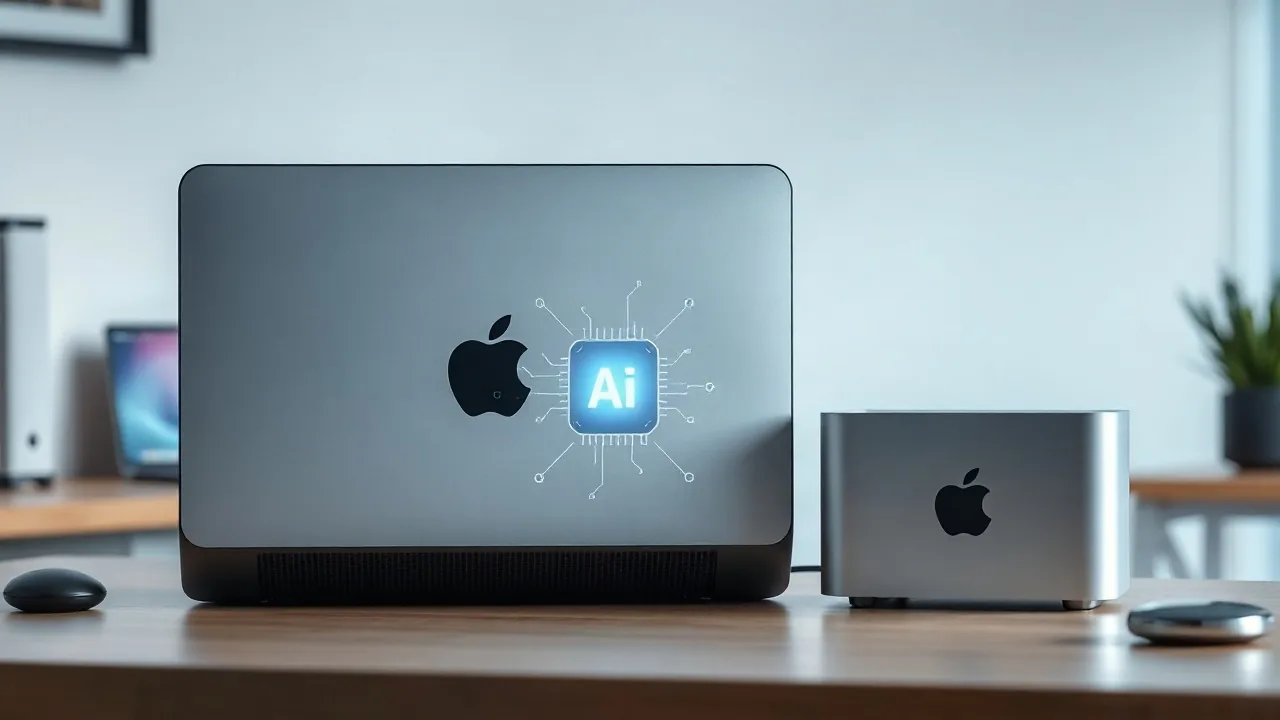
Apple is making a significant push into the artificial intelligence hardware arena with its latest Mac Studio and Mac mini models, powered by the new M5 Ultra chips. This move signals a direct challenge to industry giants like Microsoft and Nvidia, as Apple seeks to carve out a competitive advantage by offering more affordable AI processing capabilities. The M5 Ultra processors are designed to handle demanding AI workloads, potentially making powerful AI accessible to a broader range of users and developers.
The M5 Ultra chip represents a leap forward in Apple's silicon development, promising enhanced performance for tasks ranging from complex data analysis to on-device machine learning. Early benchmarks and reviews suggest that the new Mac Studio, in particular, delivers exceptional performance, tackling AI-intensive tasks with remarkable speed. While the Mac mini also sees an upgrade, some reports indicate a price increase may temper its appeal for budget-conscious consumers. Regardless, the availability of these new machines is expected to intensify the competition in the high-performance computing market.
Apple's Strategy in the AI Race
This strategic pivot by Apple is rooted in its long-term vision to integrate AI capabilities seamlessly across its product ecosystem. By developing its own high-performance chips, Apple aims to reduce reliance on third-party hardware providers and gain greater control over the user experience. The company is betting that the M5 Ultra's efficiency and cost-effectiveness will be a key differentiator, allowing users to perform advanced AI computations without the prohibitive expense often associated with specialized hardware. This approach could democratize access to AI tools, fostering innovation among a wider community.
Industry analysts note that Apple's investment in custom silicon for AI is a calculated move to capture a larger share of the burgeoning AI market. Microsoft has been aggressively expanding its AI services and hardware offerings, often leveraging Nvidia's powerful GPUs. Nvidia, a dominant force in AI processing, has consistently set the standard for AI hardware performance. Apple's entry with its cost-competitive M5 Ultra chips could force both companies to re-evaluate their pricing and product strategies. The success of these new Macs could reshape the landscape of personal computing and professional workstations, particularly for those involved in AI research and development.
The underlying architecture of the M5 Ultra chip is optimized for neural network processing, a core component of modern AI. This means that applications designed for machine learning, natural language processing, and computer vision should see significant speedups. Apple has historically focused on a closed ecosystem, but its moves in the AI hardware space suggest a broader ambition to influence the direction of AI development beyond its own devices. The company's ability to manufacture these chips at scale and integrate them into user-friendly hardware gives it a unique position in this rapidly evolving technological frontier.
Consumers and professionals alike will be watching closely to see how the M5 Ultra performs in real-world applications and whether Apple's cost-saving approach can indeed disrupt the established players in the AI hardware market. The launch of these new Macs is more than just an update to existing product lines; it represents Apple's bold declaration of intent to be a leading force in the artificial intelligence revolution.