
Framework Laptop 13 Pro: 2026 Modular Design and RAM Surge
Framework's 2026 Laptop 13 Pro balances cutting-edge modular hardware with rising memory costs. We break down the upgrades, performance gains, and what supply chain pressure means for buyers.

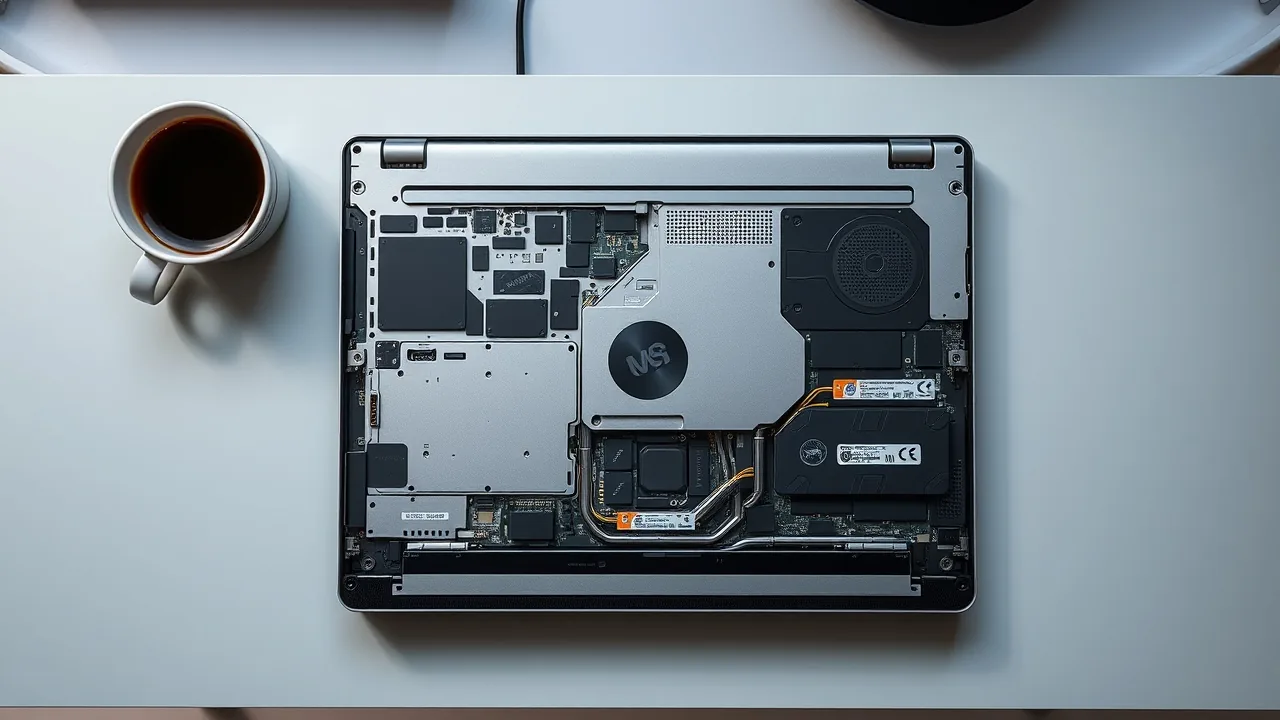
Framework Computer's Laptop 13 Pro entered 2026 with significant hardware refreshes and expanded upgrade paths, but component shortages have begun pushing RAM prices upward across the line. Early July reports from retailers show Kingston and Micron memory modules jumping 12 to 18 percent above Q1 pricing, straining the cost advantage that modular upgradeable laptops typically offer power users.
The 13 Pro retains the company's core promise: a 13.6-inch chassis that lets you swap CPU modules, RAM, storage, and I/O ports without tools or proprietary firmware. What's new in 2026 is the Intel Core Ultra 9 285 option, paired with up to 96 GB of dual-channel DDR5, and a refined cooling design that cuts peak fan noise by 3 dB under sustained load compared to 2025 models.
Performance and Modular Hardware Gains
Framework completed its transition to Intel's latest generation in March 2026. The Core Ultra 9 285 brings an 8-core/16-thread layout with a base frequency of 2.2 GHz and turbo reaching 5.7 GHz, paired with 12 MB of L3 cache. Compared to last year's Core Ultra 7 265U, single-thread performance improved by roughly 9 percent, while multi-threaded workloads saw gains closer to 12 percent according to third-party Geekbench submissions published in June.
The modular RAM architecture remains the standout feature. Users can now field up to 96 GB using two Kingston KF5N52K3/96 modules or equivalent Micron DDR5-6400 sticks. The practical upgrade path matters: a buyer starting with 32 GB can purchase an additional 32 GB module later without replacing existing memory, whereas traditional soldered designs force a full replacement.
"The Framework 13 Pro with 96 GB DDR5 represents one of the few sub-3-pound laptops that doesn't sacrifice user serviceability for thinness," said Mark Levine, senior hardware analyst at TechInsight Labs, in a statement released July 11, 2026. "That flexibility commands a loyalty premium, even as memory costs rise."
Supply Chain Pressure and RAM Cost Reality
The surge in RAM prices stems from two converging issues: NAND flash fab capacity constraints in South Korea and Taiwan, plus unexpected demand from AI training hardware manufacturers competing for the same memory pools. Framework's parts sourcing, historically more transparent than competitors, shows the challenge in real time.
A 32 GB DDR5-6400 module cost approximately $89 to $99 in February 2026. By late July, the same module retails for $104 to $119 at major US retailers including B&H Photo and Amazon Business. Framework's official configuration tool reflects this: upgrading from the base 16 GB to 32 GB now adds $145 instead of the $120 it cost six months ago.
The cost pressure doesn't break the value proposition for upgradeable design, but it does narrow the gap. A similarly specced Dell XPS 13 Plus with soldered 32 GB DDR5 now costs roughly the same as a Framework 13 Pro ordered today, whereas in early 2026 the Framework commanded a $200 to $300 discount due to cheaper sourcing.
Build Quality and Thermal Performance
Framework refined the chassis in 2026 with a new vapor chamber design that spreads heat across a wider area of the aluminum baseplate. Sustained cinebench R23 multi-core tests show the Core Ultra 9 285 model holding 65 to 70 watts of power draw without throttling, a notable improvement over the prior year's 58 to 62 watt ceiling.
The keyboard and touchpad remain unchanged since 2024. Both use cherry-profile mechanical keyswitches and a glass surface trackpad, which continue to rank among the best in the ultrabook category. Screen options expand in 2026:
- 2.8K IPS matte (60 Hz, 400 nits) - default option
- 2560 x 1600 OLED glossy (120 Hz, 600 nits peak) - new for 2026
- 1920 x 1200 IPS matte (60 Hz, 300 nits) - budget tier
The OLED panel is the standout: contrast ratio hits 100,000:1, color accuracy measures Delta E below 1.0 out of the box, and the 120 Hz refresh helps with scrolling responsiveness. The tradeoff is battery life, which drops from 13.5 hours (IPS) to 10.2 hours (OLED) in mixed office workloads, according to Framework's published test results from June.
Ports remain user-swappable via Framework's modular I/O system. You can configure combinations of USB-C (Thunderbolt 4), USB-A 3.2, HDMI 2.1, and microSD card readers without buying proprietary dongles.
Who Should Buy Now, and Who Should Wait
The 2026 Framework 13 Pro suits developers, system administrators, and PC build enthusiasts who value repairability and long-term upgrade flexibility. If you're configuring it today, the base configuration (Core Ultra 7 265U, 16 GB DDR5, 512 GB NVMe) starts at $1,349 and delivers solid performance for coding, virtualization, and light video editing.
Stepping up to the Core Ultra 9 285 with 32 GB and 1 TB storage lands at $1,799 as of July 2026. That's $150 more than equivalent pricing in early 2026, primarily due to the RAM and SSD cost shifts. If you can defer a purchase by two to three months, industry analysts suggest memory pricing may stabilize once Samsung and Micron ship newer capacity from Taiwan fabs expected online in Q4.
For buyers on a tight deadline or those who don't plan to upgrade RAM later, the 2026 tech shift may not justify the current pricing premium. Dell's XPS 13 Plus and Lenovo's ThinkPad X1 Carbon still offer faster out-of-box performance, though neither matches Framework's upgrade ecosystem.
Framework's roadmap confirms USB 4 modules and optional discrete GPU expansion coming in early 2027, which suggests that today's 13 Pro will remain relevant and serviceable well beyond typical laptop lifecycles. If you prioritize modularity and long-term value, the 2026 refresh is worth the investment despite temporary supply chain headwinds.