
New Crystal Type Discovered in 1945 Nuclear Bomb Test Debris
Scientists identified a novel clathrate crystal structure within red trinitite, glass created by the 1945 Trinity nuclear test. This discovery expands understanding of matter under extreme conditions.

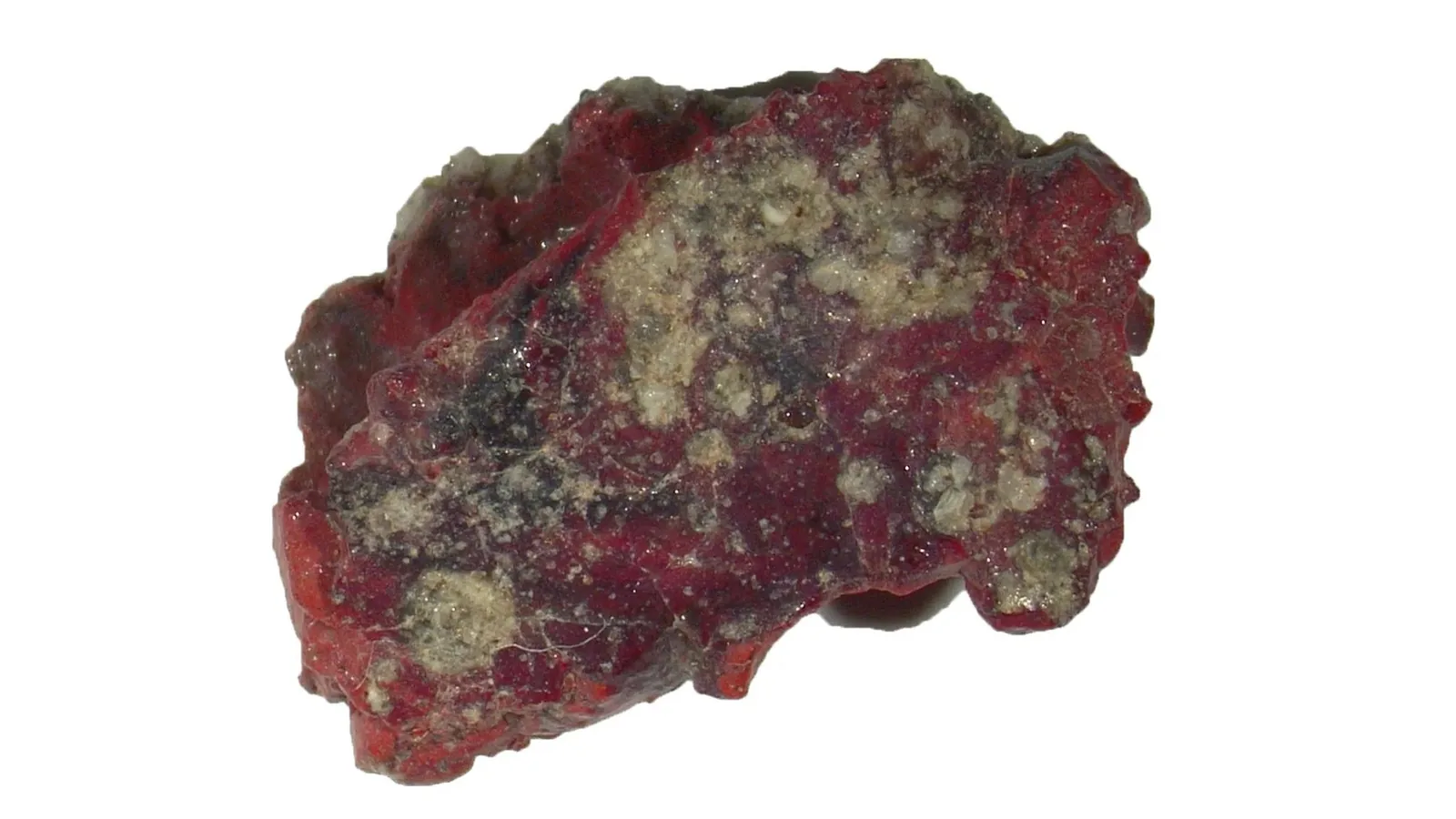
In the intense aftermath of the world's first nuclear detonation on July 16, 1945, in New Mexico, scientists created a unique glass-like substance dubbed "trinitite." Now, researchers have identified a never-before-seen type of crystal structure within a rare "oxblood" variant of this material, offering new insights into how matter behaves under extreme pressures and temperatures. The findings were published on May 11 in the journal PNAS.
The original Trinity test, codenamed for the test site in New Mexico, unleashed an explosion equivalent to 25,000 tons of TNT. The blast vaporized the bomb's steel tower and fused the surrounding desert sand into a glassy material. This pale-green-and-red, faintly radioactive substance, trinitite, served as the medium for this new crystallographic discovery. The investigation was prompted by a prior identification of an unusual silicon-rich quasicrystal in red trinitite samples.
"We wanted to further explore these extreme-formation products," said Luca Bindi, a mineralogist at the University of Florence in Italy and lead author of the new study. His team utilized advanced techniques, including electron microprobe analysis and X-ray diffraction, to examine the crimson-colored trinitite. This striking hue is attributed to metallic droplets from the disintegrated test tower and associated equipment, which were incorporated into the molten silicon glass during the explosion.
A Novel Structure Under Intense Pressure
Within this particular sample, the researchers discovered a clathrate crystal – a structure where one element forms a lattice that encloses other atoms. In this instance, silicon atoms created a cage-like structure, trapping atoms of copper and calcium within interconnected 12- and 14-sided crystal lattices. Such an inorganic clathrate arrangement is exceptionally rare in nature, and its presence as a byproduct of a nuclear explosion is a first.
The Trinity explosion generated temperatures exceeding 2,700 degrees Fahrenheit (1,500 degrees Celsius) and pressures briefly reaching 8 gigapascals, conditions comparable to those found deep within Earth's mantle. These immense forces compelled atoms into configurations not typically observed. The study also explored whether this new clathrate could have been a precursor to the previously found trinitite quasicrystals, but mathematical analysis suggested this was unlikely.
This discovery is significant because it demonstrates how extreme events, such as nuclear blasts, lightning strikes, or asteroid impacts, can forge entirely new mineral phases and structures. These occurrences push the boundaries of our comprehension of material science and how matter self-organizes. "Extreme events like nuclear blasts, lightning, or impacts can generate new mineral phases and structures that expand our understanding of how matter organizes under extreme conditions," Bindi stated. The findings contribute to the broader scientific understanding of mineral formation under the most severe terrestrial and extraterrestrial conditions, far beyond what can be simulated in laboratory settings.