
Nintendo Switch Games Run Natively on Apple Silicon Macs and iPhones
A new project allows Nintendo Switch games to run directly on Apple Silicon Macs, iPhones, and iPads without the need for emulation. This breakthrough brings popular titles to Apple devices.

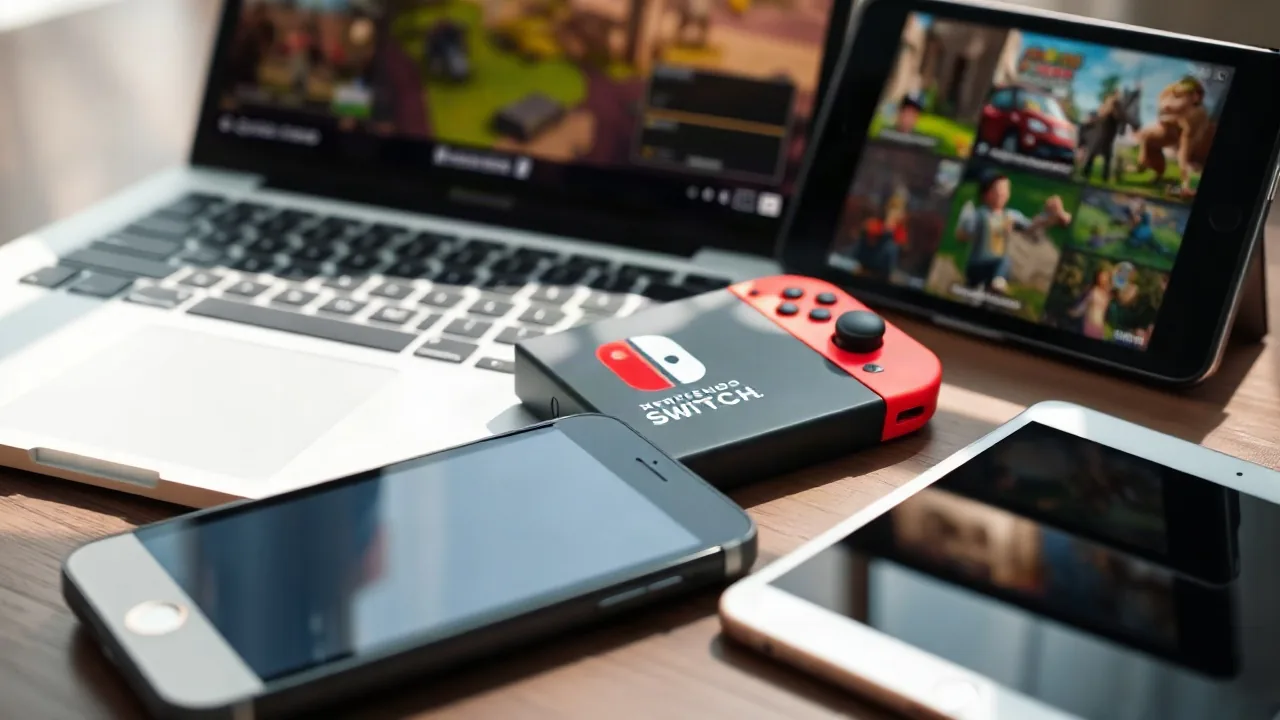
A groundbreaking new project is enabling Nintendo Switch games to run natively on devices powered by Apple Silicon, including Macs, iPhones, and iPads. This development eliminates the need for traditional emulation software, offering a more direct and potentially higher-performance way to play popular titles like The Legend of Zelda and Mario Kart on Apple hardware.
The project, spearheaded by independent developers, leverages the architecture of Apple's M-series chips to execute Switch game code directly. Historically, playing console games on non-native platforms has relied on emulators, which simulate the original console's hardware. Emulation can be resource-intensive and sometimes results in compatibility issues or performance limitations. This new approach bypasses those hurdles by running the games as if they were native applications on the Apple operating system.
Bridging the Console and Mobile Divide
The implications of this advancement are significant for both gamers and developers. For consumers, it opens up the possibility of accessing a wider library of games on devices they already own, potentially reducing the need for dedicated gaming hardware. The ability to play complex Switch titles on an iPhone or MacBook without performance degradation could redefine mobile and portable gaming experiences. Developers might also see this as a new avenue for reaching audiences, although Nintendo's official stance on such unofficial ports remains to be seen.
Early reports suggest that the project has achieved playable frame rates on various Apple Silicon devices, including the M1 MacBook Air, which is positioned as an entry-level machine. This indicates that the technology is scalable and may perform even better on more powerful Mac models and future iPhone generations. The project's success hinges on its ability to translate the intricate demands of Switch hardware and software into a format that Apple Silicon can process efficiently. This involves understanding how the Switch's Tegra processor, GPU, and memory management interact, and finding ways to map those operations to their Apple Silicon equivalents.
The development team has been working to ensure a smooth user experience, focusing on performance optimization and compatibility. While the initial focus is on enabling native playback, future iterations could potentially explore features like controller support, graphical enhancements, or even cloud saves, though these are speculative at this stage. The project represents a significant technical achievement, showcasing the versatility of Apple Silicon and the ingenuity of the developer community in pushing the boundaries of what's possible with cross-platform gaming. The accessibility of games like The Legend of Zelda: Tears of the Kingdom and Mario Kart 8 Deluxe on non-Nintendo hardware without extensive workarounds marks a notable moment in gaming history.