
Quantum Dot TVs Outperform RGB LED Displays, Nanosys Claims
Nanosys demonstrated its quantum dot technology, arguing it surpasses RGB LED displays by reducing color crosstalk and improving contrast, particularly in complex scenes.

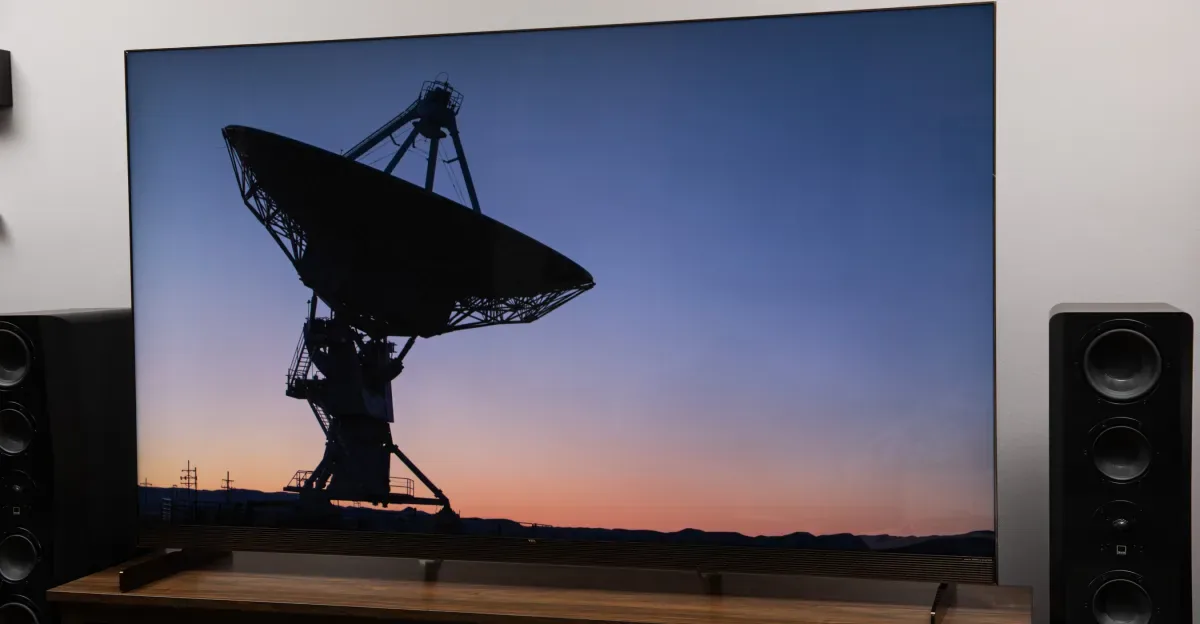
At the Los Angeles Convention Center during Display Week, Nanosys showcased a side-by-side comparison of two 85-inch televisions: one utilizing mini-LED with super quantum dots (SQD) and another employing RGB LED backlighting, a trending display technology. The Nanosys-made quantum dot TV, identified as a TCL X11L, was pitted against an RGB LED model, with both displaying identical content to highlight perceived differences in performance. Nanosys, a key supplier of quantum dots for the TV industry, asserted that its SQD technology offers significant advantages over the newer RGB LED approach.
Jeff Yurek, vice president of marketing at Nanosys, explained that both televisions were set to Filmmaker Mode with native color settings to maximize their color gamuts. RGB LED TVs theoretically promise more vibrant colors by using red, green, and blue LEDs grouped into zones for the backlight. However, a primary concern with this technology is "color crosstalk," where light from one zone bleeds into adjacent areas displaying different colors, potentially altering hues in the image. This was vividly demonstrated during the comparison, with the RGB LED TV showing noticeable color bleeding. For instance, a white cross displayed within a colored box on the RGB LED screen caused the surrounding color to appear less saturated and lighter. This effect was also observed when colored backgrounds influenced the apparent skin tones of individuals in still images, shifting their complexion towards the background color.
Addressing Display Technology Challenges
The demonstration illustrated how the color gamut, specifically the BT.2020 coverage, diminished on the RGB LED TV when the white cross was introduced, impacting blue and green color points most significantly. While technical measurements highlight these issues, the impact is also perceptible in real-world viewing. Skin tones, in particular, are sensitive to such color shifts. Nanosys's SQD TV, conversely, did not exhibit any color crosstalk. Furthermore, the SQD TV demonstrated superior contrast, attributed to a higher number of dimming zones. The TCL X11L boasts up to 20,000 dimming zones, while the comparative RGB LED TV reportedly had around 8,000. The design of RGB LED backlights, requiring separate red, green, and blue LEDs per zone, inherently limits the zone density compared to SQD systems that can use single blue LEDs as dimming zones, allowing for finer control.
These performance differences were evident even in dynamic scenes with rapid movement and quick cuts, where bright colors on the RGB LED TV appeared to bleed into surrounding areas, affecting details like skin tones. Night scenes also revealed a noticeable contrast disparity. While the impact of color crosstalk might be less apparent on an RGB LED TV viewed in isolation, the direct comparison with the SQD technology made the issue more pronounced.
Concerns about color crosstalk in RGB LED TVs have been present since the technology's debut at CES 2025, and these worries have intensified with the increasing market presence of such displays. Manufacturers like LG Display, which competes with RGB LED TVs through its OLED technology, have previously produced content highlighting the potential drawbacks of RGB LEDs. It is important to note that both Nanosys and LG Display have commercial interests in presenting RGB LED technology in a less favorable light. Additionally, the performance of individual RGB LED TVs can vary significantly. Early reviews, such as of the Hisense UR9, did not reveal prominent crosstalk issues, suggesting some models might employ white backlighting as a fallback mechanism. The processing capabilities of upcoming models from manufacturers like Sony could also potentially mitigate these problems. While RGB LED technology is still in its early stages of development and refinement, Nanosys suggests that for the immediate future, SQD technology holds a discernible advantage in visual fidelity.