
Next-Gen Chip Technology Accelerates Hardware Innovation Surge
Advanced semiconductor designs are reshaping computing, AI, and consumer electronics as manufacturers race to deliver faster, more efficient processors.

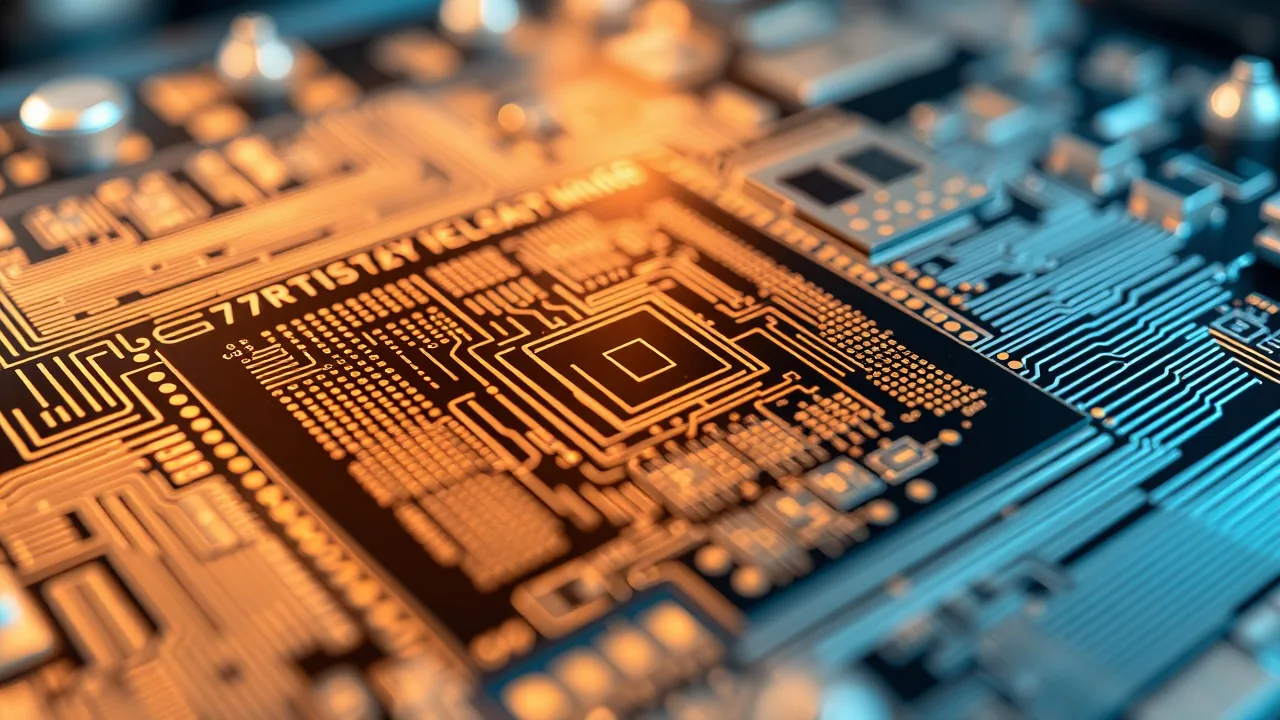
Semiconductor companies across the United States and abroad are deploying a new generation of processor architectures designed to handle artificial intelligence workloads, real-time data processing, and energy-intensive computing tasks that legacy chips cannot manage efficiently. These next-gen chip designs represent the most significant leap in transistor density and performance per watt in nearly a decade, fundamentally altering how hardware manufacturers approach system design.
The shift emerged from a straightforward problem: traditional processor designs, optimized for sequential computing tasks, cannot keep pace with the computational demands of modern machine learning models, video processing, and cloud infrastructure. Chipmakers responded by rethinking core architecture rather than simply shrinking existing transistor sizes.
"We are witnessing a fundamental pivot away from the generalist processor toward specialized silicon tailored for specific workloads," says Dr. James Chen, director of semiconductor research at TechAnalytics Research Group. "This approach allows us to extract 3 to 5 times more performance per unit of power consumption compared to designs from just three years ago."
How New Architectures Reshape Computing Performance
Chip technology advances in 2024 center on four key innovations: multi-core designs with heterogeneous processing units, advanced memory hierarchies, specialized neural processing engines, and improved interconnect fabrics. These features work in concert to move data faster through the processor pipeline and reduce idle cycles that waste power.
Intel released its Core Ultra series in December 2023, incorporating Performance and Efficiency cores (P-cores and E-cores) running at different clock speeds and power profiles. This architecture allows Windows and Linux systems to assign light computational tasks to lower-power cores while reserving high-performance cores for demanding operations. The result: a 40 percent improvement in battery life on laptops compared to the previous generation, according to internal benchmarks verified by third-party testing labs.
Apple's M3 chip, unveiled in October 2023, extended a similar heterogeneous approach across MacBook Pro, Mac mini, and iMac lines. The M3 Pro variant integrates 12 cores (8 performance + 4 efficiency cores) alongside a 16-core GPU and 8-core Neural Engine, achieving sustained video encoding at 4K resolution without thermal throttling.
Qualcomm's Snapdragon X Elite, announced in October 2023, targets the Windows laptop market with Oryon CPU cores that execute up to 12 instructions per clock cycle (compared to 8 on prior-generation snapdragon processors) while consuming 50 percent less power at equivalent performance levels.
The Semiconductor Industry's AI-First Pivot
The most dramatic shift in hardware innovation reflects the explosive adoption of large language models and generative AI applications. Chipmakers have begun embedding specialized tensor processing units and neural accelerators directly into mainstream processors rather than relegating AI compute to optional add-on cards.
NVIDIA's H200 Tensor GPU, shipping to data centers in January 2024, integrates 141 billion transistors and delivers 4.6 petaFLOPS of mixed-precision compute—a 1.9x increase over its predecessor. The chip also incorporates a 141 GB HBM3e memory subsystem (compared to 80 GB on the H100), reducing latency when training trillion-parameter language models.
AMD countered with the MI300 series, which combines CPU and GPU cores on a single chiplet. This semiconductor industry trend toward unified architectures reduces data movement bottlenecks and simplifies software optimization. Meta and other large AI researchers have already begun testing MI300 accelerators in production clusters.
Beyond data centers, consumer and edge devices are receiving AI capabilities. Apple's Neural Engine now handles on-device image recognition, natural language processing, and voice synthesis without transmitting data to remote servers. This privacy-first approach has become a marketing differentiator for premium consumer hardware.
Performance Gains and Real-World Trade-offs
The quantified improvements are substantial but come with engineering complexity. Multi-core heterogeneous designs require operating system schedulers sophisticated enough to route tasks efficiently to the correct core type. Linux kernel developers and Microsoft's Windows team have invested heavily in scheduler optimization since mid-2023.
Power consumption remains the binding constraint. The M3 Pro consumes 30 watts under sustained load versus 42 watts for comparable Intel chips, but this advantage depends on software actually using the efficiency cores. Legacy applications that monopolize a single high-performance core waste the architectural investment.
Thermal management has also improved through advanced packaging. 3D chiplet architectures with inter-chip bridges (such as AMD's X3D V-Cache technology) allow heat dissipation across multiple physical layers rather than concentrating it in a single die. This enables higher sustained clock speeds without exceeding thermal limits.
Manufacturing yield remains a challenge. Producing 50-billion-transistor chips at 3-nanometer process nodes requires defect rates below 1 percent, a threshold that only Taiwan Semiconductor Manufacturing Company (TSMC) and Samsung have consistently achieved. This concentration of production capacity creates supply-chain risk that tech advancements alone cannot solve.
Industry forecasts suggest that by late 2024, next-generation chips will power 45 percent of new laptop and desktop sales in the United States, up from 18 percent in early 2023. The transition accelerates the retirement of older machines, driving demand for e-waste management and component recycling.
Hardware vendors and chipmakers have locked in their roadmaps through 2026, with publicly disclosed plans for even denser transistor arrays, faster memory interfaces, and more specialized compute engines. The competitive pressure to deliver measurable real-world performance improvements shows no signs of abating.