
SteelSeries Rival Pro Gaming Mouse Features Ultra-Wideband Wireless
SteelSeries has released the Rival Pro gaming mouse, featuring Ultra-Wideband wireless connectivity, an 8K polling rate, and a 53-gram lightweight shell.

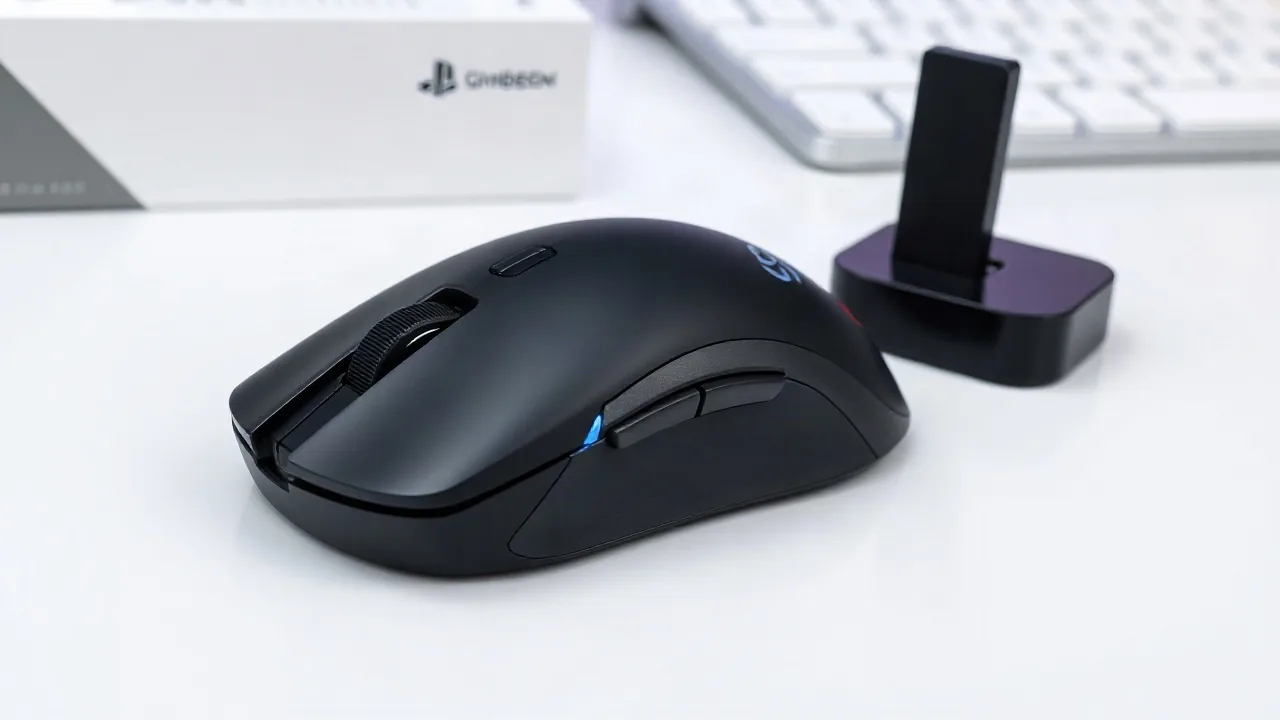
The SteelSeries Rival Pro gaming mouse has entered the market with a lightweight build, high-end tracking capabilities, and an innovative power configuration. Weighing just 53 grams, the peripheral aims to give competitive players the agility of a corded device without the physical cable restrictions. Priced at $180, it arrives alongside sister variants including the Sensei Pro and a compact mini model, catering to different grip styles and preferences.
Built around a simple four-button configuration, the mouse features traditional left and right clicks alongside two programmable side keys. Its ergonomic, right-handed contour matches fast-paced gaming requirements, while a symmetrical alternative is available via the Sensei Pro lineup. The underside hosts 100% PTFE non-stick pads for smooth gliding across various desk surfaces, alongside a dedicated button for power adjustments and DPI changes.
Ultra-Wideband Connectivity and Power System
A primary differentiator for this flagship hardware is its reliance on Ultra-Wideband technology rather than traditional 2.4GHz or 5GHz wireless bands. The base station houses the UWB radio, bypassing congested frequencies often cluttered by nearby smartphones or tablets to maintain a responsive connection. The device runs on the TrueMove 42K Pro sensor, supporting an 8K polling rate and an optional 9K over-polling setting.
To combat the higher power consumption typical of UWB hardware, the company implemented an interchangeable cell design called the Infinite Power System. The kit includes two disc-shaped batteries, allowing one to power the mouse while the other charges in the desktop base station. Swapping out a depleted unit takes mere seconds through a simple twist-and-pull motion. According to the specifications, a single cell lasts roughly 16 hours at maximum 8K polling, though lowering the rate to 1,000 extends runtime up to 120 hours for general tasks.